Under Vision 2030, the Saudi Arabian B2B market is moving fast. The gap between collecting data and using it to win deals is getting wider. With internet penetration at99%, buyers are more informed, competitors are easier to discover, and sales cycles often start well before the first call.
That shift is why CRM alone is not enough anymore. The teams pulling ahead layer CRM with sales intelligence: signals, firmographics, intent, and relationship context that help reps prioritize the right accounts, personalize outreach, and move faster with less guesswork.
This article breaks down the top B2B sales intelligence tools for 2026, including global leaders and solutions that fit how companies buy, sell, and scale.
What This Guide Covers
Sales intelligence is now essential as buyers are more informed and sales cycles start earlier. CRM alone cannot support modern targeting needs.
CRM stores activity while sales intelligence reveals who to contact next, why they matter, and what signals show buying interest.
The blog reviews nine leading tools, including HAL ERP, along with ZoomInfo, Apollo.io, LinkedIn Sales Navigator, Cognism, UpLead, Lusha, 6sense, and Demandbase.
Each tool includes a clear recommendation on who it suits best and what sales motions or regions benefit the most.
Industry use cases show how sales intelligence improves forecasting, targeting, and execution across construction, SaaS, manufacturing, and consulting.
What Is a B2B Sales Intelligence Tool?
A B2B sales intelligence tool is a platform that helps sales teams identify, qualify, and engage the right accounts using enriched data and real-time signals. It goes beyond storing leads and activities. It actively improves who you target, when you reach out, and what you say.
Most sales intelligence platforms combine five capabilities:
Enriched contact and company data: Fills in missing details like verified emails, direct dials, job roles, seniority, company size, revenue ranges, and decision-maker mapping.
Buying intent signals: Shows which accounts are actively researching a category, comparing vendors, or consuming relevant content. This helps reps focus on accounts that are warm, not just “ideal on paper.”
Firmographic and technographic insights: Adds business context (industry, headcount, locations, growth indicators) and tech context (tools used, stack changes, integrations), so outreach and qualification match the account reality.
Account prioritization tools: Helps rank accounts based on fit plus activity. Good platforms make prioritization visible and shareable across sales and marketing, so teams stop chasing low-probability deals.
Predictive analytics and AI scoring: Uses patterns across signals, past wins, and account attributes to score leads and accounts, flag risk, and recommend next-best actions.
How does this differ from a traditional CRM?
A CRM is the system of record. It stores what your team already knows and does: contacts, accounts, pipeline stages, notes, tasks, emails, meetings, and forecasts.
Sales intelligence is the system of insight. It brings in what your CRM usually cannot provide on its own: new data, market signals, and prioritization guidance.
Here’s the practical difference:
CRM answers:What happened, and where is this deal now?
Sales intelligence answers:Who should we contact next, why them, and what signal tells us to act now?
A CRM keeps your pipeline organized and auditable, while sales intelligence sharpens your targeting and timing. Used together, they transform your CRM from a static database into a decision-making engine.
Turn Your Pipeline Into Predictable Profit
Track leads, monitor sales performance, automate approvals, and align finance with operations in real time. HAL ERP eliminates silos so every opportunity moves forward with clarity and accountability.
The strongest sales intelligence stacks in 2026 combine accurate data, intent signals, and AI-driven insights with workflows your team will actually use.
Below are tools that stand out for modern B2B teams, including options that fit how companies evaluate vendors, manage stakeholders, and scale revenue.
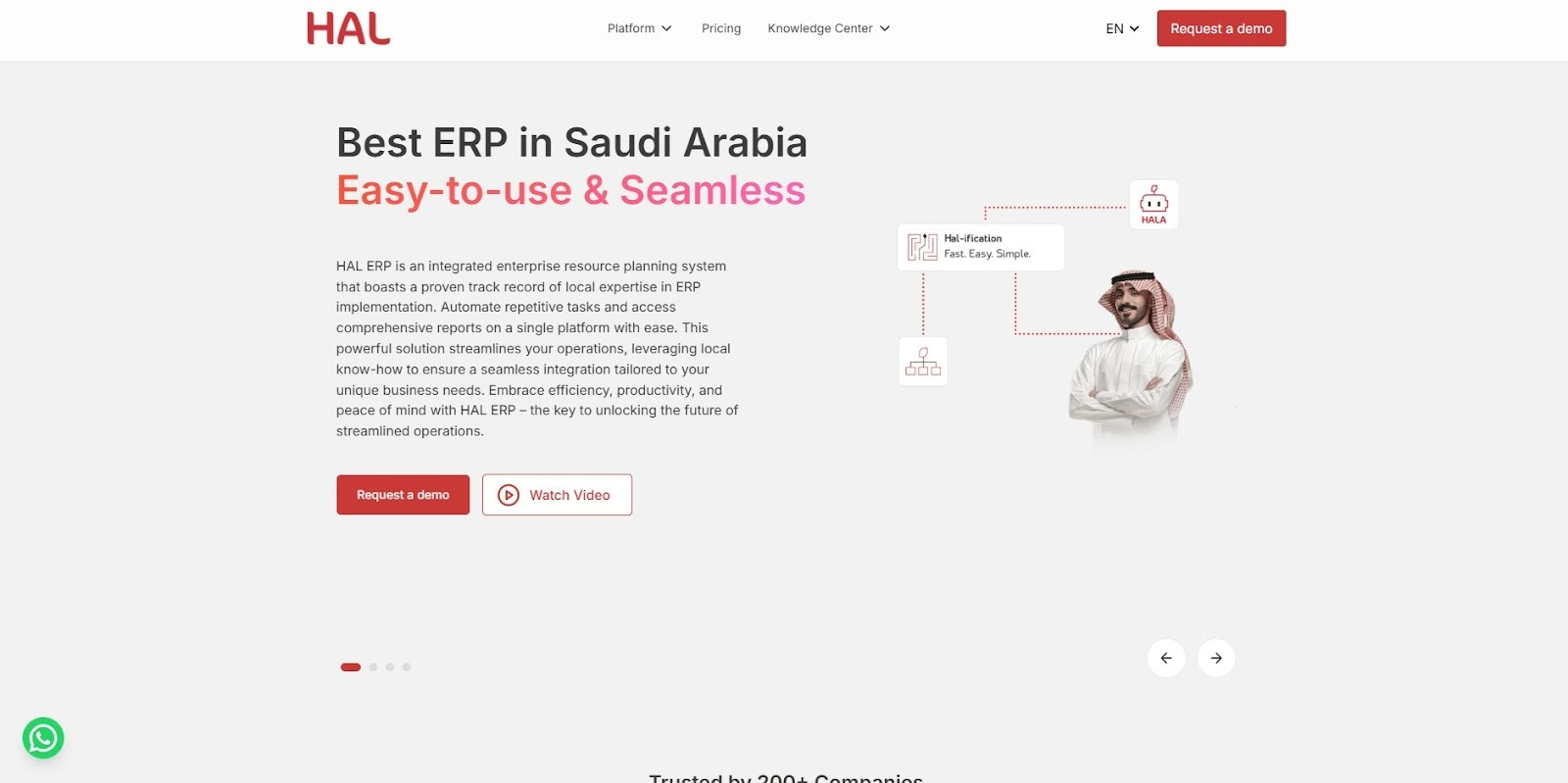
1. HAL ERP – Unified ERP with Intelligent Sales & CRM Analytics
HAL ERP itself is an all-in-one ERP system that brings CRM, finance, and operations into a single platform, with built-in reporting and automation. For sales teams, the advantage is simple: pipeline decisions can be made using the same real-time data that runs invoicing, budgets, and fulfillment, instead of relying on disconnected tools.
Why does it stand out:
Designed and marketed as an ERP option for Saudi businesses, with local-fit positioning and implementation focus.
Includes a CRM module focused on consolidating lead/customer management and providing performance visibility through “instant insights.”
Pushes an “agentic” direction, as to how agentic AI can automate follow-ups, pipeline hygiene, and lead prioritization inside CRM workflows.
HAL Agentic ERP embeds AI agents directly into ERP workflows (approvals/execution layers), not as disconnected add-ons.
Sales intelligence strengths:
Centralizes customer and account data in one system, reducing fragmented context across tools.
Real-time dashboards and reporting are positioned as part of the platform’s “smart ERP” value.
Quote-to-invoice and sales-to-finance visibility via an integrated ERP approach, useful for tighter forecasting and deal control.
Bilingual availability (English/Arabic site experience), supporting broader internal adoption.
Best for: SMEs and growing enterprises that want “sales intelligence” driven by first-party operational + finance data (what is happening inside the business), alongside CRM visibility, instead of relying only on external prospecting databases.
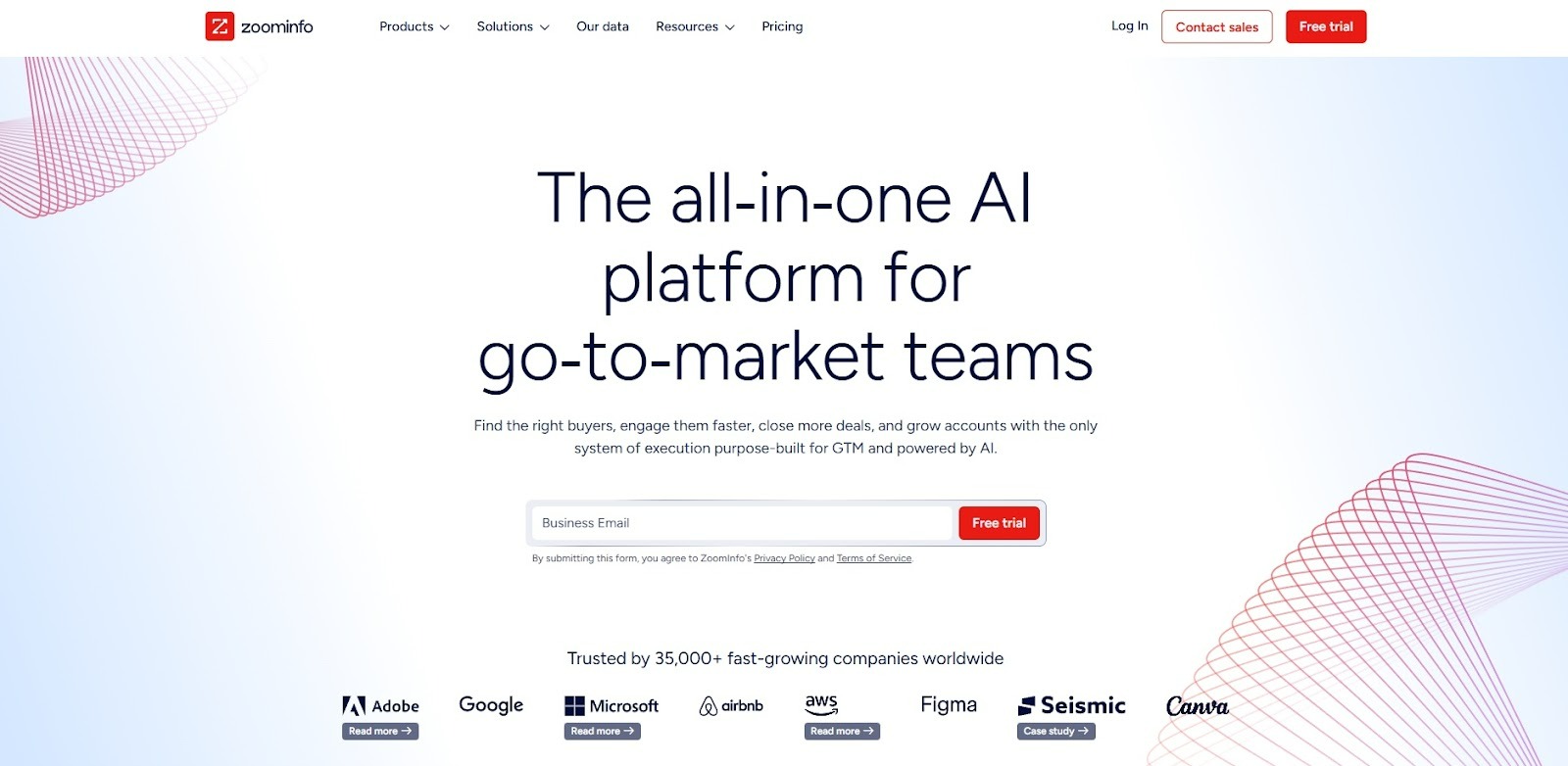
ZoomInfo is built for enterprise teams that need large-scale prospecting, account intelligence, and intent-driven targeting across multiple markets. It is typically used when sales and marketing need a shared view of who to target, which accounts are showing buying signals, and how to segment at high precision.
Sales intelligence strengths
Advanced firmographic and technographic filtering for highly targeted list building.
Intent signals are designed to alert teams when accounts are “in-market” and ready for outreach prioritization.
Strong enterprise-grade segmentation depth (e.g., large filter libraries and buying-signal layering) that supports ABM-style targeting at scale.
Best for: Large enterprises targeting international markets and running structured ABM motions where coverage + segmentation + intent matter more than lightweight prospecting.
3. Apollo.io – Prospecting + Outreach in One Platform
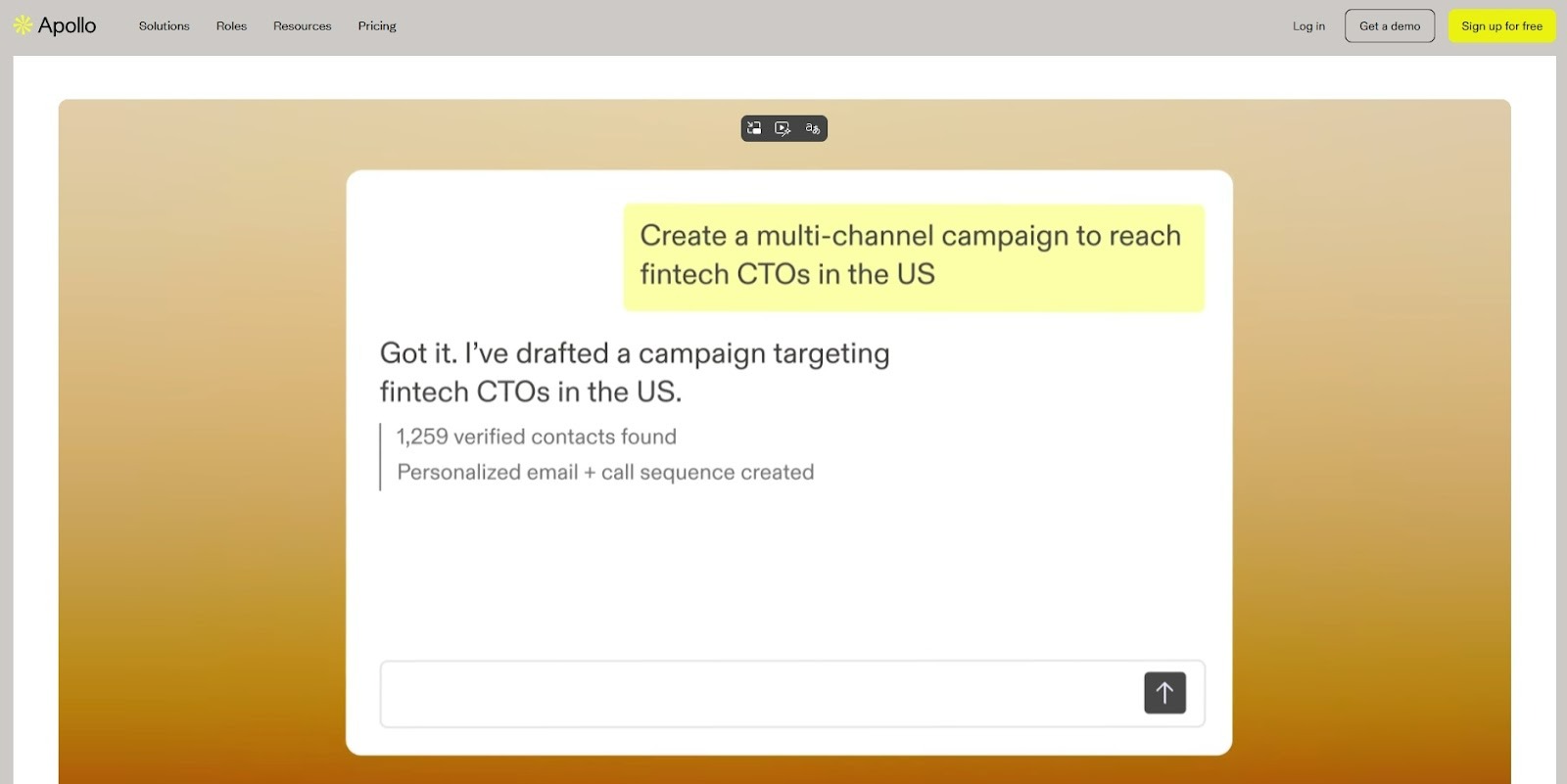
Apollo.io combines lead data + outreach execution in one workflow, which makes it popular for teams that want to find contacts, score them, and launch sequences without stitching together multiple tools. It is positioned as an AI-led sales platform that supports prospecting, engagement, and automation.
Sales intelligence strengths
Built-in outreach sequences that support multi-step engagement across email, calls, and tasks.
AI lead scoring models that can use your CRM signals plus Apollo’s demographic/firmographic/behavioral data.
Freemium entry point and tiered pricing, which support affordable scaling for startups and mid-sized teams.
Best for: SaaS startups and mid-sized sales teams that want one platform for prospecting, scoring, and outbound execution, especially when speed and cost efficiency matter.
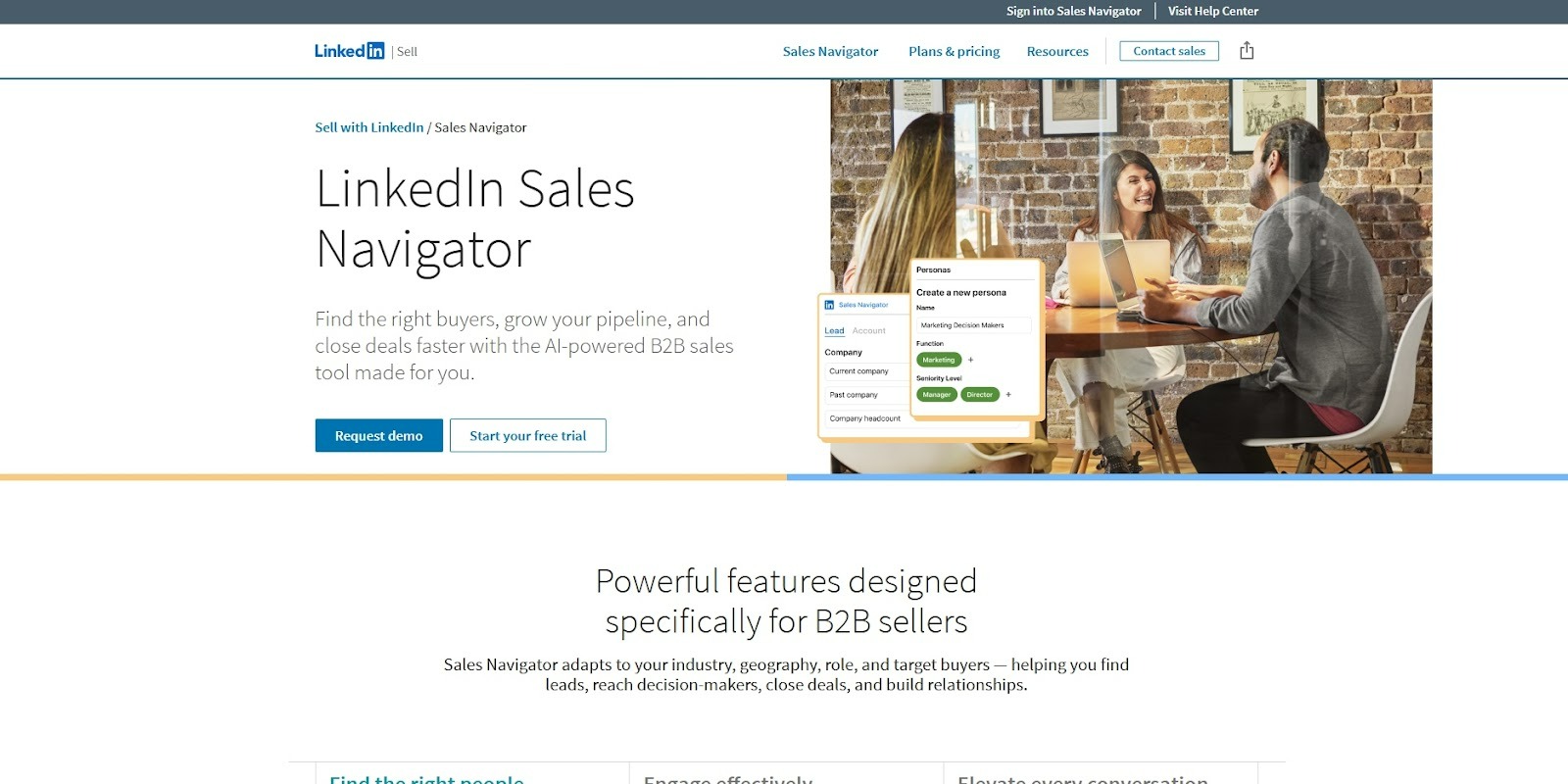
Built on LinkedIn’s professional graph, Sales Navigator is designed for teams that win through trust, timing, and warm pathways into accounts. It helps sellers find the right stakeholders, track account movement, and use engagement signals to start better conversations.
Advanced search filters (50+ attributes) to target by role, seniority, industry, company size, and more.
Save and track leads/accounts with lists to organize and prioritize your book of business.
Lead and account recommendations based on activity, saved leads, mutual connections, and buyer interest.
Alerts and actionable updates on leads/accounts (role changes, company news, and other trigger events) to time outreach better.
Best for: relationship-heavy sales motions like consulting, IT services, and enterprise tech where multi-threading and timing matter.
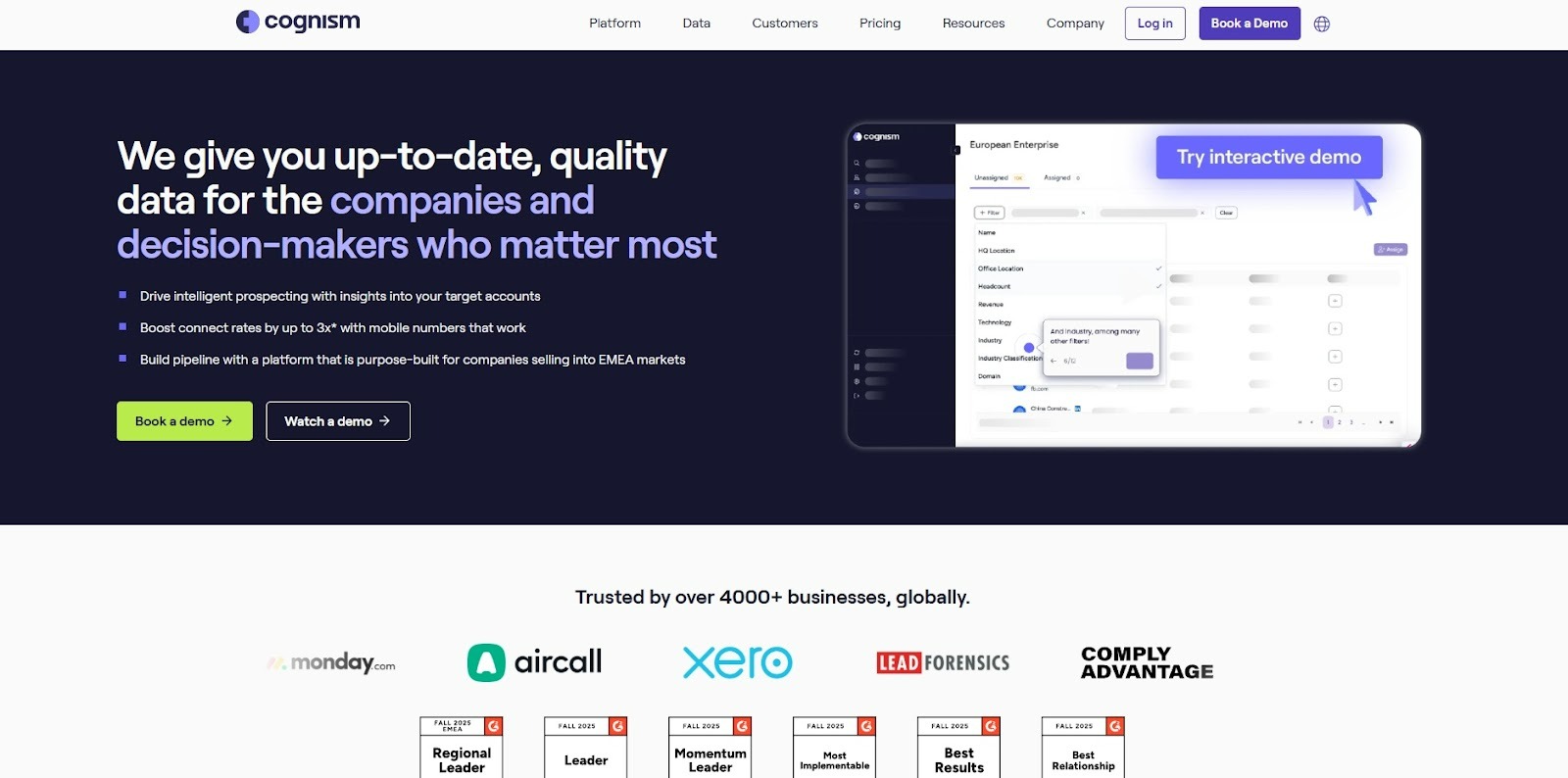
Cognism positions itself as a premium sales intelligence and GTM platform with a strong emphasis on data quality and “compliant-first” practices. It’s typically chosen when connect rates, verified mobile coverage, and compliance expectations are non-negotiable.
Phone-verified mobile numbers (Diamond Data) are designed to help teams reach decision-makers with fewer dead-end dials.
Compliance-first positioning, including stated alignment with GDPR/CCPA practices and security attestations like ISO 27001 and SOC 2 Type 2 (as described by Cognism).
Intent capability support (Cognism describes intent signals and how they can be used to prioritize accounts showing interest).
Contact enrichment and delivery into workflows (positioned as sales intelligence you can activate, not just a static database).
Best for: businesses targeting Europe and other compliance-sensitive markets where verified contactability and documented compliance posture matter.
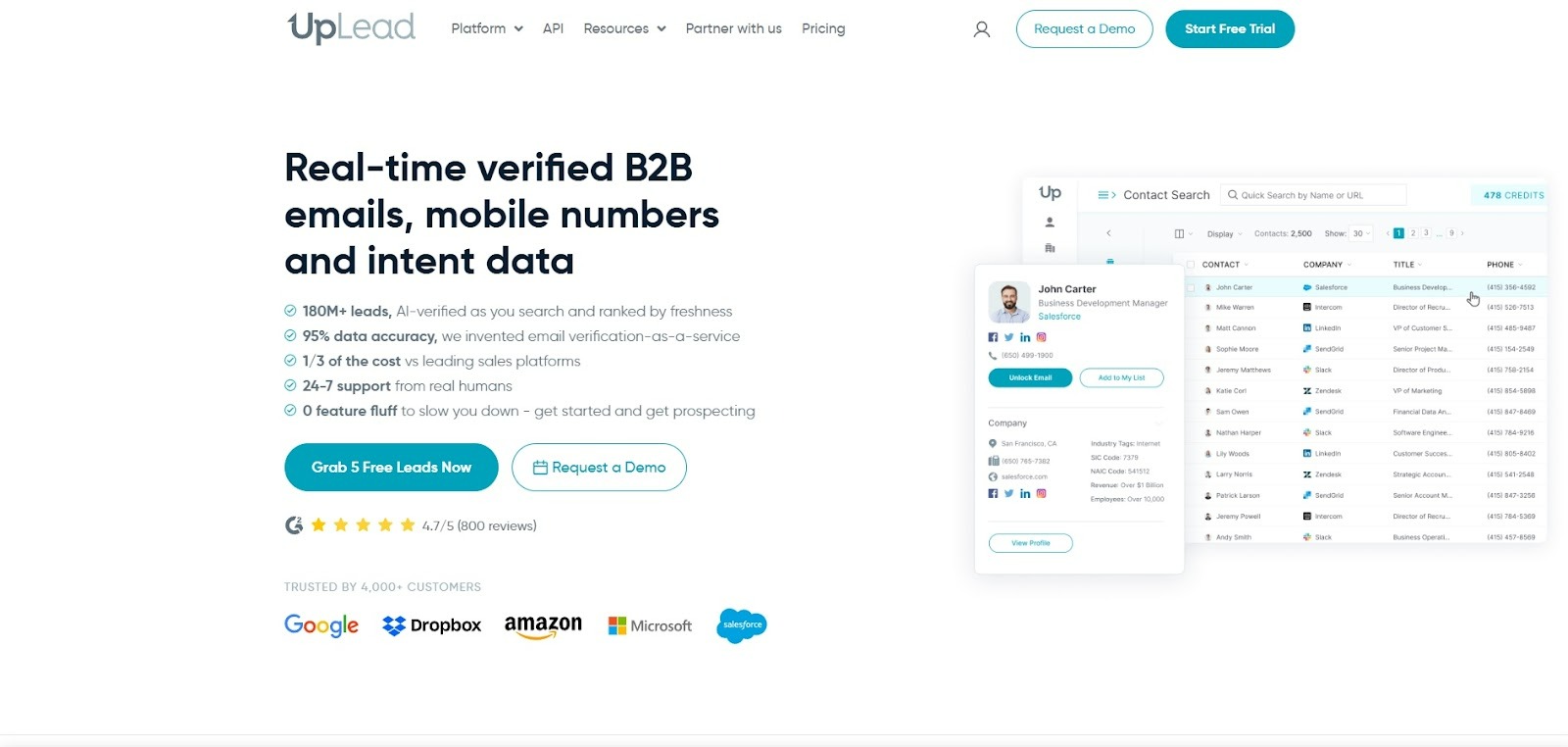
UpLead positions itself as a B2B data platform focused on high-accuracy contact data and real-time verification, so outbound teams spend less time dealing with bounces and bad records. It’s especially useful when you want to build clean, highly targeted lists using firmographic and technographic filters, then push that data into your sales workflow.
Real-time email verification is built into the platform, so emails are verified before you export or use them.
Technographic filtering lets you build lists based on the technologies a company uses (and exclude technologies, too).
Targeting uses 50+ filters to narrow by the account and persona you want, supporting industry-specific outbound list building.
Designed to plug into sales workflows via integrations and API options (useful when you want enrichment to flow into your existing stack).
Best for: targeted outbound campaigns where deliverability + list precision matter more than heavy automation.
Lusha is built for speed and day-to-day SDR adoption. Its browser experience is designed to surface verified contact details while you browse LinkedIn or the web, then save/sync that data to your CRM with minimal friction.
Chrome extension to find contact data where reps already work, including LinkedIn and supported B2B websites.
Quick contact lookup with verified emails and phone numbers, plus prospect updates surfaced in the extension.
CRM integrations and “save/sync” workflows are built into the extension, including bulk actions.
A free plan is available with monthly credits, which lowers the barrier for small teams to start using it.
Best for: small sales teams and quick prospecting when you want fast enrichment without a heavy platform rollout.
8. 6sense – AI-Powered Intent and Buying-Stage Intelligence
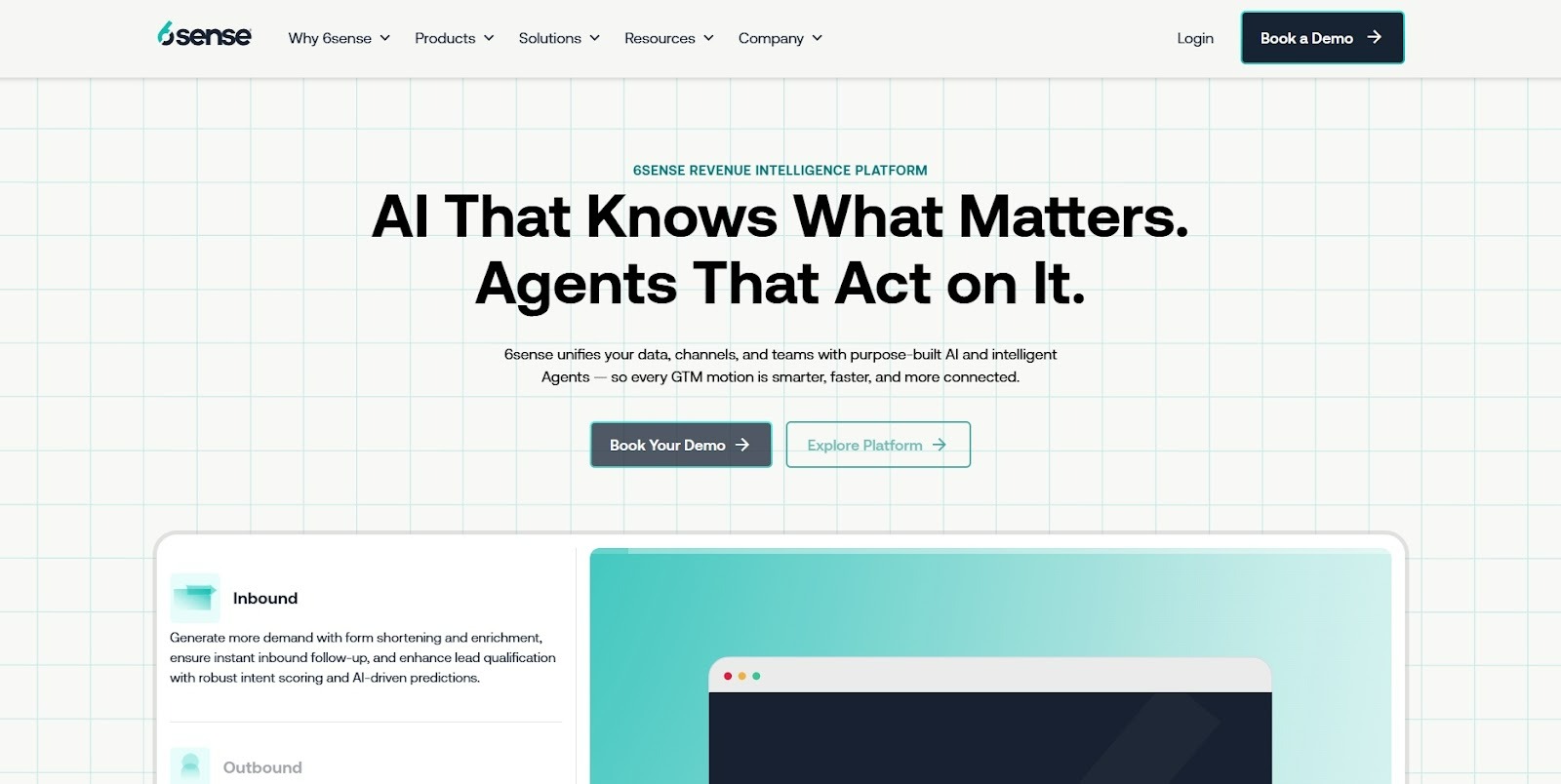
6sense positions its platform around turning intent and engagement signals into predictive account insights, including where an account is in the buying journey and which accounts are most likely to convert. It is built for teams running serious ABM and needing earlier visibility into in-market demand.
Anonymous intent tracking (web deanonymization): identifies accounts researching before they fill a form, so you can engage earlier.
Buying-stage intelligence: uses AI to classify accounts by buying stage and help teams time outreach based on journey stage.
AI account scoring / predictive modeling: scores opportunities using factors like ICP fit, engaged personas, buying stage, and revenue potential.
Deep ABM support: designed to help revenue teams prioritize target accounts and tailor campaigns/outreach using intent + predictive signals.
Best for: enterprise ABM programs that need predictive prioritization and early-stage visibility into in-market accounts.
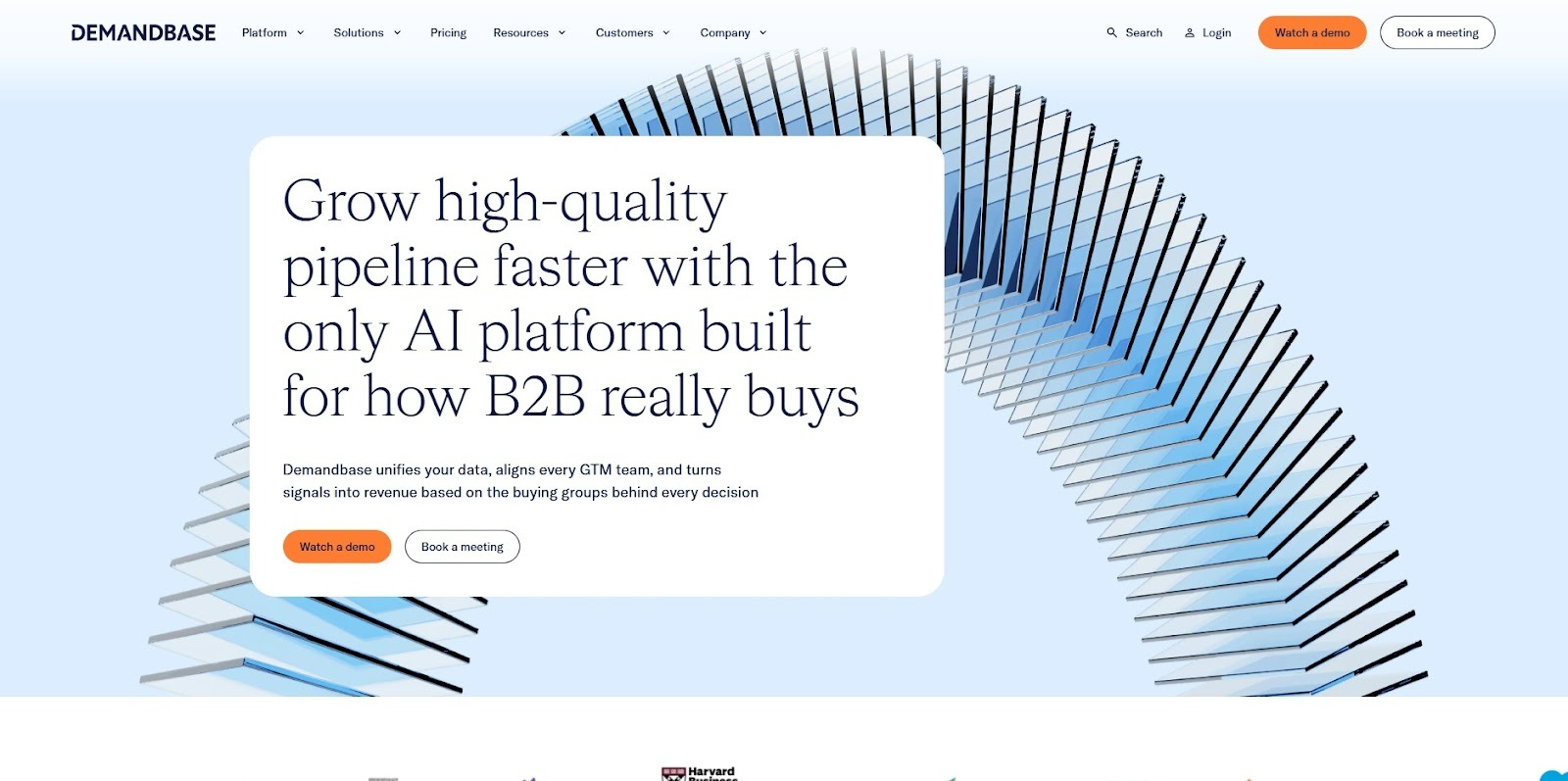
9. Demandbase – Advanced ABM and Intent Intelligence
Demandbase positions Demandbase One as an AI-powered go-to-market platform built to align sales and marketing around account intelligence, intent signals, and orchestrated plays. It is typically chosen when ABM is mature, and the priority is coordinated targeting, personalization, and measurement across teams.
Real-time buying signals: identify accounts showing interest in your company, category, or competitors so teams can act earlier.
AI-driven insights + data foundation: combines 1st- and 3rd-party data and uses AI to turn signals into actionable account insights.
Marketing + sales alignment: positions the platform to unify GTM teams (sales, marketing, customer success, ops) around shared account intelligence and workflows.
Personalization support for ABM: uses account intelligence to tailor website experiences and messaging for priority accounts.
Best for: large organizations with a mature ABM strategy that want shared account intelligence + intent + orchestration across revenue teams.
Comparison Table (Quick Decision Guide)
Use this table to shortlist tools by what actually changes outcomes: where the insight comes from, how teams activate it day to day, and what you need in place to see ROI.
Intent + account identity + activation across channels
Mature enterprise ABM
Strong data foundation + agreed target-account strategy + cross-team governance
Use Cases for Industries
Sales intelligence matters most when it is tied to how a business actually operates day to day. Below are high-impact use cases by industry, including where an ERP-led approach can add an advantage by connecting sales activity to delivery, billing, and operational reality.
Construction & Real Estate
Where it helps most: keeping bids and projects under control by connecting the pipeline to budgets, resources, and delivery.
Account and stakeholder tracking for complex tenders, so ownership and follow-ups stay clear across teams.
Project-ready visibility into budget tracking, resource allocation, and progress reporting, so sales commitments align with execution capacity.
IT & SaaS
Where it helps most: keeping the pipeline clean and forecastable with less manual effort across reps.
Centralized lead and customer management in one place, reducing fragmented context across tools.
“Instant insights” on performance and tasks, so managers can spot gaps early and drive consistent execution.
Manufacturing & Distribution
Where it helps most: planning around real production constraints by connecting sales, inventory, and manufacturing workflows.
Production optimization from raw materials to finished goods, supporting more reliable delivery commitments.
Manufacturing ERP integration (production, inventory, finance, HR) to reduce overpromising and improve forecast-to-fulfillment accuracy.
Consulting & Professional Services
Where it helps most: relationship-led selling and better timing, especially when deals depend on trust and multi-threading.
Lead and account alerts to act on trigger events like role changes and engagement, enabling more relevant outreach.
Ongoing account tracking via saved leads/accounts, so sellers stay close to key stakeholders over longer cycles.
Conclusion
B2B selling in 2026 rewards speed, accuracy, and clear account ownership. The right sales intelligence tool depends on your size, target markets, deal complexity, and how tightly you need sales connected with finance and operations.
If you want integrated visibility across sales and execution, HAL ERP is a strong fit because CRM analytics sit inside the same system used for quoting, invoicing, and delivery. If your priority is global expansion and enterprise ABM, tools like ZoomInfo, 6sense, and Demandbase are built for intent-led targeting at scale.
Book a demo: See how HAL ERP connects pipeline visibility with real operational and financial outcomes.
FAQs
1) Do sales intelligence tools replace a CRM?
No. A CRM stores your pipeline and activities, while sales intelligence improves what goes into the CRM by adding enriched data, signals, and prioritization so reps focus on the right accounts.
2) Which tool is better for local selling: an ERP-led platform or a data provider?
If your biggest gaps are execution, forecasting, quoting, and visibility across finance and operations, an ERP-led approach can deliver faster day-to-day value. If your biggest gap is finding and expanding into new accounts, a data provider is usually the stronger starting point.
3) How do I validate data accuracy before signing a contract?
Run a short pilot with a real target list and measure email bounce rate, phone connect rate, duplicate rate, and how often titles/companies are outdated. Good vendors also show verification methods and refresh timelines.
4) Are intent signals reliable for prioritizing accounts?
They’re useful when combined with ICP fit and human review. Treat intent as a “where to look first” indicator, then confirm relevance through stakeholder research and early discovery.
5) What’s the biggest mistake teams make when adopting sales intelligence?
They buy the tool but don’t change the workflow. Without rules for targeting, enrichment, handoffs, and CRM hygiene, even strong data turns into messy lists and low adoption.
Issam Siddique
Issam Siddique is a visionary IT strategist and co-founder of HAL Simplify, with a dynamic career journey from Infosys to leading transformative digital solutions for Saudi businesses. Renowned for bridging business and technology, Issam combines deep ERP expertise with a keen understanding of Saudi Arabia's evolving digital ecosystem, empowering enterprises to accelerate growth and achieve operational excellence.