

Is your finance team spending more time chasing data than actually running your business? Saudi Arabia's ERP software market was valued at USD 416.7 million in 2024 and is projected to reach USD 1.6 billion by 2033, growing at 15.2% annually.
Yet many Saudi businesses, especially in contracting, trading, and manufacturing, still run their accounting on disconnected tools that were never designed for this level of complexity.
The real risk? Picking the wrong ERP means paying for features you will never use, missing ZATCA e-invoicing deadlines, and facing a painful reimplementation two years later.
This blog explores the top ERP accounting software solutions, the modules that matter most for Saudi businesses, how your industry shapes what you need, and what makes an ERP truly built for the Kingdom.
Standalone accounting software records transactions. ERP accounting software connects them automatically across your entire business.
When you raise a purchase order in an ERP, it flows into accounts payable, updates your cash flow forecast, posts to the general ledger, and triggers a compliance check. All in one step. No re-keying. No reconciliation delay.
You are ready to move to ERP when you recognise any of these signs:
If three or more of those feel familiar, standalone accounting is quietly holding your business back. The next step is choosing the right ERP, and that starts with understanding what each platform actually offers.
Also Read: Cloud vs. On-Premise ERP: Which is Right for Your Business?
Most ERP comparison guides rank platforms by global popularity. This one ranks them by Saudi Arabia fit, starting with the platform built for the Kingdom. Here is what each system genuinely offers, and where each one falls short.
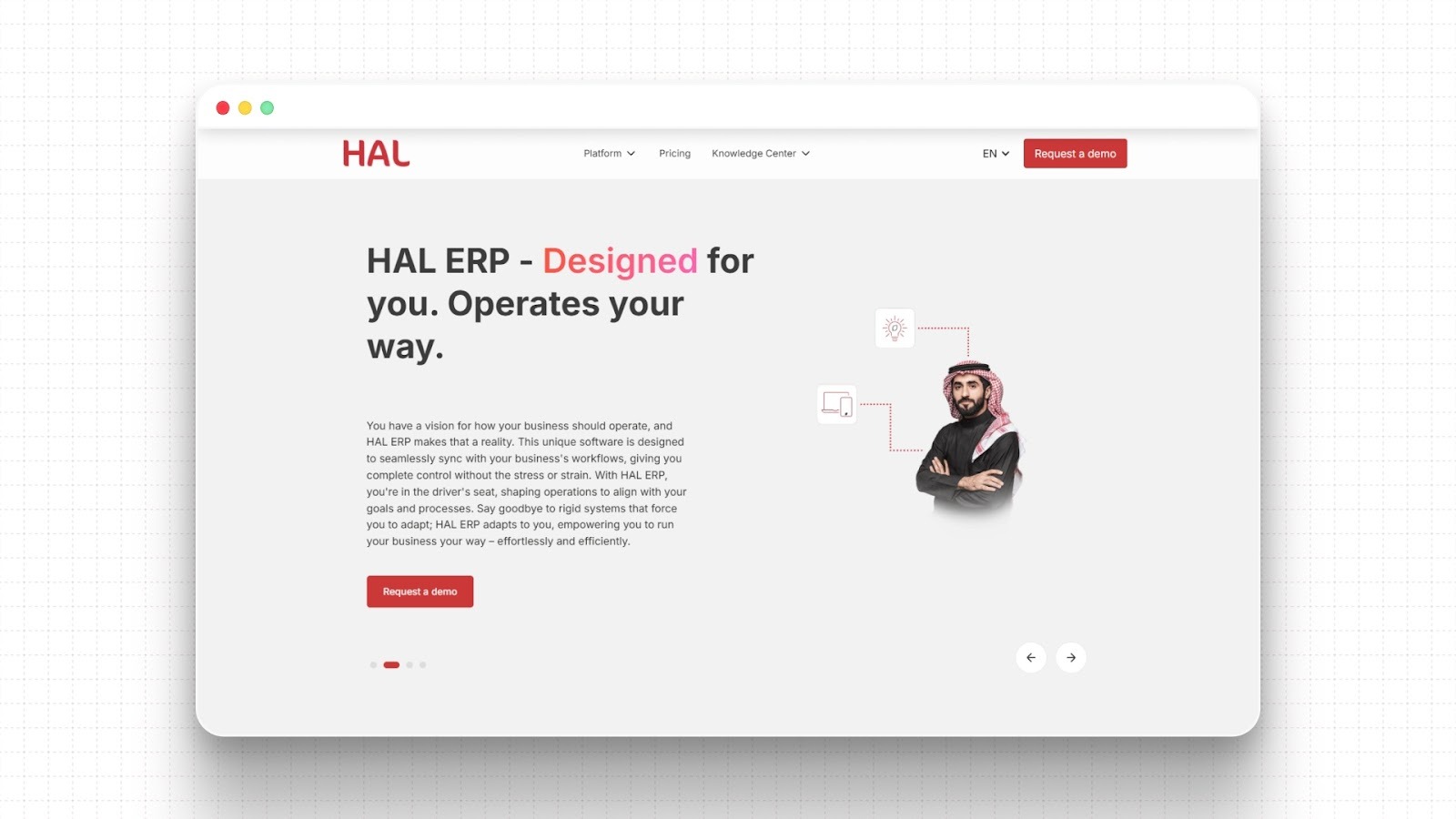
HAL ERP is the only major ERP platform on this list that was built from the ground up for Saudi Arabia's industries, regulations, and business structures. That distinction goes beyond marketing. It shows up in every module, every workflow, and every compliance update.
Where it stands out most: ZATCA compliance built in, local team on the ground, industry modules pre-configured for Saudi sectors, and a total cost of ownership that is competitive with global platforms while delivering faster go-live timelines.
Best for: Saudi businesses of all sizes across contracting, manufacturing, trading, retail, services, and education who want a compliant, locally supported ERP without the enterprise price tag.
Al Homaidhi Group is one of Saudi Arabia's most established luxury retail chains. Despite their scale, they ran on disconnected legacy systems. Reporting was delayed by a full week. Store-level pricing was a manual headache. Customer engagement was limited, and checkout processes were slow. Leadership had no real-time view of what was actually happening across their 80+ outlets.
What HAL ERP Delivered:
The Result: SAR 70 million+ in operational savings. A 61% uplift in ROI. Seamless omnichannel retail across 80+ stores. And a finance team that finally has the real-time data it needs to make fast, confident decisions.
Learn more about how HAL can help you in your accounting process. Book a demo now.
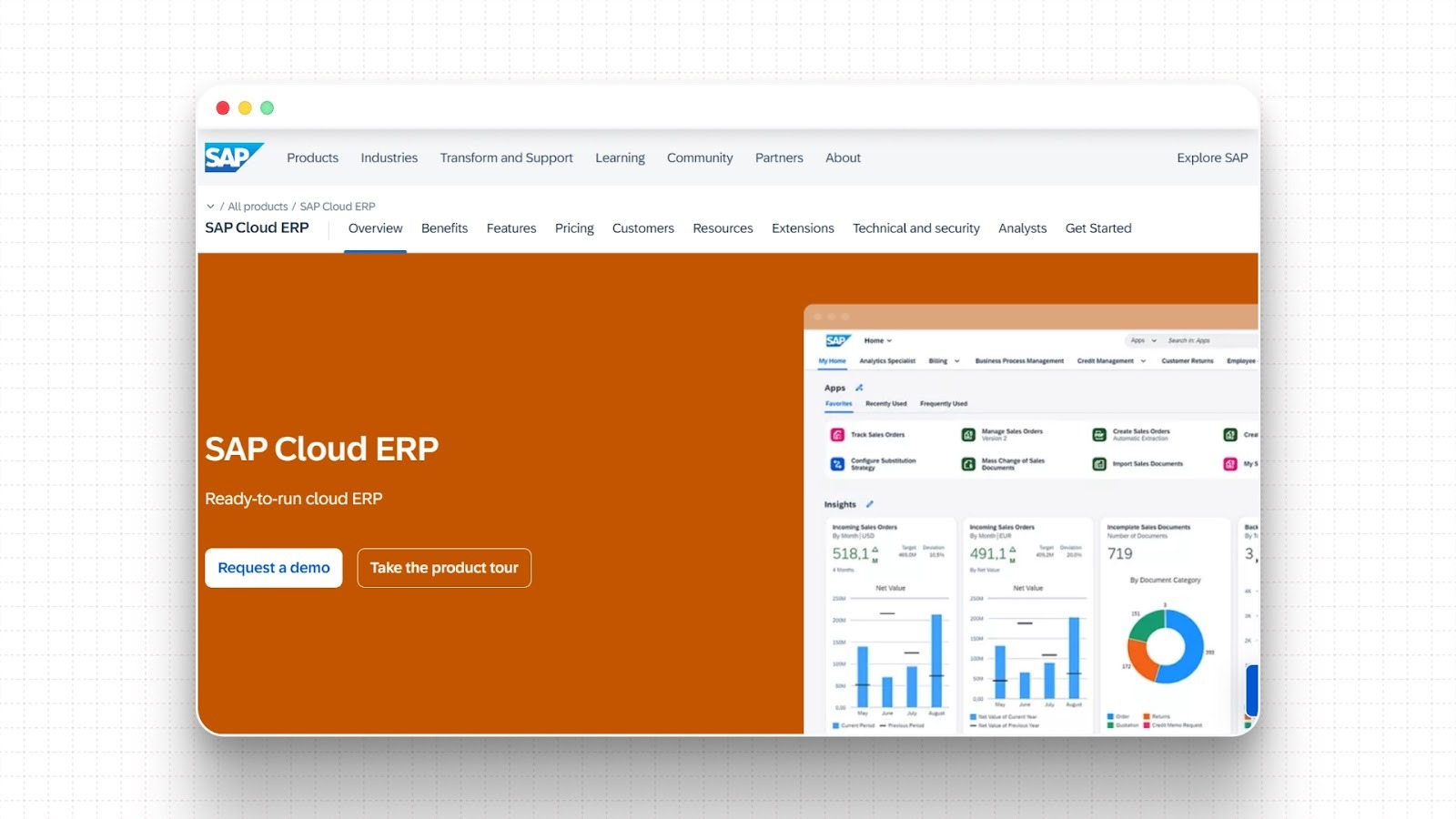
SAP S/4HANA is the most widely deployed large-enterprise ERP in the world. Its accounting capabilities are genuinely comprehensive. A multi-book general ledger, advanced financial close management, fixed asset depreciation with multiple IFRS-compliant methods, real-time analytics through SAP Fiori dashboards, and deep integration across finance, procurement, supply chain, and HR.
Where it falls short: Implementation for a mid-sized KSA firm often exceeds SAR 1 million, with deployment timelines stretching 12–24 months. Without a dedicated internal IT team, SAP can become more overhead than operational advantage. Localisation updates for KSA compliance, including ZATCA regulation changes, sometimes lag behind regulatory deadlines.
Best for: Large corporations, government-adjacent organisations, and multinationals with complex multi-country operations, dedicated IT teams, and budgets to match.
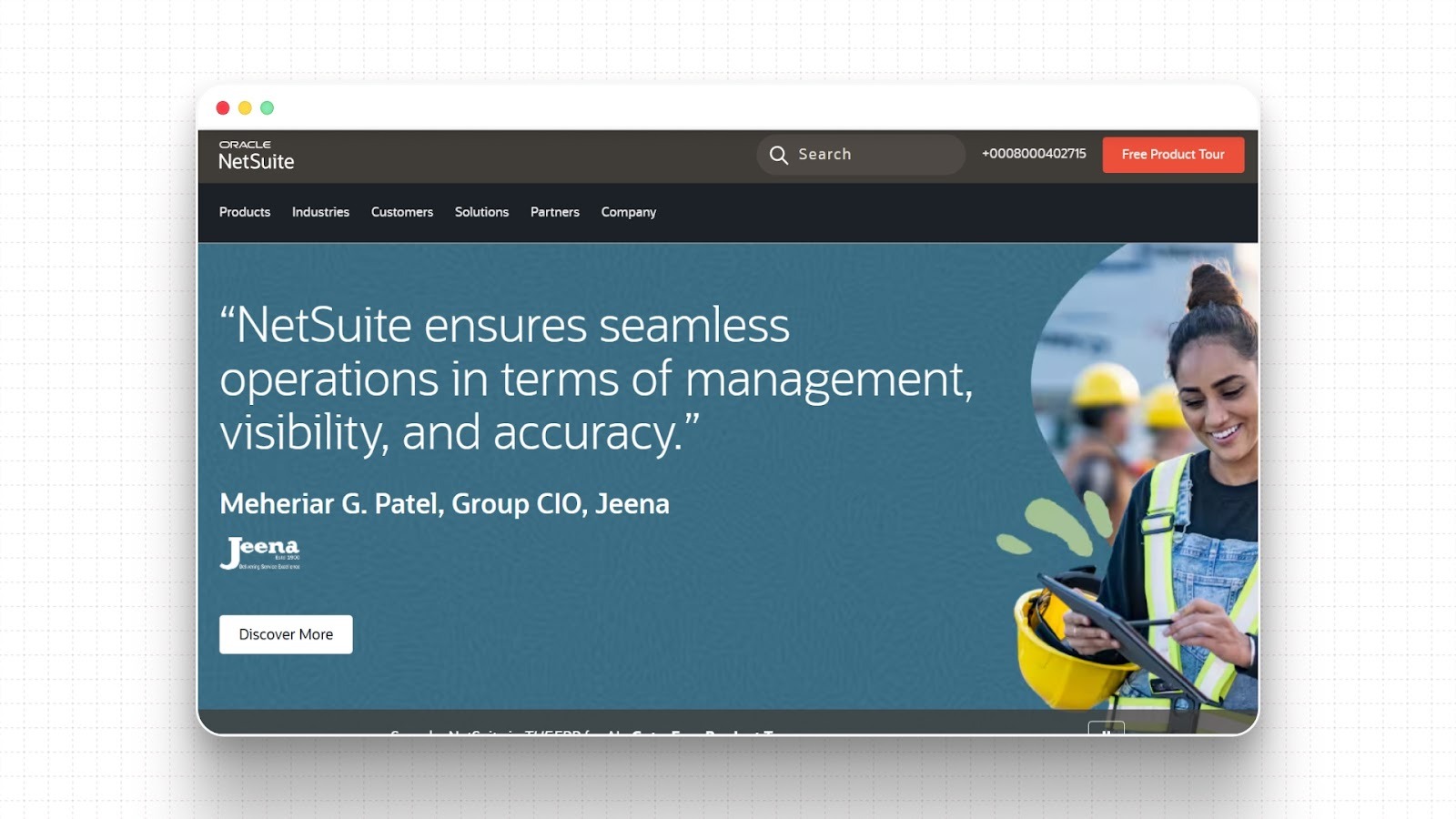
Oracle NetSuite is a cloud-first ERP built specifically for businesses managing multiple subsidiaries or cross-border entities. Its financial management engine is one of the strongest in the mid-market. Multi-book accounting, automated revenue recognition under IFRS 15 and ASC 606, real-time intercompany eliminations, and consolidated dashboards that roll up group financials within minutes.
Where it falls short: ZATCA Phase 2 compliance is not native. It requires third-party connectors, adding maintenance cost and update dependency. Local implementation support in KSA is limited to a small number of certified partners. Arabic UI support is partial, creating real friction for Arabic-first finance teams. For businesses where ZATCA compliance is the top priority, the add-on approach introduces ongoing risk.
Best for: Multi-entity holding groups and regional businesses with international reporting requirements and an existing relationship with a certified NetSuite partner in the region.
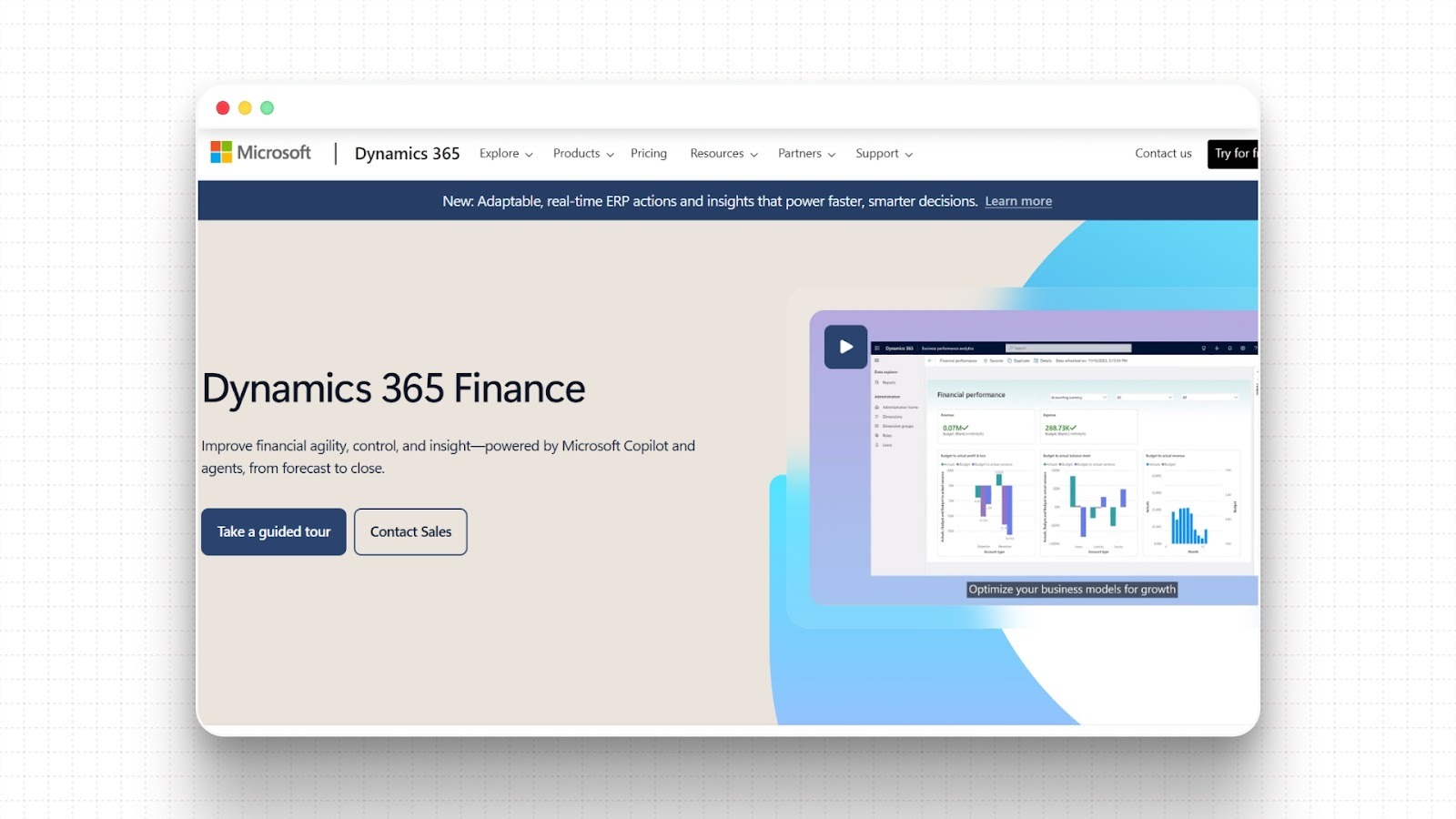
Microsoft Dynamics 365 Finance is the natural ERP choice for businesses already running deep on Microsoft infrastructure. The integration with Teams, SharePoint, Power BI, and Azure is seamless. If your business already lives in Microsoft 365, this integration value is real and immediate.
Where it falls short: Full ZATCA Phase 2 compliance depends entirely on partner-built localisation add-ons. It is not a native module. Implementation is complex and expensive, with most KSA deployments requiring certified Dynamics partners. Per-user licensing scales quickly and can become costly for growing teams. For businesses without a strong internal Microsoft IT function, the ongoing system management overhead can be significant.
Best for: Mid-to-large Saudi businesses already running Microsoft 365 infrastructure that want a tightly integrated finance and operations platform under one vendor.
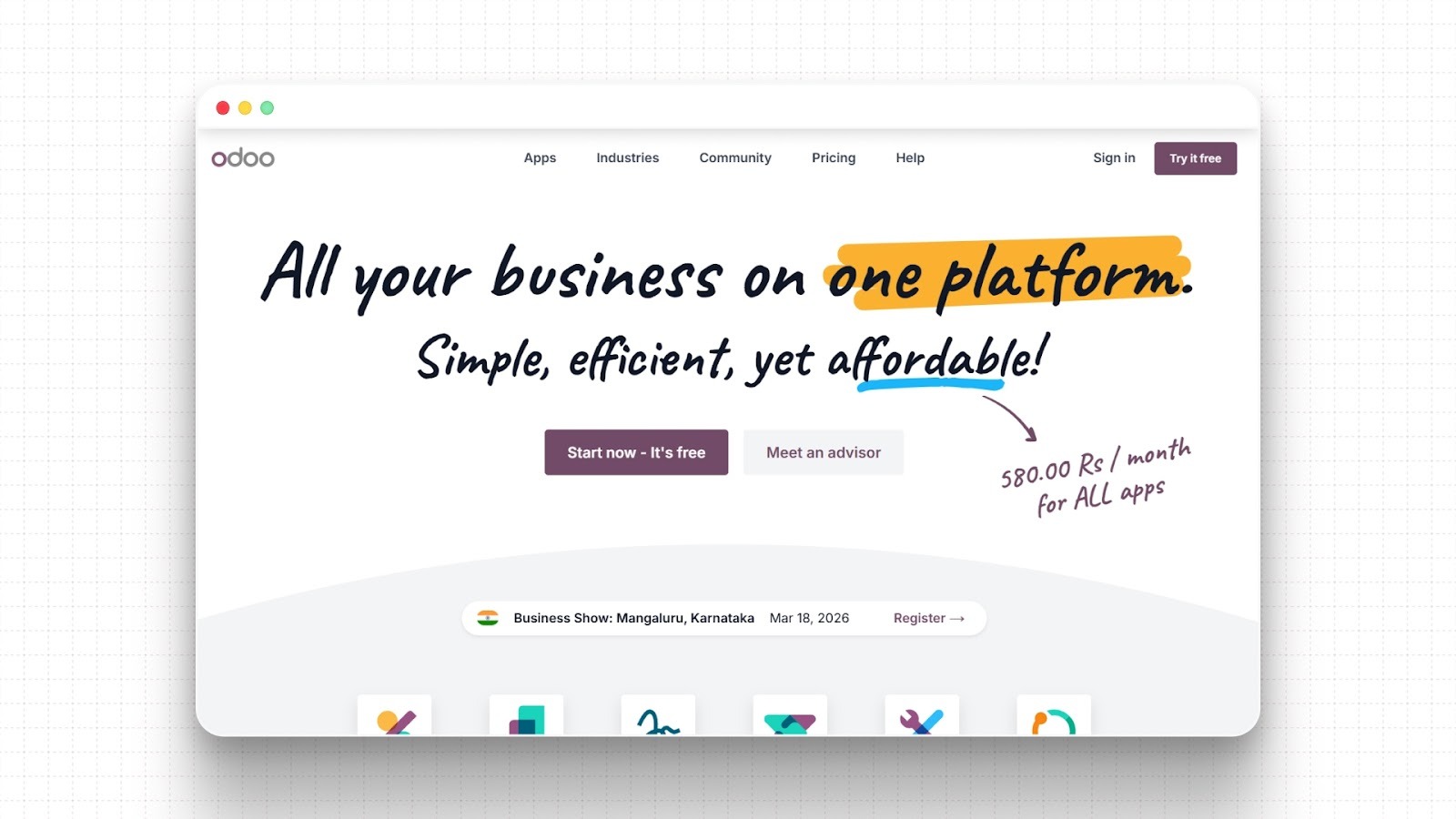
Odoo is an open-source ERP with a build-your-own modular structure. You choose which apps to activate, like accounting, invoicing, inventory, HR, CRM, project management, and pay only for what you use. The interface is clean, modern, and more accessible for non-technical users than any other platform on this list.
Where it falls short: ZATCA Phase 2 compliance is entirely partner-dependent. There is no standard certified module. Quality and update reliability vary significantly between partners. For businesses with complex multi-entity structures, high transaction volumes, or advanced project costing needs, Odoo often requires expensive customisation to scale. Support quality is only as good as your chosen partner.
Best for: SMEs and growing businesses that want a cost-effective, flexible ERP starting point with the ability to add modules over time.
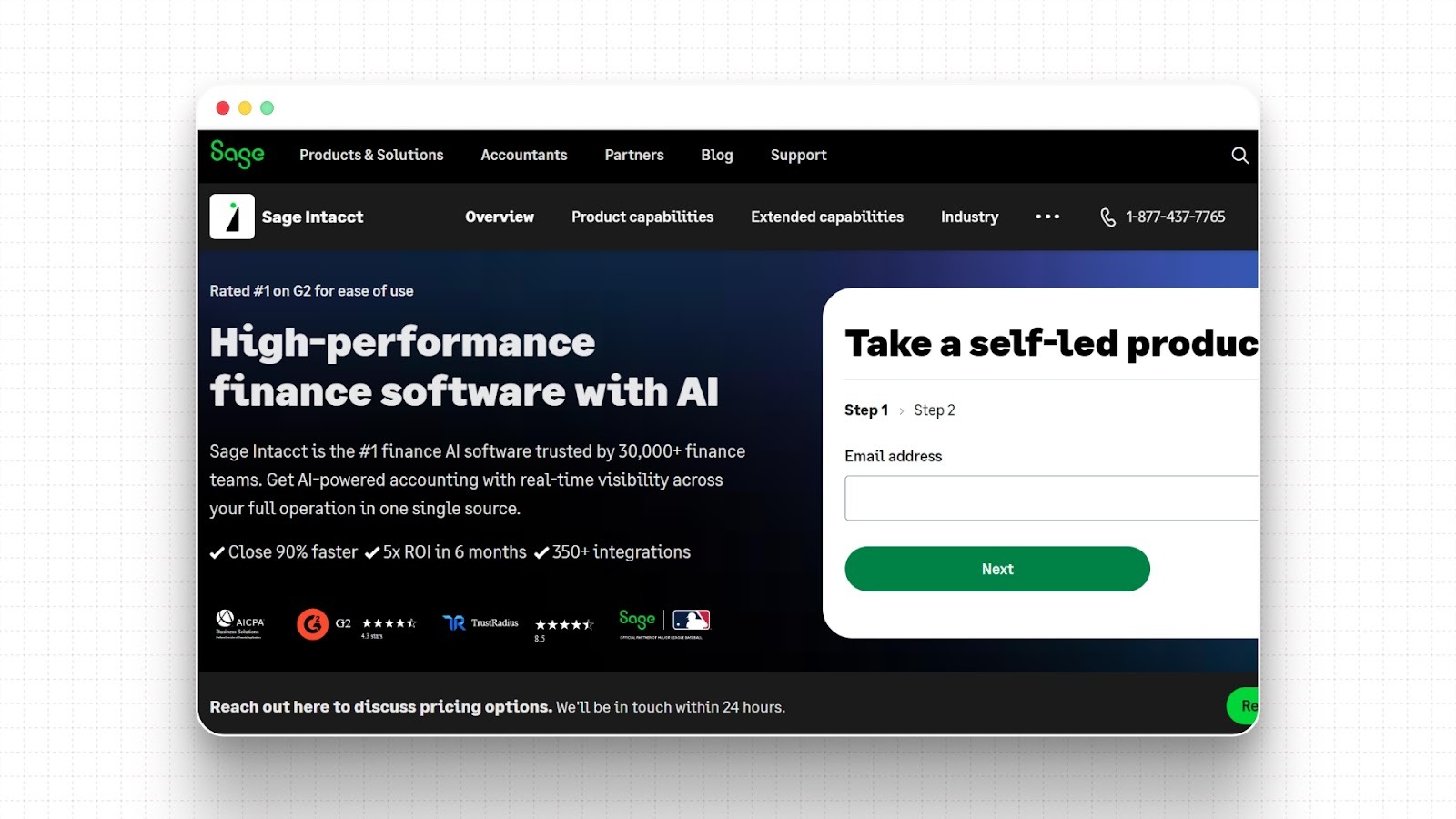
Sage Intacct is a cloud accounting platform widely respected for multi-dimensional financial reporting, project accounting, and professional services billing. It is the platform of choice for many US and UK-based accounting firms, non-profits, and professional services organisations.
Where it falls short for KSA: Sage Intacct has no ZATCA certification, no Arabic-language interface, and no implementation or support presence in Saudi Arabia. It is built entirely for GAAP and IFRS environments in the US and UK. Deploying it in KSA means managing ZATCA compliance entirely outside the system, a significant, ongoing regulatory risk that nullifies much of the platform's accounting strength.
Best for: US or UK-based accounting firms with no Saudi regulatory obligations and an existing Sage ecosystem.
With the platform landscape clear, the next decision is about modules. Knowing which features your firm actually needs, by industry, is what separates a smart ERP investment from an expensive one.

Most ERP feature lists read like product brochures. This one explains what each module actually does for your team, day to day. Here are the ten modules to evaluate and why each one matters in a Saudi context.
Every transaction flows here. A strong GL supports multi-dimensional tagging by department, project, cost centre, and legal entity, so you can run a P&L for your entire group and for a single site in the same system. Real-time trial balance means your team stops waiting for overnight batch runs to see current figures.
Three-way matching of invoice, purchase order, and goods receipt eliminates both fraud risk and manual verification. Automated payment scheduling, supplier ageing dashboards, and early payment discount tracking reduce AP processing time by up to 70%. Your team chases fewer emails and catches more errors automatically.
Automated invoice generation, customer ageing reports, and payment reminder workflows keep cash flowing predictably. Live AR data feeds directly into your cash flow forecast, so your CFO sees the next 30, 60, and 90 days of expected collections in real time, not at month's end.
The non-negotiable for every Saudi business. Look for: ZATCA Phase 1 and Phase 2 certification, XML and PDF/A-3 invoice generation, cryptographic UUID stamping, QR code embedding, live Fatoora portal integration, and tamper-proof 5-year digital storage. Any workaround here is a compliance risk, not a solution.
Budget vs. actual tracking per project, contract, or site. Milestone invoicing, WIP (Work-in-Progress) reporting, and subcontractor cost tracking. You see P&L per project without manual consolidation at month end. For contracting firms, this module alone often justifies the entire ERP investment.
Automated depreciation schedules using straight-line, declining balance, or IFRS-compliant methods. Asset lifecycle tracking from purchase to disposal, with automatic GL posting on every transaction. No more manual spreadsheet depreciation runs at year-end, and no more mismatched asset values at audit time.
Separate P&Ls per legal entity, automatic intercompany elimination entries, and one-click consolidated group financial statements. For Saudi holding groups and family conglomerates managing multiple business lines, this replaces weeks of manual month-end spreadsheet work.
Annual budgets are set by department, project, or entity. Real-time plan-vs-actual variance tracking through the year. Scenario modelling lets your CFO run forward-looking analysis, not just historical reporting. This turns your ERP from a transaction recording system into a strategic planning tool.
Role-based dashboards for CEOs, CFOs, and project managers. Drill down from the consolidated group P&L to an individual transaction in seconds. Full Arabic and English bilingual output, so your ZATCA submissions, board packs, and daily management reports all come from the same single source of truth.
Direct integration between payroll and GL eliminates manual journal entries at every pay cycle. Labour costs flow automatically to projects, departments, and cost centres. For labour-intensive industries like contracting, facilities management, and manufacturing, this integration removes one of the biggest sources of financial reporting inaccuracy.
You will not need all ten modules on day one. A well-designed ERP like HAL should not force you to pay for everything up front. That growth logic matters most in a Saudi context, where your industry defines which modules are truly non-negotiable from day one.
Also Read: Top ERP Modules: Types, Functieons, aned Benefits

Evaluating ERP is not just about features. It is about fit. Your industry, team size, compliance obligations, and growth trajectory. Use these seven questions to cut through vendor demos and make a confident decision.
Once you have your shortlist, the final piece is understanding what implementation actually looks like, so there are no surprises after you sign.
Also Read: 5 Steps for a Successful ERP Implementation Plan

The right ERP accounting software does not just replace your spreadsheets. It becomes the financial infrastructure your entire business grows on.
SAP, Oracle, Microsoft, and Odoo are all credible options for the right business profile. But if you are a growing Saudi firm in contracting, trading, manufacturing, retail, or services, and you want a system built for this market and not just adapted for it, HAL ERP is the platform worth your attention.
HAL ERP is more than just software. It is your strategic partner for growth.
Book a free demo today to see exactly how HAL ERP handles your industry's financial workflows, from ZATCA-compliant e-invoicing to real-time multi-entity consolidation, with a team that truly understands the Saudi market.