
ERP Built for Saudi Businesses

Request a demo
Request a demo

Saudi ERP Compliance Guide for the 2025 Fiscal Year

Saudi ERP Compliance Guide for the 2025 Fiscal Year

Published By

Issam Siddique
Finance
Dec 18, 2025

Saudi Arabia’s fiscal year is more than a timing convention; it transforms how businesses plan, report, and stay compliant. With government budgets, tax cycles, and ZATCA filings all anchored to the Ministry of Finance’s fiscal calendar, companies that align their own financial years gain a strategic advantage.

Beyond compliance, fiscal alignment allows consistent forecasting, smoother audits, and stronger financial governance, especially when supported by ERP systems built for Saudi regulatory precision.

In this guide, we explore how to manage it effectively and stay fully compliant.

Key Takeaway

  • Fiscal Alignment Drives Compliance: Synchronizing fiscal calendars with MoF and ZATCA cycles guarantees accurate reporting and audit readiness.
  • Right Fiscal Year Enhances Planning: Choosing a well-aligned fiscal year improves budgeting, forecasting, and performance visibility across departments.
  • Consistency Simplifies Operations: Unified fiscal, tax, and accounting periods reduce reconciliation errors and regulatory friction.
  • Automation Prevents Year-End Bottlenecks: HAL ERP eliminates manual cutoffs, data mismatches, and unauthorized edits during fiscal close.
  • ERP Precision Allows Readiness: HAL ERP’s fiscal controls, VAT automation, and audit trails keep Saudi businesses compliant and audit-secure year-round.

What Exactly is a Fiscal Year in Saudi Arabia?

A fiscal year (also called a financial year) is a continuous 12-month accounting period used by businesses and governments to record, report, and analyze financial performance.
Unlike the calendar year, which always runs from January to December, a fiscal year can begin on any date, depending on regulatory, operational, or industry-specific needs.

In Saudi Arabia, the fiscal year typically aligns with the calendar year (January 1 to December 31), following the framework set by the Ministry of Finance (MoF). This period forms the foundation for the Kingdom’s national budgeting, tax filing, and public finance reporting systems.

As companies establish this foundation, the impact of the fiscal year becomes clearer, especially on compliance, planning, and long-term growth.
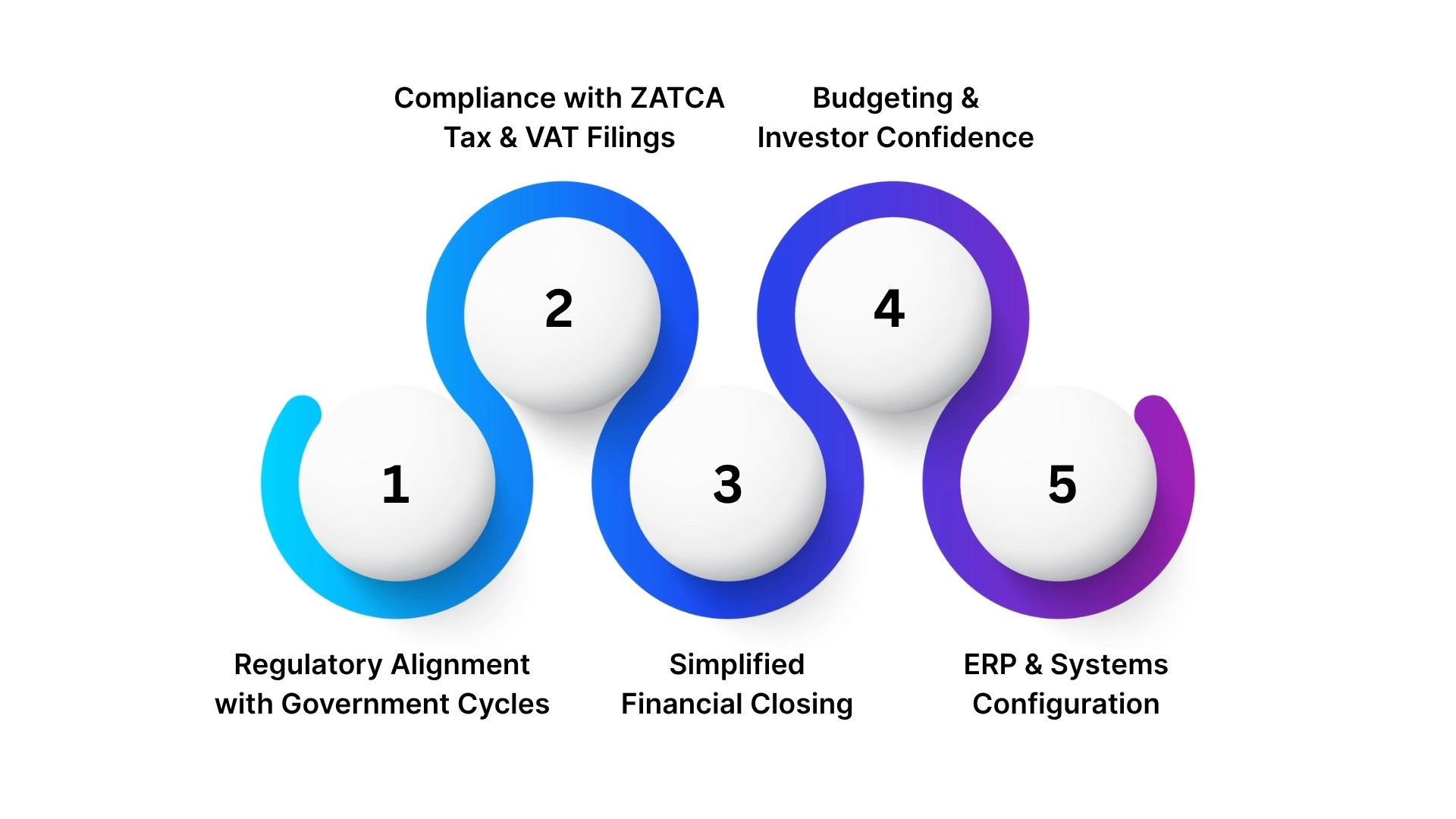
Why the Fiscal Year in Saudi Arabia Matters for Business Compliance and Growth

Why the Fiscal Year in Saudi Arabia Matters for Business Compliance and Growth

Saudi Arabia’s fiscal calendar is directly tied to national budgeting, taxation, and reporting cycles, making fiscal alignment a strategic lever rather than a procedural choice.

1. Regulatory Alignment with Government Cycles

Saudi Arabia’s public finances, including expenditure and tax policy, follow the fiscal year defined by the MoF.

  • For FY 2024, the MoF projected revenues of SAR 1,193 billion, and expenditures are projected to be SAR 1,368 billion in FY 2026.
  • The FY 2025 Pre-Budget Statement estimates expenditures at SAR 1,285 billion and revenues at SAR 101 billion, indicating a deficit of 2.3% of GDP.
  • Aligning internal fiscal calendars with these national cycles helps businesses plan budgets and reporting timelines that stay consistent with government frameworks.

2. Compliance with ZATCA Tax and VAT Filings

Your company’s taxable year, the period used for corporate tax and VAT, is defined by ZATCA regulations, which mandate specific filing schedules and reporting criteria to guarantee compliance.

  • Consistent fiscal-year structures simplify VAT return filing, corporate income tax reporting, and audit schedules.
  • Any misalignment between accounting and tax years can cause delays or discrepancies in ZATCA submissions.

3. Simplified Financial Closing and Audit Cycles

Using the same fiscal calendar each year enables audit teams to directly compare financial results period-over-period, avoiding complex adjustments needed when calendars differ.

  • Aligning fiscal and accounting years reduces manual adjustments and audit risk.
  • A stable fiscal framework allows for faster closing, smoother reconciliations, and predictable reporting cycles.

4. Budgeting, Forecasting, and Investor Confidence

Fiscal year consistency supports long-term planning and investment analysis.

  • Investors and banks in Saudi Arabia often evaluate company performance against national fiscal indicators.
  • A clear, standardized fiscal period improves financial transparency and stakeholder confidence.

5. ERP and Systems Configuration

Your ERP setup must reflect the fiscal calendar to guarantee accurate period-end processes.

  • HAL ERP allows precise configuration of fiscal start and end dates, sub-periods, and automated lock mechanisms for closed years, thereby preventing unauthorized changes and guaranteeing regulatory compliance throughout the fiscal cycle.
  • Proper fiscal setup makes sure that every report, reconciliation, and tax filing aligns smoothly with Saudi compliance requirements.

To make sure that your fiscal planning fully aligns with regulatory timelines and tax obligations, explore Understanding Taxation in Saudi Arabia: Key Insights.

This alignment also determines how daily operations perform, from budgeting and payroll to audits and system configurations.
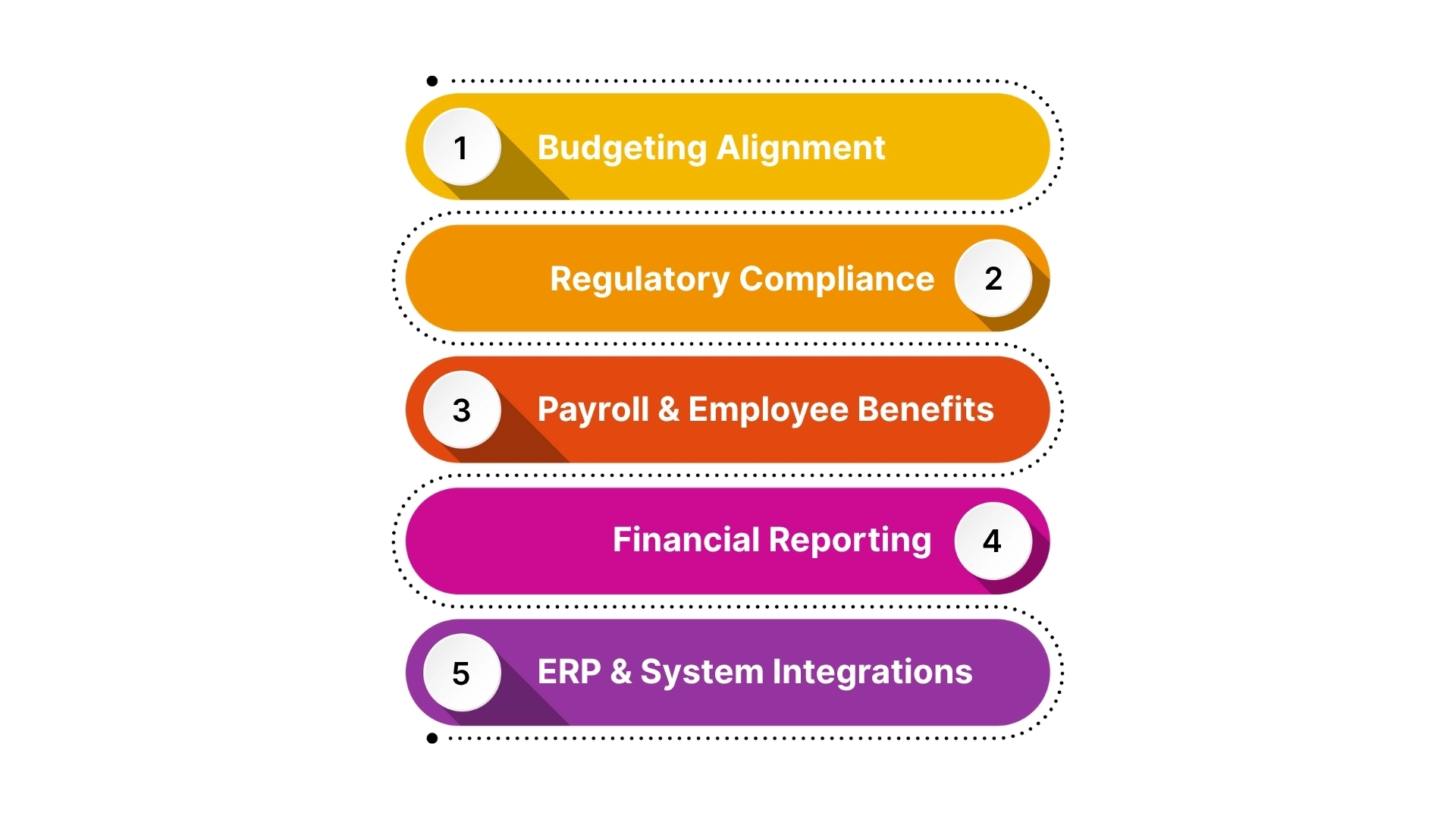
How the Right Fiscal Year in Saudi Arabia Shapes Business Operations and Compliance

How the Right Fiscal Year in Saudi Arabia Shapes Business Operations and Compliance

A fiscal year does more than set reporting boundaries. It transforms how Saudi companies plan strategically, measure outcomes, and stay agile amid shifting financial cycles.

1. Budgeting & Forecasting Alignment

Choosing a fiscal year that matches the calendar year (January–December) allows your internal budgets and forecasts to sync with Saudi Arabia’s national budget cycle.

  • This alignment helps you plan capital spending, track performance against economic indicators, and coordinate timing with government-led projects or tenders.
  • If your fiscal year differs (e.g., April–March), you’ll need to maintain dual forecasting cycles, increasing planning complexity and reducing visibility.

2. Audit & Regulatory Compliance

Regulators, auditors, and ZATCA expect consistent accounting periods for clear financial traceability.

  • Any change or misalignment in your fiscal year can result in reconciliation delays, extra audit procedures, or regulatory scrutiny.
  • Aligning fiscal years across all entities reduces compliance risk and simplifies year-end statutory audits.

3. Payroll, Bonuses & Employee Benefits

HR and payroll systems rely on fiscal-year boundaries for calculating accruals, bonuses, and benefits.

  • Shifting the fiscal year changes the timing of payroll cycles and benefit calculations, which can affect employee leave accruals, bonuses, and year-end financial reconciliations.
  • Keeping payroll cycles consistent with the fiscal year guarantees accurate accounting and smoother employee communication.

4. Financial Reporting & Group Consolidation

Companies with multiple subsidiaries or joint ventures benefit from having synchronized fiscal periods.

  • A unified fiscal year simplifies group consolidation, roll-forward entries, and comparative analysis.
  • When entities operate on different fiscal years, financial consolidation becomes complex and prone to timing discrepancies.

5. ERP, E-Invoicing & System Integrations

Your ERP system and connected applications, such as payment gateways, e-invoicing tools, and financial dashboards, depend on accurate fiscal configurations.

  • HAL ERP allows you to define fiscal periods, automate year-end closings, and maintain control across multiple branches or entities.
  • Incorrect or inconsistent fiscal settings can cause data misalignment across accounting, reporting, and compliance modules.

To apply these practices effectively, businesses must distinguish the fiscal year from related timelines like tax years and accounting periods.

Achieve effortless ZATCA Phase II compliance with HAL VAT Care, the trusted partner behind Motamayiz ERP’s smooth e-invoicing success. Go live in weeks, stay fully compliant, and simplify every invoice cycle with confidence.
Book a demo.

Fiscal Year in Saudi Arabia vs. Tax Year: Key Differences Businesses Must Know

Financial reporting in Saudi Arabia relies on three distinct yet interconnected timelines, each governing how data flows across management, auditors, and regulators. Understanding how the fiscal year, tax year, and accounting period differ is key to maintaining accuracy and avoiding compliance friction.

Term Used By Definition (Saudi Context) Why It Matters for Businesses
Fiscal Year Management, Statutory Auditors, Ministry of Commerce The official 12-month financial cycle your company uses for preparing and publishing audited statements (e.g., Jan–Dec or Apr–Mar). Determines when you close books, finalize budgets, and align with national fiscal policies issued by the Ministry of Finance (MoF).
Tax Year ZATCA and Tax Advisors The 12-month period used for corporate income tax and VAT filings, which must comply with ZATCA regulations. Misalignment between your fiscal and tax year can lead to duplicate filings, timing mismatches, and compliance penalties.
Accounting Period Finance & Internal Control Teams Sub-divisions within the fiscal year, monthly, quarterly, or custom reporting windows. Supports management reporting, variance analysis, and operational control over revenues and expenses.

Saudi businesses that align their fiscal year, tax year, and accounting periods reduce reconciliation overhead, audit adjustments, and compliance risk, creating a unified reporting rhythm across MoF, ZATCA, and internal systems.

To manage liquidity and sustain smooth operations throughout the fiscal cycle, learn more in What Is Working Capital and Its Importance?

With these definitions clarified, organizations can choose the fiscal year model that best fits their structure, seasonality, and reporting needs.

Fiscal Year Models in Saudi Arabia: How Businesses Choose the Right Structure

Saudi companies adopt fiscal year models that align not just with compliance norms but with their operating rhythms, industry cycles, and consolidation needs. The choice influences how smoothly audits, forecasts, and system processes run throughout the year.

Common Models

Let’s look at the fiscal year models most commonly adopted by Saudi businesses and the logic behind each choice.

  • Calendar Year (Jan 1 – Dec 31): The standard fiscal model across most Saudi entities. It aligns with the Ministry of Finance’s fiscal cycle, simplifying tax filing, budgeting, and external audit coordination.
  • Custom Fiscal Year (12 Months, Non-Calendar): Used by businesses with strong seasonal demand patterns (e.g., F&B, retail, tourism). This helps match accounting recognition with operational peaks but adds coordination effort for compliance and consolidation.
  • 52-53 Week Fiscal Year: Adopted by certain retail or manufacturing firms to align reporting with weekly production or sales cycles. This model demands additional period-end reconciliations since month lengths differ from the Gregorian calendar.

Decision Checklist

Before finalizing your fiscal year model, evaluate these factors to make sure that your selection supports both performance visibility and regulatory compliance.

  • Industry Seasonality: If your sales or production cycles fluctuate sharply by season, a custom fiscal year can improve performance tracking.
  • Group or Investor Alignment: Subsidiaries or joint ventures benefit from fiscal alignment with parent or partner entities to guarantee smooth consolidation.
  • Stakeholder Expectations: Regulators, auditors, and lenders often expect calendar-year financials, especially when benchmarking against national data.
  • System Compatibility: Make sure that your ERP, VAT, and e-invoicing systems can handle flexible fiscal calendars and period-end automation before deviating from the default.
  • Compliance Simplicity: When in doubt, aligning to the Saudi calendar-year standard minimizes reporting friction with MoF and ZATCA frameworks.

Real Saudi Example, Masader (Trading Industry)

Masader, a leading Saudi engineering and trading company managing 4,500+ SKUs and 50+ services for 1,000+ customers, simplified its operations with HAL ERP. By automating financial postings, integrating departments, and allowing dynamic pricing, Masader gained real-time visibility, accurate cost tracking, and faster year-end closing. HAL’s comprehensive solution improved profitability, audit readiness, and operational agility across the business.

book demo

After selecting the right structure, smooth year-end closing becomes the focus, guaranteeing accuracy from pre-close planning to audit submission.

Fiscal Year-End Close in Saudi Arabia: Step-by-Step Planning and Reporting Guide

A successful year-end close depends on clear sequencing, accountable ownership, and consistent execution. Each phase should flow into the next without data breaks or manual overlaps, guaranteeing accuracy from pre-close preparation to final reporting.

Phase Timeline Key Tasks Owners
Pre-Close Prep 60–90 days before year-end Plan inventory counts, review accruals, freeze ERP changes, and lock budgets Finance Controller, ERP Admin
Final Month 30 days before year-end Complete reconciliations, validate assets, confirm PO/GRNs, align with auditors Chief Accountant, Audit Liaison
Year-End Close Day 0 Post closing entries, roll forward balances, lock prior year, generate reports ERP Admin, Finance Controller
Post-Close & Compliance 1–45 days after year-end Support audits, file VAT & ZATCA returns, finalize management reports CFO, Tax Lead, Financial Analyst

Implementation Tip: Use your ERP’s automated close calendar and task assignment features to guarantee accountability, for example, configuring reminders like “ERP Admin executes roll-forward on Day 0” or “Operations finalizes inventory count by Week –3.”

Managing these tasks manually can slow down closure cycles, which is why many Saudi enterprises now automate fiscal-year processes through HAL ERP.

Achieve full ZATCA Phase II compliance in just two weeks, book your free HAL VATCare demo and simplify e-invoicing without changing your ERP. Book a demo
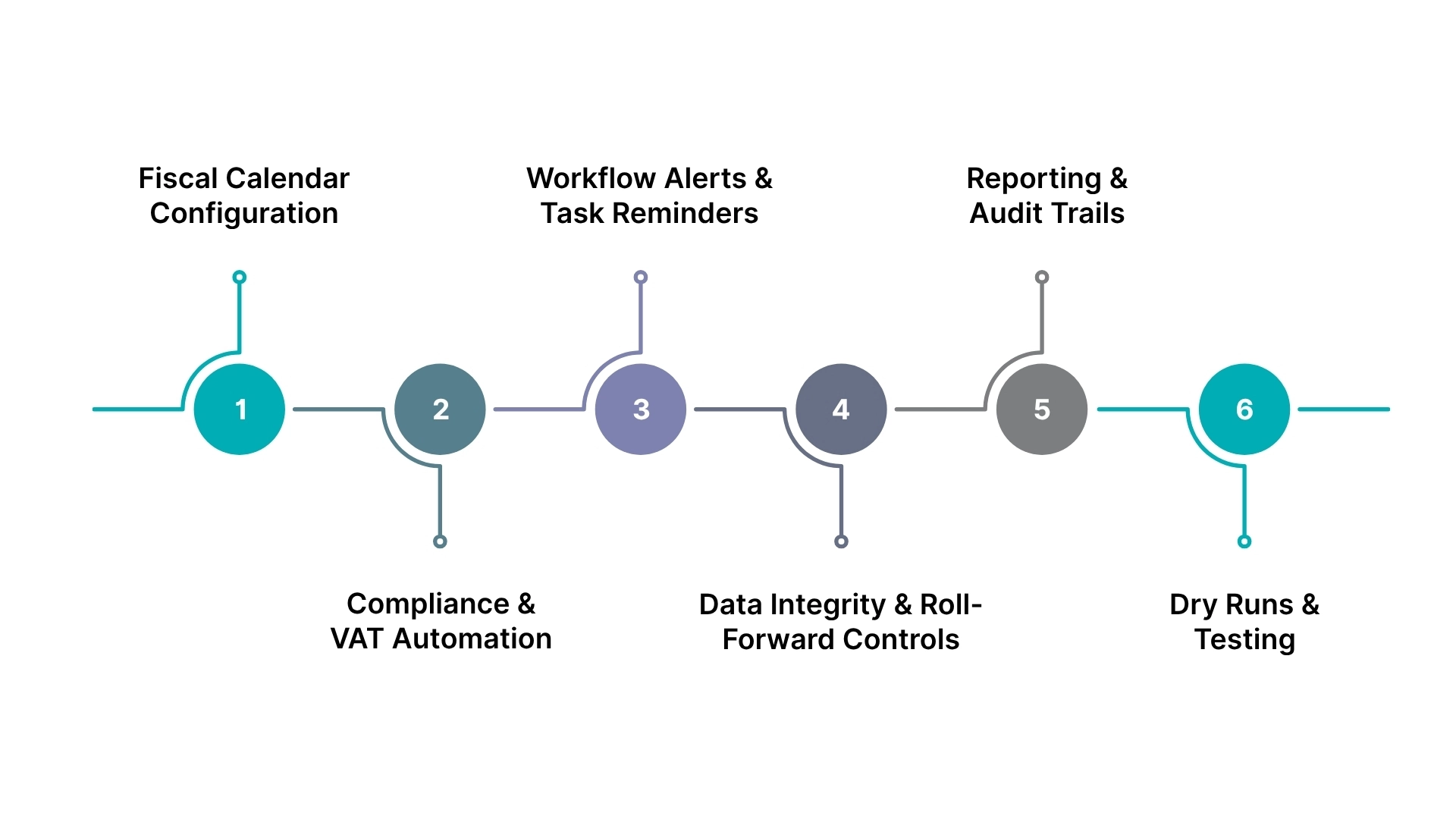
How HAL ERP Automates Fiscal Year Readiness and Compliance

How HAL ERP Automates Fiscal Year Readiness and Compliance

Managing a fiscal year transition in Saudi Arabia involves synchronizing accounting, VAT, and audit workflows within strict regulatory timelines.
HAL ERP simplifies this process through automated fiscal controls, ZATCA-compliant VAT handling, and smooth year-end rollovers, guaranteeing every business stays compliant and audit-ready without operational disruption.

Key Capabilities

  • Fiscal Calendar Configuration: Define fiscal start and end dates, create monthly or quarterly sub-periods, and lock closed years to prevent manual edits, maintaining absolute structural control.
  • Compliance & VAT Automation: Generate ZATCA-compliant VAT journals, reconcile input/output VAT ledgers, and produce audit-ready VAT summary reports aligned with Saudi fiscal timelines.
  • Workflow Alerts & Task Reminders: Receive automated alerts (email, WhatsApp, or in-ERP) for reconciliation, journal postings, and approval sign-offs, reducing delays and improving accountability.
  • Data Integrity & Roll-Forward Controls: Make sure that closing entries roll forward smoothly. All AR/AP, inventory, and banking data automatically refresh for the new fiscal cycle, eliminating manual risk.
  • Reporting & Audit Trails: Use built-in statutory and management report templates, Balance Sheet, Profit & Loss, Cash Flow, Budget vs. Actual, with complete audit trails and user logs for version control.
  • Dry Runs & Testing: Conduct two pre-closing simulations in a sandbox to validate accuracy, data integrity, and compliance settings, guaranteeing a smooth transition before actual go-live.

JCCI Achieves E-Invoicing Phase-II Compliance with HAL VAT Care

Jeddah Chamber of Commerce and Industry integrated HAL VAT Care with its Oracle EBS system to achieve instant ZATCA Phase-II compliance without disrupting existing operations.

Key ROI & Impact:

  • Instant go-live using a universal API bridge, ensuring rapid regulatory compliance.
  • Smooth database integration, handling legacy versions while maintaining top-tier security.
  • Over 300% ROI, preserving internal IT resources and enabling scalable long-term compliance.
  • Local expertise in Saudi Arabia, facilitating smooth collaboration and project execution.

HAL VAT Care provided a strong, scalable compliance architecture, automating QR code generation, cryptographic stamping, and Fatoora portal integration, empowering JCCI to achieve full Phase-II compliance efficiently and securely.

book demo

Conclusion

The Fiscal Year in Saudi Arabia provides a structured timeframe that guarantees financial discipline through consistent reporting, allows compliance readiness via aligned tax cycles, and supports decision accuracy by standardizing performance measurement periods.

Businesses that align their fiscal strategies with regulatory expectations gain more than compliance; they build credibility, agility, and long-term financial control. The difference often lies in how efficiently these cycles are managed, automated, and audited.

That is where HAL ERP transforms the process. Designed for Saudi businesses, HAL allows precise fiscal configurations, automated closings, and ZATCA-compliant reporting with unmatched reliability. If you want your Fiscal Year in Saudi Arabia to run on structure rather than stress, it’s time to modernize your system.

Book your HAL ERP demo today and experience a smooth, compliant, and audit-ready year-end close.

FAQs About Fiscal Year

1. Can a Saudi company change its fiscal year after incorporation?

Yes, but approval from the Ministry of Commerce (MoC) is required, and filings with ZATCA must reflect the new fiscal start and end dates. The company must justify the change (e.g., alignment with parent company reporting) and file transitional financial statements.

2. How does the fiscal year affect ZATCA VAT filing schedules?

While VAT returns are filed monthly or quarterly, they must align with your fiscal calendar for accurate year-end reconciliation. Any misalignment can trigger timing mismatches in VAT reporting or input credit claims.

3. Is the fiscal year the same for all Saudi government entities?

Yes, the Saudi fiscal year for government entities runs from January 1 to December 31, as defined in the Ministry of Finance Budget Circular. However, private entities may choose alternative cycles with proper regulatory documentation.

4. How does fiscal year selection impact consolidated reporting for multinational groups?

If your Saudi subsidiary uses a different fiscal year than its parent, HAL ERP’s consolidation module can auto-adjust reporting periods for group-level consistency, minimizing manual restatement work.

5. What happens if the fiscal year closing is delayed beyond the legal reporting deadline?

Delays can result in compliance penalties and delayed tax filing under ZATCA rules. Using an ERP with automated close checklists and statutory reminders guarantees timely financial closure and submission.

Issam Siddique
Issam Siddique is a visionary IT strategist and co-founder of HAL Simplify, with a dynamic career journey from Infosys to leading transformative digital solutions for Saudi businesses. Renowned for bridging business and technology, Issam combines deep ERP expertise with a keen understanding of Saudi Arabia's evolving digital ecosystem, empowering enterprises to accelerate growth and achieve operational excellence.