

ERP Built for Saudi Businesses

Request a demo
Request a demo

Shrinkage in Retail: Proven Ways Saudi Stores Cut Losses

Shrinkage in Retail: Proven Ways Saudi Stores Cut Losses

Published By

Mohammed Ali Khan
Retail
Dec 15, 2025

Retail shrinkage cuts into margins at a time when Saudi businesses are under pressure to grow faster and operate with more clarity, especially as the country pushes toward the goals of Vision 2030. Even small stock gaps hurt, and repeated losses make it harder to scale with confidence.

If you manage stores in Saudi Arabia, the pressure feels heavier during peak seasons, where missing items, pricing errors, and inaccurate counts disrupt your planning. Shrinkage forces you to question your data, your systems, and sometimes even your internal processes, which adds stress during already demanding periods.

In this blog, we’ll explore what shrinkage is, how to calculate it, its causes, practical steps to reduce it, omni-channel risks, and how HAL Retail helps you stay in control with clear visibility across outlets.

Key Takeaways:

  • Shrinkage reduces your profit by creating gaps between recorded stock and actual stock across your stores.
  • The shrinkage formula helps you accurately measure losses and track the value that disappears from your inventory.
  • Common causes include theft, vendor issues, data entry mistakes, damaged goods, and supply chain gaps in Saudi retail operations.
  • Stronger controls, frequent counts, trained teams, and real-time tracking tools help reduce shrinkage across outlets.
  • HAL Retail supports retailers with clearer visibility, connected branches, and tools that reduce stock gaps across all channels.

What Is Shrinkage in Retail?

Inventory shrinkage refers to the gap between the stock recorded in your system and the stock physically available on your shelves, which directly affects your profitability and overall control. Retailers across Saudi Arabia face this issue when items disappear due to theft, damage, counting errors, or supplier inaccuracies, creating unexpected stock gaps.

For example, your system may show 120 units of a product, while your team finds only 110 during a routine check, revealing a loss that affects your planning and decision-making. These small gaps build pressure on your margins, especially when they repeat across outlets or during fast-moving sales periods.

After understanding the concept, it becomes much easier to calculate shrinkage using a simple method that gives you clear visibility.

book demo

How to Calculate What Is Shrinkage in Retail Inventory?

Understanding how to measure shrinkage helps you identify where losses occur and provides a clear starting point for correcting stock issues. This simple process lets you track gaps with more confidence and act before small losses grow.

Here’s a clear breakdown of the steps involved:

  1. Start with your recorded inventory value, which represents the total stock expected based on your system data over a specific period. This number usually comes from your POS or ERP reports and reflects purchased and received goods.
  2. Conduct a physical count, ensuring your team checks every item across shelves, storage rooms, and secondary locations to confirm the actual quantity available. This step reveals gaps that may not appear in your system records.
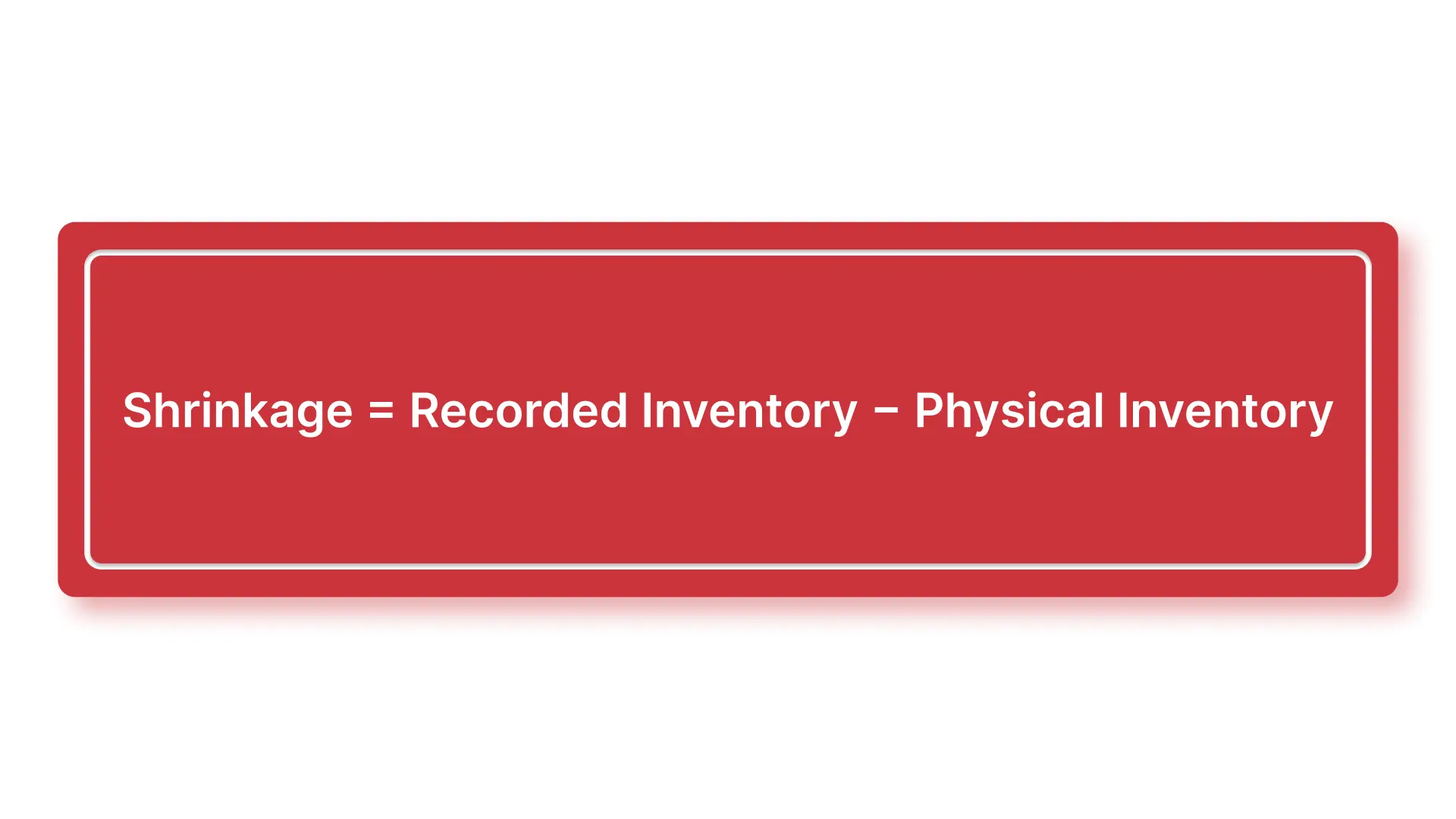
  3. Use the shrinkage formula, which compares your recorded inventory value with the physical inventory value to highlight the exact loss amount for that period.

Formula: Shrinkage = Recorded Inventory − Physical Inventory
Formula: Shrinkage
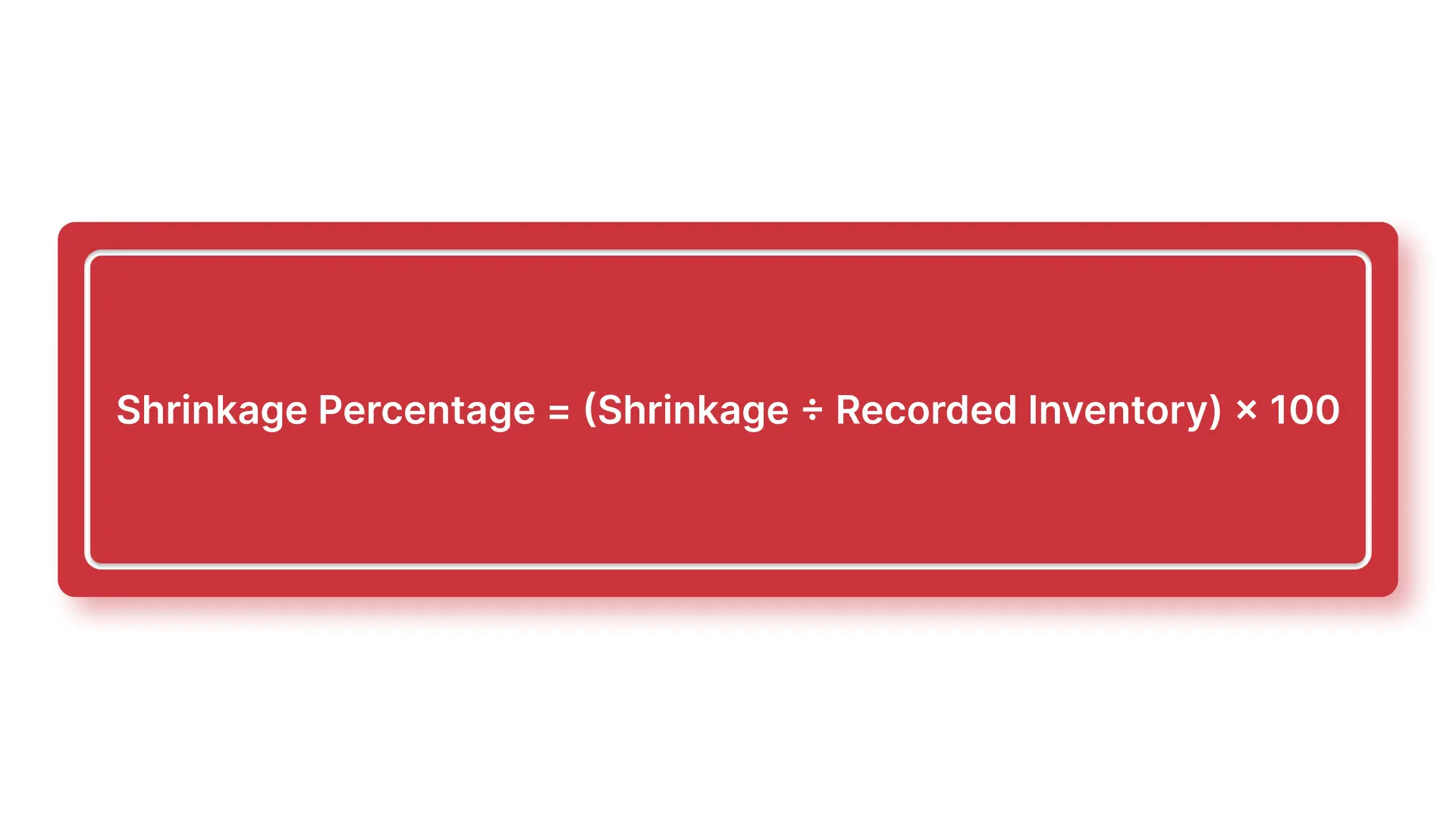
  1. Convert the loss to a percentage to gain clearer visibility into how much of your stock disappeared relative to your total inventory value.

Formula:  Shrinkage Percentage = (Shrinkage ÷ Recorded Inventory) × 100
Formula:  Shrinkage Percentage

Example: If your system shows stock worth SAR 150,000 and your physical count totals SAR 145,000, your shrinkage is SAR 5,000, which equals a 3.3 percent loss.

After identifying shrinkage, it becomes crucial to understand how the numbers influence your planning and day-to-day decisions.

Also Read: How to Calculate Cost of Goods Sold (COGS) Effectively
Why Tracking Shrinkage Matters for Retail

Tracking shrinkage helps you understand where losses occur and how these gaps affect your business beyond missing stock numbers. When shrinkage goes unreported, it slowly erodes your margins, disrupts planning, and creates stress across your operation.

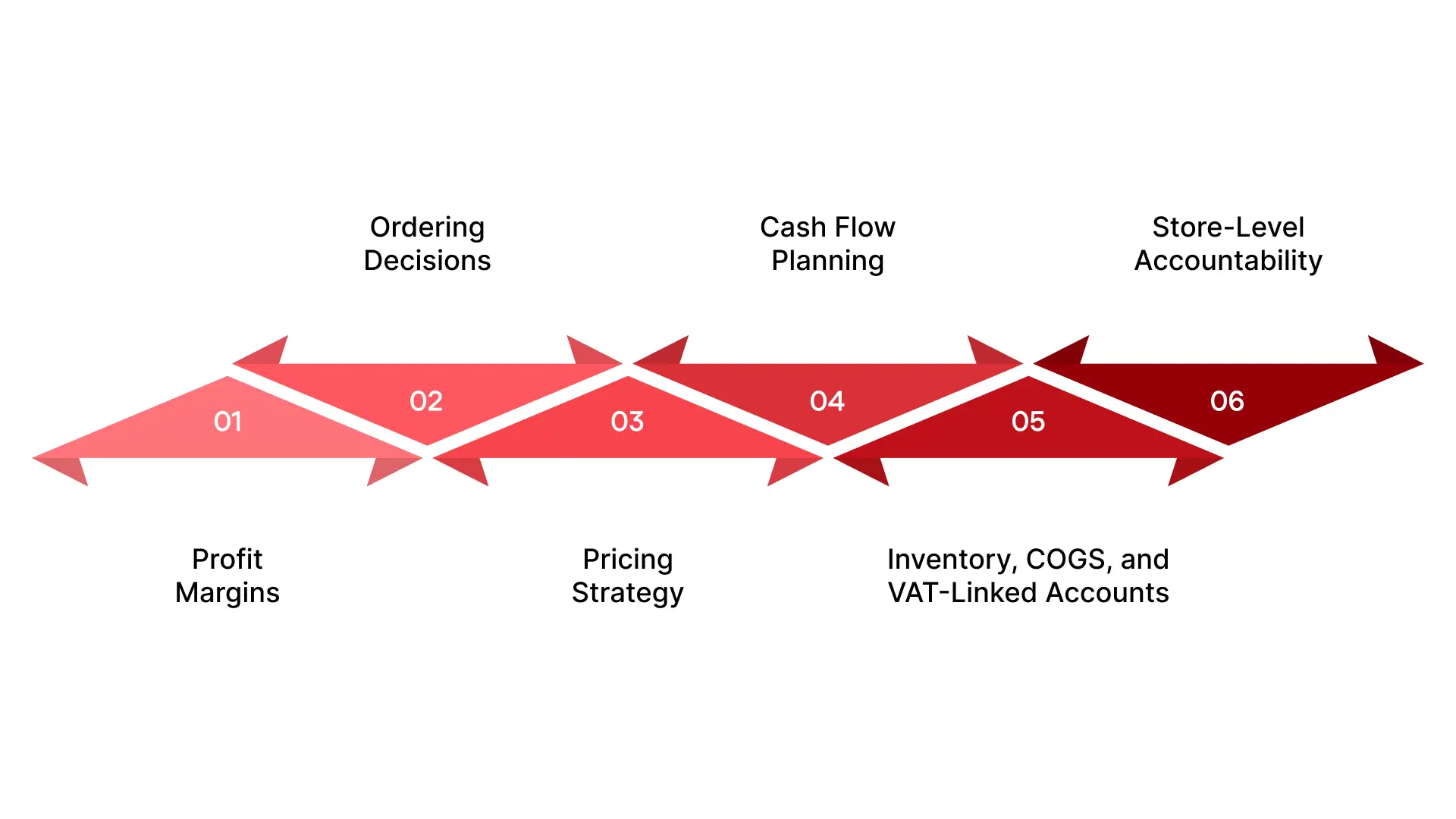
To show how broad the impact can be, here is a clear breakdown of the areas and accounts affected by shrinkage reporting:

  • Profit Margins: Lost items reduce revenue without reducing costs, placing pressure on your profit figures and creating silent gaps in your financial records.
  • Ordering Decisions: Wrong stock figures push you to purchase items you may not need, or delay items you urgently require, affecting your sales consistency.
  • Pricing Strategy: Shrinkage affects cost calculations, leading to sudden, unplanned adjustments that confuse customers and disrupt your store's performance.
  • Cash Flow Planning: Missing inventory reduces your expected returns, disrupts cash flow, and creates stress during busy retail periods.
  • Inventory, COGS, and VAT-Linked Accounts: Shrinkage distorts these accounts by reducing recorded stock and increasing cost discrepancies, affecting VAT accuracy and complicating ZATCA audits for your stores.
  • Store-Level Accountability: Reporting makes it easier to identify repeated patterns in specific branches, helping you act early and reduce ongoing issues.

Understanding the effect naturally leads to examining the root causes of recurring stock gaps across your locations.

Keep your VAT and ZATCA records clean with HAL VATCare. Book a quick demo to see how easy compliance can be.

book demo

What Drives Shrinkage in Saudi Retail Stores

Shrinkage occurs when the stock on your shelves no longer matches the stock recorded in your system, resulting in losses that slowly erode your margins. These gaps often build over time, and many retailers only notice the impact once the numbers start hurting their monthly performance.

To help you understand where these losses come from, here is a clear breakdown of the most common causes affecting retail stores across Saudi Arabia:

  • External Theft: Missing items often result from customer theft during busy hours, especially when store layouts create blind spots or staff members are occupied.
  • Internal Theft: Employees with direct access to stockrooms or POS terminals may take items or manipulate records, creating losses that are harder to detect.
  • Vendor Fraud: Incorrect deliveries, inflated invoices, or unrecorded returns can create stock gaps that stay hidden until your team conducts a detailed count.
  • Administrative Errors: Mistakes during receiving, pricing, data entry, or stock transfers can create inaccurate records that misrepresent your actual inventory levels.
  • Damaged or Expired Items: Products lost due to breakage, handling issues, or expired dates are deducted from your available stock but do not appear as sales.
  • Regional Supply Chain Gaps: Retailers in Saudi Arabia sometimes face delivery delays, mixed shipments, or inaccurate supplier counts, which increase shrinkage risk across multiple outlets.

Understanding the reasons behind shrinkage makes it easier to implement practical actions that reduce risk across all store locations.
6 Practical Ways to Cut Shrinkage in Retail

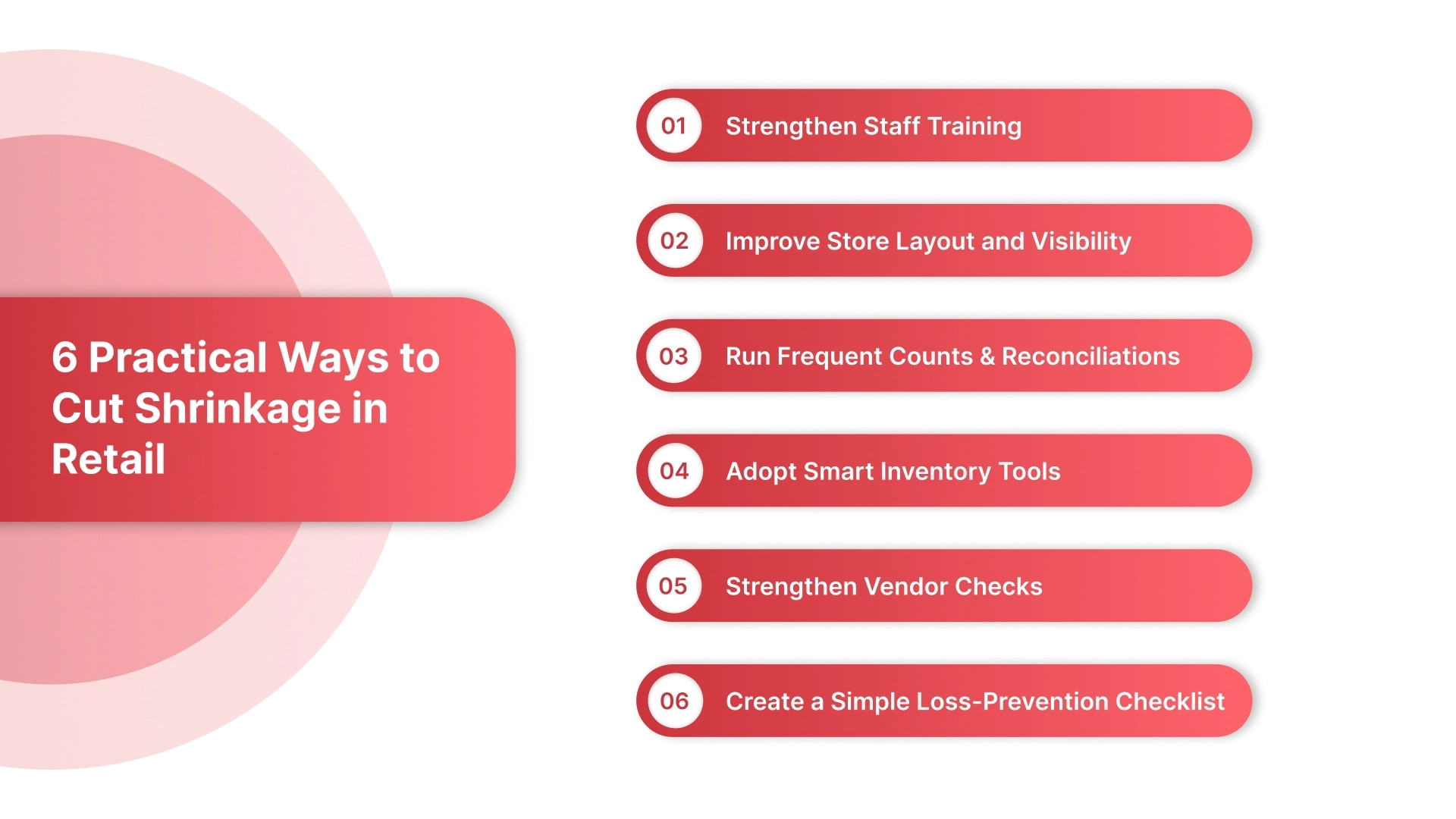
6 Practical Ways to Cut Shrinkage in Retail

Reducing shrinkage starts with understanding where losses occur and building habits that keep your stock accurate across all outlets. When these practices stay consistent, your team gains more control, and your stores experience fewer surprises during audits or busy sales periods.

To support your efforts, here are practical measures that help you limit shrinkage and create stronger visibility across your retail operations:

  1. Strengthen Staff Training: Clear rules on stock handling, POS billing, and customer service help your team reduce mistakes and spot early signs of suspicious activity during daily tasks.
  2. Improve Store Layout and Visibility: Organized shelves, clear sight lines, and key product placement make it easier for your team to monitor movement and reduce unnoticed lifting of items.
  3. Run Frequent Counts and Reconciliations: Smaller cycle counts between major audits help you catch errors quickly, allowing you to correct gaps before they spread across your branches.
  4. Adopt Smart Inventory Tools: Systems with real-time tracking, such as HAL ERP, help you see item movement across outlets and reduce gaps created by manual data entry.
  5. Strengthen Vendor Checks: Verify quantities at receipt, document returns, and establish clear agreements with suppliers to avoid inaccurate deliveries that affect your stock.
  6. Create a Simple Loss-Prevention Checklist: A short routine covering stock checks, POS reviews, opening duties, and closing tasks helps your team stay consistent without adding pressure.

As retail expands across multiple channels, new challenges appear, creating additional points where shrinkage can grow without warning.

Also Read: 5 Proven ERP Implementation Strategies To Ensure Success

How Omni-Channel Sales Increase Shrinkage

How Omni-Channel Sales Increase Shrinkage

Retailers offering both online and in-store sales face added challenges, especially when stock moves quickly between channels. These gaps appear when orders, returns, and transfers happen faster than your team can update records, creating confusion that affects your store's performance.

To help you understand where these issues come from, here is a clear breakdown of the risks linked to omni-channel operations:

  • Online Return Errors: Items returned through delivery partners or drop-off points may arrive at your store with missing details, creating gaps in your stock records.
  • BOPIS Mismatches: Buy online, pickup in store orders often cause stock shortages when system counts do not match actual availability on your shelves.
  • Shipping and Fulfillment Delays: Slow or inaccurate shipments cause unexpected gaps, especially when stock is marked as delivered but has not arrived at your outlet.
  • Overlapping Sales Channels: Selling across websites, POS counters, and social platforms creates timing gaps that lead to double-counting or missing items.
  • Limited Tracking Tools: Stores without real-time tracking face higher risks, which is why systems like HAL ERP help by updating stock as it moves across channels.

To address these issues with confidence, many retailers turn to tools that offer clear visibility across stock, pricing, and sales channels.
How HAL Retail Helps You Reduce Shrinkage and Unify Store Operations

How HAL Retail Helps You Reduce Shrinkage and Unify Store Operations

Retailers need clear visibility across all outlets to reduce losses and maintain accurate stock levels during busy periods. HAL Retail supports this need by giving your team tools that track movement, improve accuracy, and keep your operations connected across every channel.

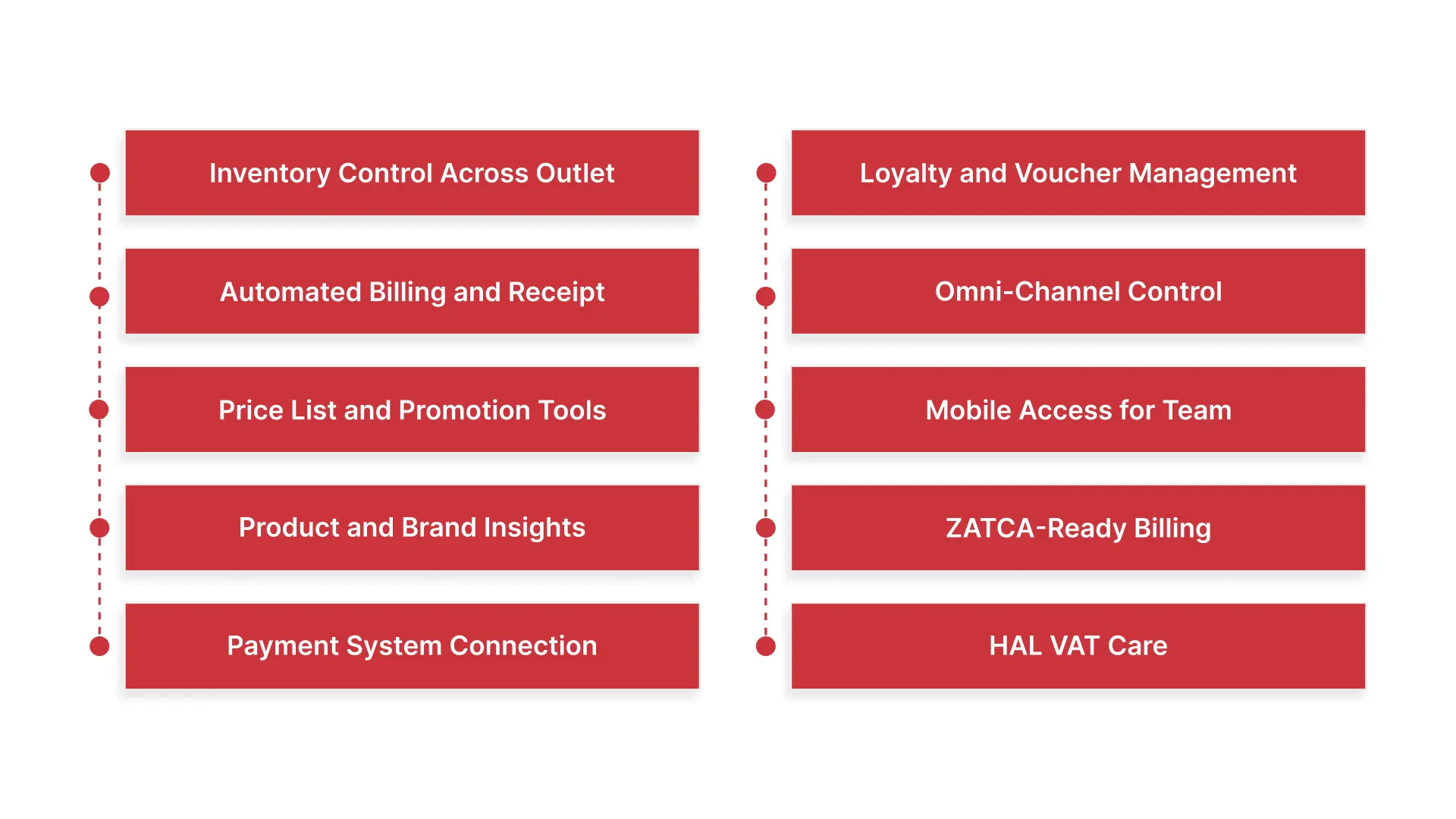
To help you see how B2B enterprise-grade, ZATCA-compliant HAL ERP supports your daily work, here are key features that strengthen control and reduce risks across your stores:

  • Inventory Control Across Outlets: You can easily track item movement between branches, reducing stock gaps caused by transfers, delays, or counting errors.
  • Automated Billing and Receipts: Digital receipts sent through WhatsApp or email help improve record accuracy and prevent billing errors that affect stock values.
  • Price List and Promotion Tools: You can manage pricing across stores without confusion, eliminating gaps caused by manual entries or outdated pricing sheets.
  • Product and Brand Insights: Clear reports show item performance across outlets, helping you spot shrinkage patterns linked to fast-moving or high-risk categories.
  • Payment System Connections: HAL Retail works with payment terminals such as Geidea, ANB, and Al Rajhi to reduce errors during cash handling.
  • Loyalty and Voucher Management: Customer rewards and coupon tools help you control promotional stock and avoid mismatches during busy campaigns.
  • Omni-Channel Control: HAL Retail integrates online and offline sales, helping your team reduce errors caused by separate systems.
  • Mobile Access for Teams: Staff can check stock, confirm transfers, and track store activity from their mobile devices, helping reduce mistakes during daily operations.
  • ZATCA-Ready Billing: HAL Retail prepares receipts and invoices that meet ZATCA e-invoicing requirements, reducing store-level errors caused by manual formats or outdated systems.
  • HAL VAT Care: This module helps your team manage VAT correctly, reducing errors that affect pricing accuracy, tax reporting, and branch-level stock valuations.

To show how these features work in real situations, here is a closer look at a retail group that experienced measurable improvements with HAL Retail.
Case Study: Al Homaidhi Group

Case Study: Al Homaidhi Group

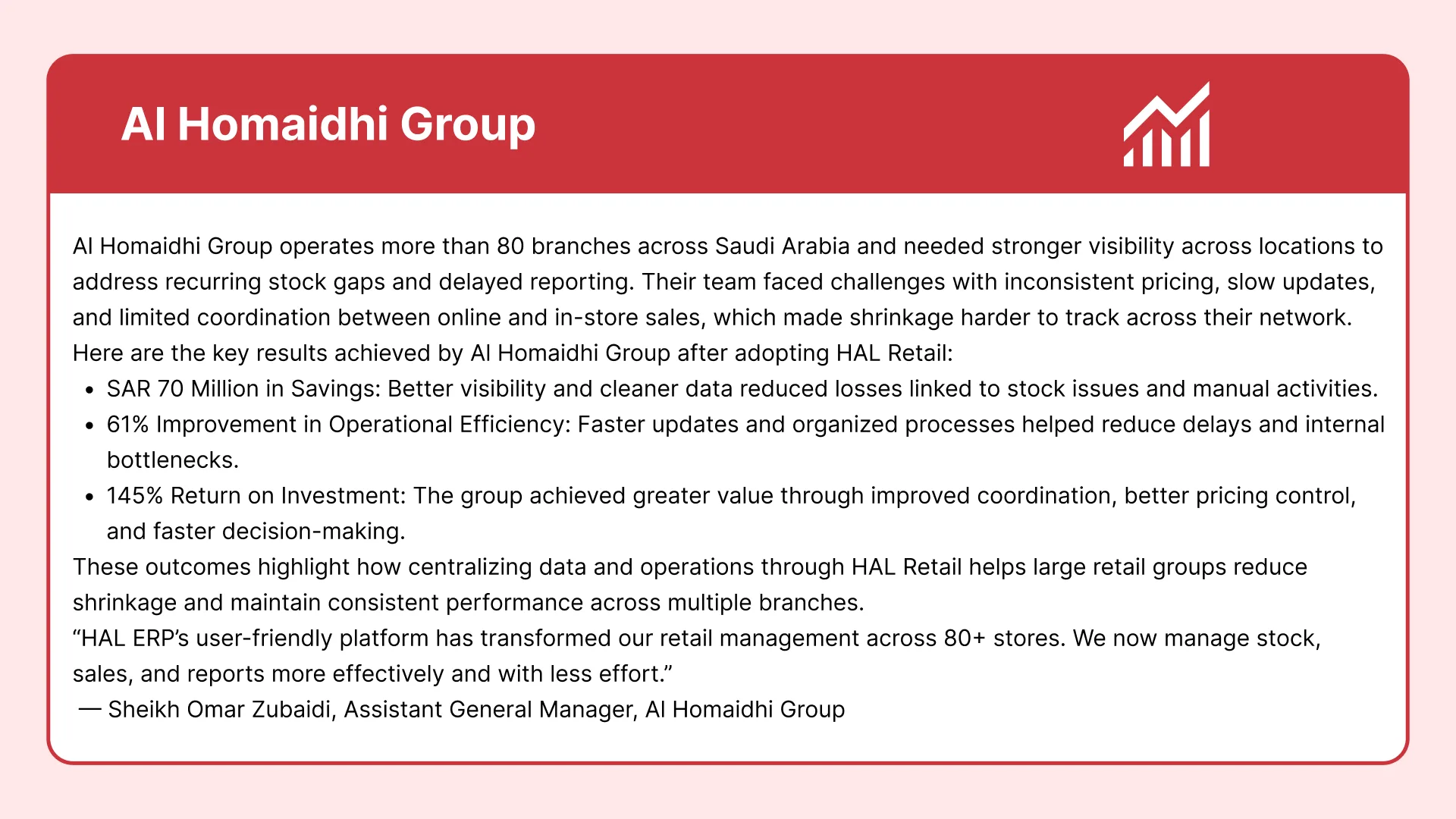
Al Homaidhi Group operates more than 80 branches across Saudi Arabia and needed stronger visibility across locations to address recurring stock gaps and delayed reporting. Their team faced challenges with inconsistent pricing, slow updates, and limited coordination between online and in-store sales, which made shrinkage harder to track across their network.

Here are the key results achieved by Al Homaidhi Group after adopting HAL Retail:

  • SAR 70 Million in Savings: Better visibility and cleaner data reduced losses linked to stock issues and manual activities.
  • 61% Improvement in Operational Efficiency: Faster updates and organized processes helped reduce delays and internal bottlenecks.
  • 145% Return on Investment: The group achieved greater value through improved coordination, better pricing control, and faster decision-making.

These outcomes highlight how centralizing data and operations through HAL Retail helps large retail groups reduce shrinkage and maintain consistent performance across multiple branches.

“HAL ERP’s user-friendly platform has transformed our retail management across 80+ stores. We now manage stock, sales, and reports more effectively and with less effort.”

 — Sheikh Omar Zubaidi, Assistant General Manager, Al Homaidhi Group

These features help your staff work with confidence across locations, giving you better awareness of shrinkage risks before they disrupt your performance.

Conclusion

Shrinkage affects your margins, slows your growth, and creates ongoing pressure across your stores, mainly when teams rely on scattered data. Transparent reporting, stronger controls, and better visibility help you reduce losses and protect your inventory across every outlet.

If you want stronger accuracy, connected branches, and clearer insights across your retail network, HAL Retail gives you the tools to manage stock, pricing, and sales with confidence.

Book your free HAL Retail demo today and see how a connected system can support your stores, strengthen your operations, and reduce losses across all locations.

FAQs

1. How often should retailers in Saudi Arabia review shrinkage reports?

Most retailers find value in reviewing shrinkage reports every month, as this timing helps highlight early patterns without overwhelming store teams with extra work.

2. Can shrinkage affect supplier negotiations or contract terms?

Yes, repeated discrepancies can affect your relationship with suppliers, especially when missing items appear frequently and require regular adjustments during invoice checks.

3. Are certain product categories more prone to shrinkage than others?

Yes, items with higher resale value or smaller packaging tend to disappear faster, especially when displayed near exits or in crowded store sections.

4. Does store layout play a role in preventing shrinkage?

Store layout plays a major role because blocked sight lines, crowded shelves, and poorly placed displays create quiet zones where items can disappear without being noticed.

5. Can retail teams reduce shrinkage without significant investments?

Yes, small steps such as improving price accuracy, tightening stock movement logs, and assigning clear duties during opening and closing can effectively reduce gaps.


Mohammed Ali Khan
Mohammed Ali Khan is a seasoned ERP Implementation Consultant with over 100 successful projects across Saudi Arabia. With expertise across diverse industries, he has spearheaded large-scale implementations for customers across Construction/Contracting and Retail industries, to name a few. He is fluent with regional challenges and Saudi-specific compliance requirements.