

CRM in sales has become a baseline requirement for small and mid-sized businesses in Saudi Arabia. As competition intensifies under Vision 2030, the ability to track leads, manage follow-ups, and maintain pipeline visibility directly impacts revenue outcomes.
Yet execution is where most teams struggle. Leads live in spreadsheets, follow-ups rely on memory, and pipeline updates lag behind reality. According to Monsha’at, SMEs will contribute nearly 35% of Saudi Arabia’s GDP by 2030, but many still operate on fragmented sales systems that create missed opportunities and inconsistent deal tracking.
This blog explores what a CRM in sales actually does, how it improves conversion, and what KSA teams should prioritize in 2026.
A sales CRM is the system that captures and manages every customer interaction, from the first inbound lead to the final deal, and everything that follows. It logs calls, emails, meetings, and deal stages. It tracks commitments. It shows what’s progressing and what’s stuck.
That’s different from a general-purpose CRM built for support or marketing workflows. A sales CRM is built around one outcome: revenue. Every feature is designed to help reps move deals forward with more consistency and less friction.
At a basic level, it does three things:
That’s the foundation. What changes in practice are more concrete, and that’s where the next section comes in.
Understanding what CRM does is one thing. Seeing how it changes day-to-day sales operations is what actually makes the case for it.
Sales teams lose deals when information is scattered. A rep leaves, and nobody knows the history of a key account. A follow-up gets missed because it was tracked in a personal email. A manager can't assess a deal because the context lives in someone's notes app.
A CRM fixes this by creating a single record for every contact, every email, call, meeting, and stage change logged in one place, visible to anyone who needs it.
A spreadsheet shows you what someone entered last week. A CRM shows you where every deal stands right now. Which ones haven't moved in ten days. Which ones are close to closing. Where the bottlenecks are.
That visibility is what turns a sales manager from someone who asks for updates into someone who spots problems before they cost deals.
Most leads don't go cold because the rep stopped caring. They go cold because there are too many to track manually. A CRM sets automatic reminders, sends follow-up messages at the right time, and flags leads that haven't been touched, so nothing slips through.
Not every lead deserves equal attention. A CRM with AI-powered lead scoring tells reps which prospects are most engaged, which are most likely to convert, and which ones can wait, so time goes to deals with real momentum.
In many KSA businesses, the time between "the client is ready" and "the quote is sent" is longer than it should be. Approval chains, manual pricing lookups, disconnected inventory data, and these add days. A CRM with integrated workflows compresses that gap.
A CRM doesn't just track what happened. It tells leadership what's likely to happen, based on sales pipeline size, deal stage, historical close rates, and rep performance. That's the difference between a revenue target and a defensible revenue forecast.
This is where most standalone CRMs fall short. A deal can close in the CRM while inventory is out of stock, finance hasn't been notified, and the delivery team has no idea. An ERP-integrated CRM like HAL connects all of that, so when a deal closes, the rest of the business knows about it automatically.
Also Read: 10 Proven Strategies for Shortening the Sales Cycle in 2026
These seven shifts are only possible if the CRM has the right foundation built in. Here's what that actually looks like.
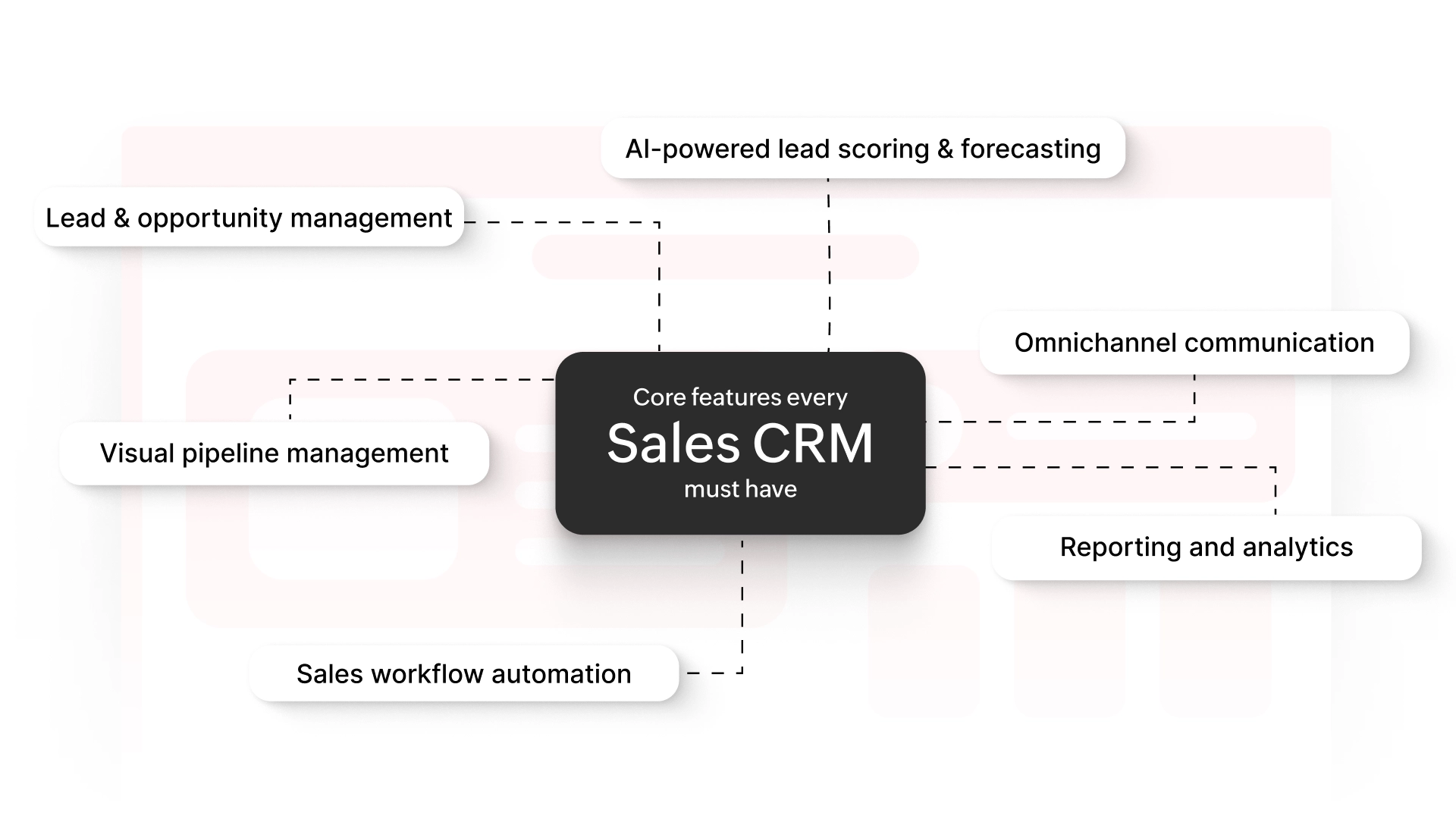
As sales teams in KSA grow more complex, the bar for what "functional" looks like has moved. These are the six features that actually matter.
These features are the baseline. But here's the issue. Even a CRM that checks every box on this list can still create problems if it operates in isolation from the rest of the business.
A standalone CRM fixes the spreadsheet problem. What it doesn’t fix is the disconnect between sales and the rest of the business—and as teams grow, that gap becomes expensive.
Here’s where it starts to break:
The issue isn’t the CRM itself. It’s the lack of integration. What growing teams need is a system where sales, finance, and operations work from the same real-time data, so when a deal closes, the next step happens automatically across the business.
That shift changes how you evaluate vendors and what actually matters in the KSA market.
Not all CRM tools are built equal, and in Saudi Arabia, the gap widens further when you factor in ZATCA compliance, Arabic language support, and the need to connect sales with real-time operations.
Here are the five ERP-native CRM vendors KSA sales businesses are choosing in 2026:
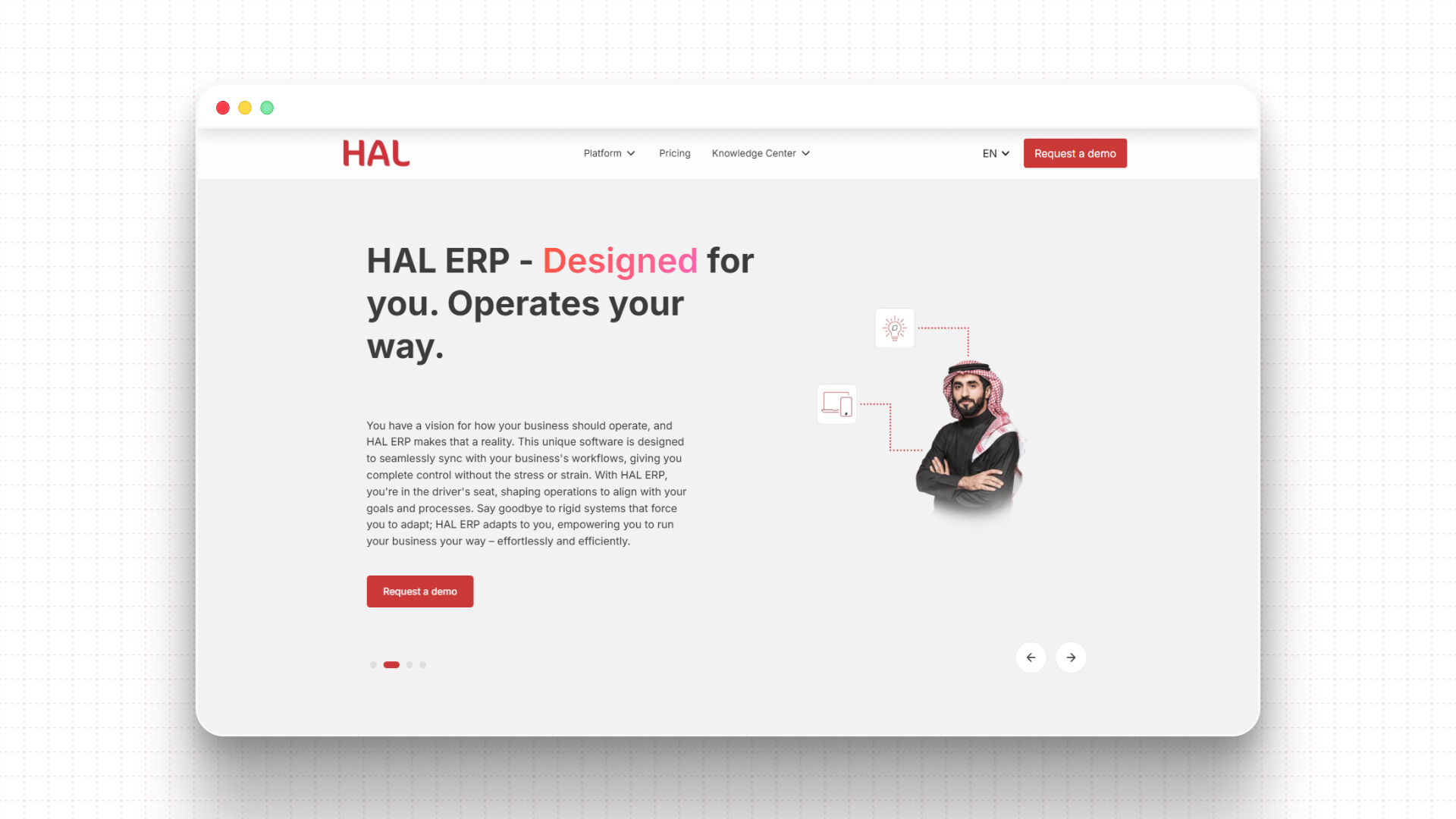
In HAL ERP, its CRM module is fully integrated with inventory, finance, procurement, and HR inside a single system. Sales reps get real-time stock availability while quoting, finance teams see deal data the moment a sale closes, and leadership gets pipeline visibility without switching tabs.
Also, HAL's agentic AI auto-scores leads, flags at-risk deals, and triggers WhatsApp follow-ups based on prospect behaviour. Native ZATCA Phase 2 compliance removes the invoice-to-approval friction that slows down most KSA B2B sales cycles.
Best for: Saudi SMEs and growing mid-market businesses in contracting, manufacturing, or trading that need a sales CRM, ERP, and ZATCA compliance in one system, without enterprise-level cost or implementation risk.
Case Study: Al Homaidhi Group
Al Homaidhi Group, a prominent luxury retailer in Saudi Arabia, was running on legacy systems that delayed reporting by a week, made dynamic pricing across stores difficult to manage, and had no way to connect its online and offline operations.
After implementing HAL ERP, they shifted from weekly to real-time reporting. Sales managers could see store-level data instantly and adjust pricing decisions the same day. The outcome:
HAL's system integrated WhatsApp invoicing, e-commerce via WooCommerce, and multiple payment gateways, all connected to the same CRM and ERP backend.
If your business is at a similar inflection point, outgrowing your current setup but not ready for a full enterprise rollout, book a demo to see how the CRM fits your sales process specifically.
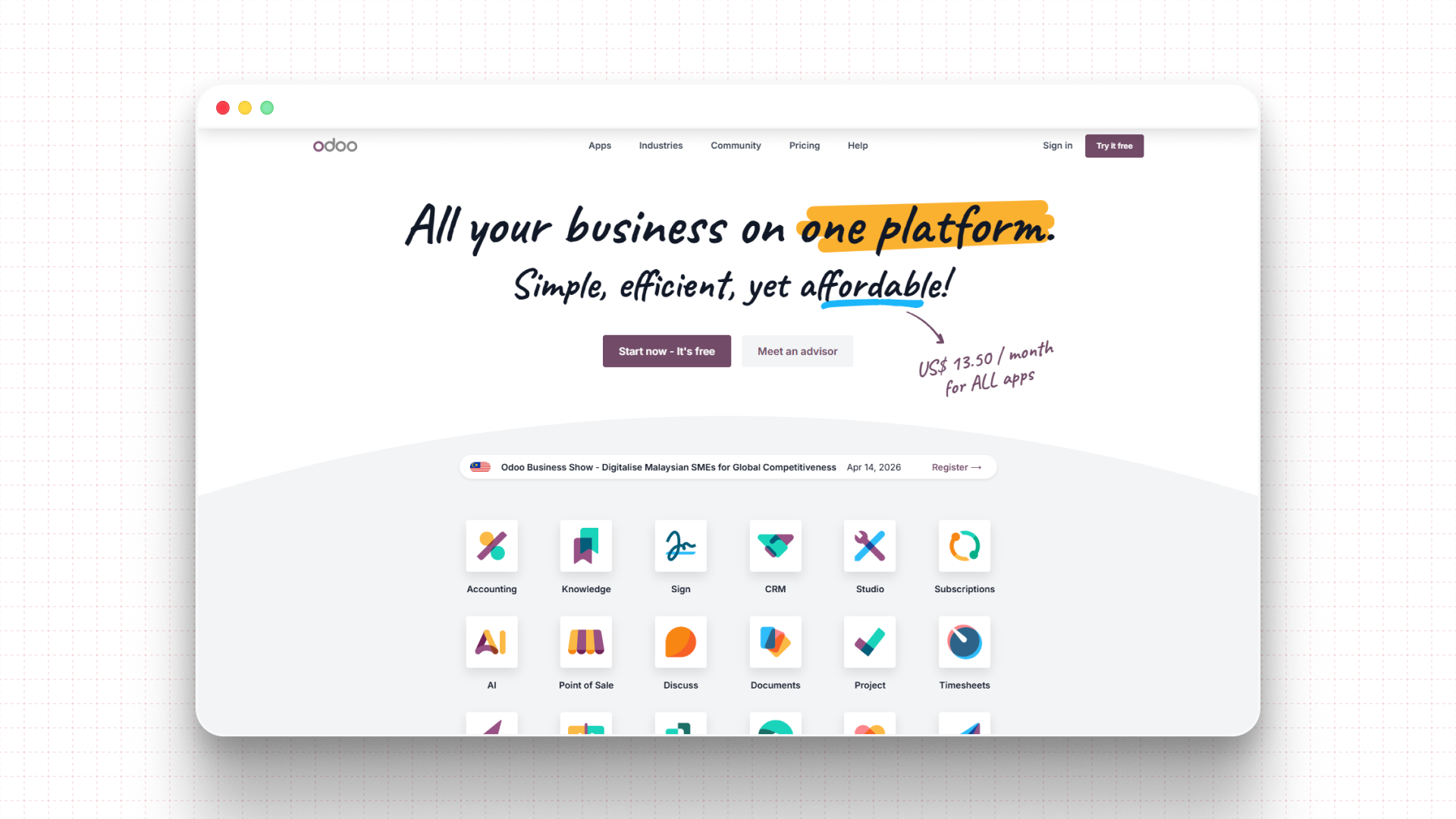
Open Source ERP and CRM | Odoo
Odoo is the most widely adopted modular ERP in Saudi Arabia, with 204 certified local partners, the second-highest country partner count globally. Its CRM module handles lead management, pipeline tracking, email automation, and activity scheduling, and connects natively with Odoo's inventory, accounting, and purchase modules.
For KSA businesses, Odoo supports Arabic interfaces, SADAD and Mada payment integration, and VAT compliance, though ZATCA Phase 2 e-invoicing usually requires a partner-configured add-on rather than a native build.
Strengths vs. Limitations
Best for: KSA SMEs and growing businesses wanting a flexible, modular ERP with a proven local ecosystem, especially in retail, e-commerce (Salla, Zid, Shopify), and distribution.
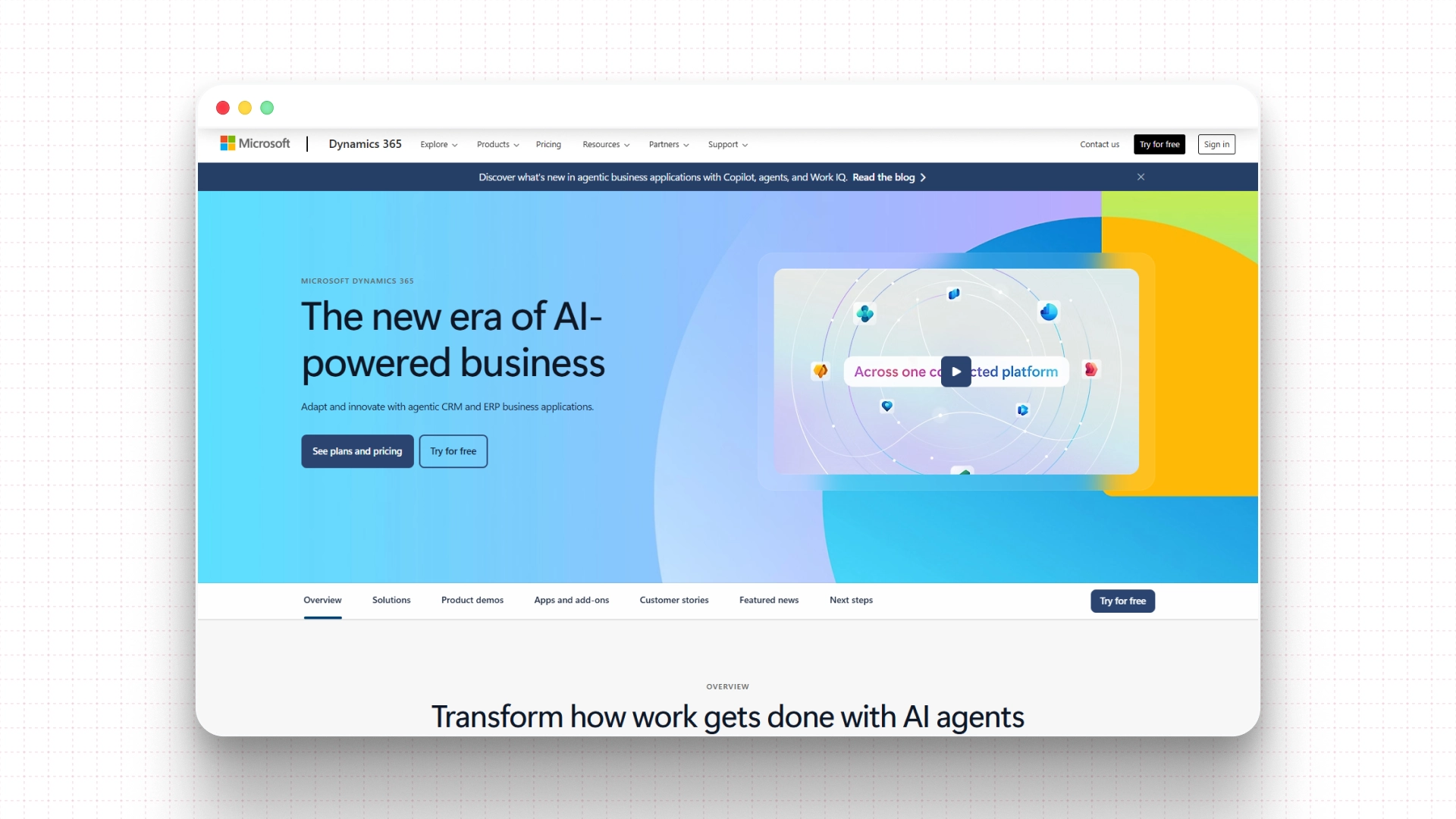
Agentic CRM and ERP Solutions | Microsoft Dynamics 365
Microsoft Dynamics 365 combines ERP (Business Central / Finance & Operations) and CRM (Sales, Customer Service) in one cloud ecosystem powered by Azure. For KSA enterprises already running Microsoft 365, Teams, and Power BI, the integration benefits are significant.
Dynamics 365 Sales includes AI-assisted deal scoring, pipeline forecasting, and automated follow-ups via Microsoft Copilot. It has an established presence in Saudi Arabia and supports Arabic, though ZATCA Phase 2 compliance is typically delivered via certified Microsoft partners rather than the core product.
Strengths vs. Limitations
Best for: Mid-to-large KSA enterprises already invested in the Microsoft ecosystem that need a comprehensive ERP-CRM under one vendor with strong AI and BI capabilities.
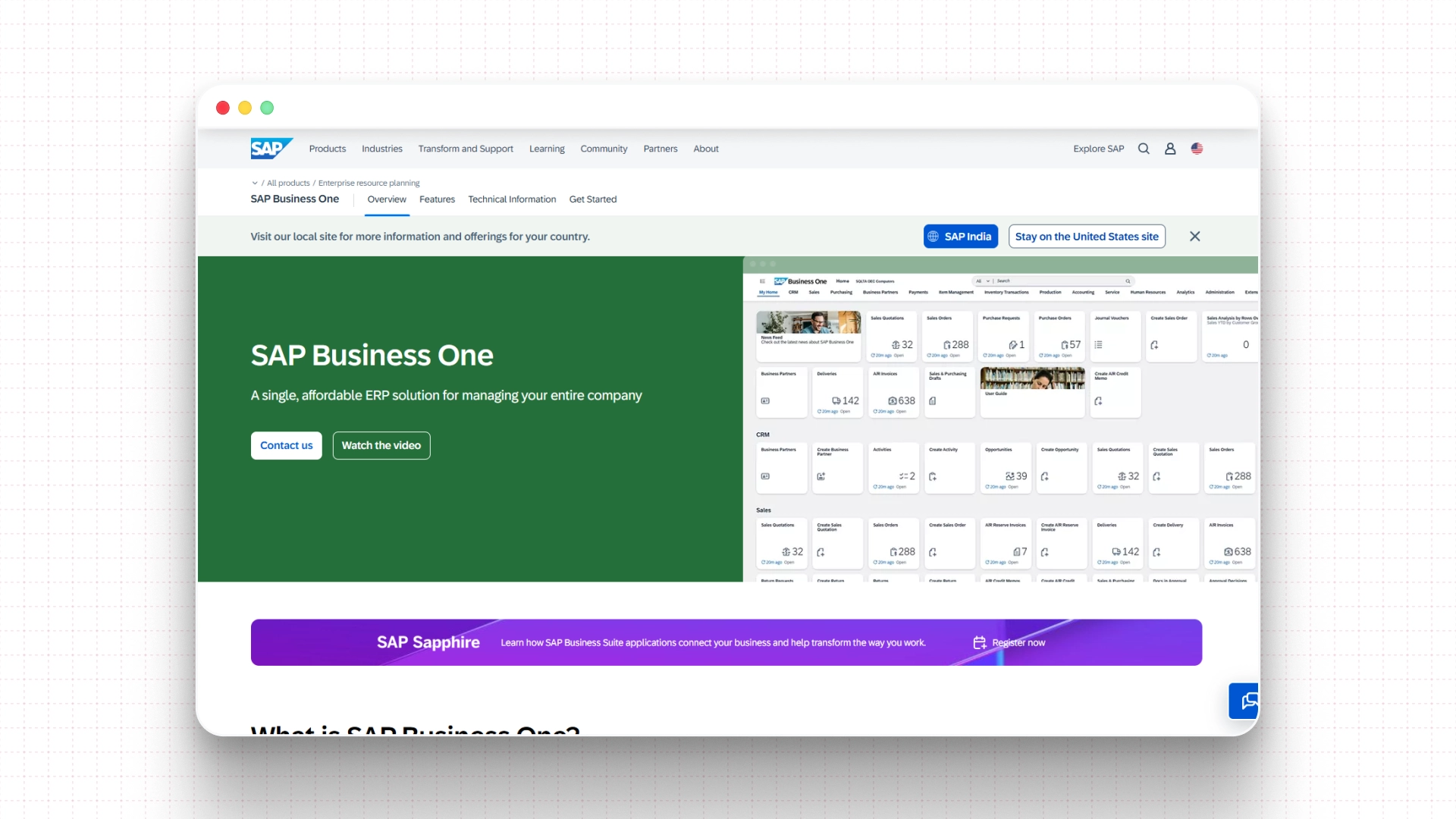
SAP Business One | ERP Software for Small Businesses
SAP Business One (SAP B1) is SAP's mid-market offering, sitting between entry-level accounting tools and the full S/4HANA enterprise suite. Its CRM capabilities cover contact management, sales opportunity tracking, and activity logging, all connected to SAP's financial and inventory backbone.
In Saudi Arabia, SAP has a well-established partner network, and KSA-certified partners can configure ZATCA compliance. For large, complex operations requiring multi-entity consolidation, advanced reporting, and global standards, SAP B1 remains a top choice, but it comes with a significant budget and implementation timeline requirement.
Strengths vs. Limitations
Best for: Large KSA enterprises, multi-entity groups, or businesses with board-level governance requirements and the budget and IT resources to match.
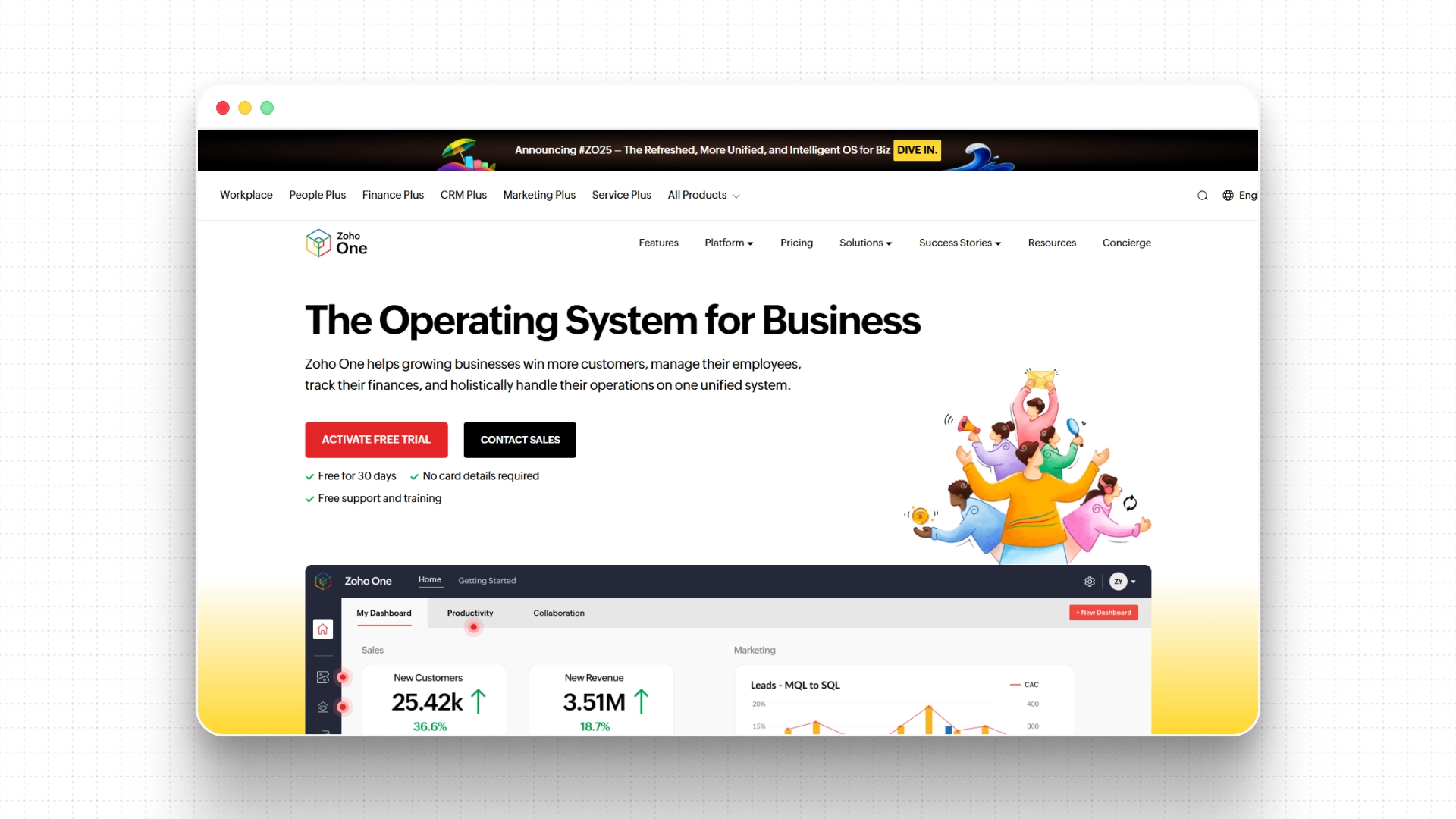
Zoho One | The Operating System for Business
Zoho CRM is one of the most popular standalone CRM tools in KSA, with strong SME adoption driven by its affordable pricing and Arabic interface. Its Zia AI assistant provides lead scoring, churn prediction, and sales trend analysis.
Zoho One bundles 40+ business apps, including CRM, accounting, HR, inventory, and marketing automation, giving SMEs an ERP-like ecosystem at a fraction of enterprise cost. WhatsApp Business API integration is native, which is a significant advantage for Saudi sales teams.
Strengths vs. Limitations
Best for: KSA startups, small businesses, or service-based teams that need an affordable, feature-rich CRM with strong Arabic and WhatsApp support, and are not yet at the stage where full ERP integration is critical.
Knowing which vendors exist is one part of the decision. Knowing how to evaluate them for your specific situation is the other.
Also Read: How to Integrate Agentic AI into CRM Systems: Strategy, Architecture, and Use Cases
The right CRM isn't the one with the longest feature list. It's the one that fits how your sales team actually works, and where your business is heading.
Here's a practical five-step framework.
For growing SMEs in Saudi Arabia, a sales CRM is the system that turns a reactive sales process into a structured one.
Also Read: 13 Reasons Your Sales Will Skyrocket With the Right CRM
CRM is sales organizes leads, automates follow-ups, gives visibility and connects sales outcomes to the rest of the business. For KSA businesses that have outgrown spreadsheets and standalone tools, HAL ERP's integrated CRM is built specifically for this environment.
HAL is not a sales tool bolted onto an ERP. It's a single platform where your sales pipeline, inventory, finance, and ZATCA-compliant invoicing run together. And every follow-up, approval, and WhatsApp message is tracked in one system.
If you're ready to see what an ERP-native CRM looks like for your business, get in touch today.
A CRM manages the customer-facing side of the business, leads, deals, communication, and pipeline. An ERP manages the operational side, inventory, finance, HR, and procurement. The difference matters in sales because many deals require operational data (stock availability, credit limits, delivery timelines) that a standalone CRM doesn't have access to. An ERP-integrated CRM gives sales teams that visibility without switching systems.
It removes the administrative tasks that pull reps away from selling, manual follow-ups, deal tracking, reporting, and replaces them with automated workflows and real-time data. Reps spend more time in front of prospects and less time updating spreadsheets.
The sales cycle in a CRM is the defined path a deal takes from first contact to close, typically captured as pipeline stages like Lead, Qualified, Proposal, Negotiation, and Closed. A CRM tracks every deal's position in the cycle and flags where deals are stalling.
Yes, particularly for SMEs that have grown beyond manual processes but haven't yet invested in a full ERP. A CRM gives small teams the structure and automation they need to handle more deals without adding headcount. For mid-sized businesses, the value increases further when CRM is connected to ERP, eliminating the data gaps that slow down billing and fulfillment.
By using it to shorten response times, prioritize high-value leads, automate follow-ups, and track which deal stages have the highest drop-off rates. The data a CRM generates is as valuable as the automation it provides, it tells you exactly where your sales process is leaking.
Yes, and that's the original purpose. A sales CRM maintains the full history of every customer interaction, so any rep can pick up a conversation where it left off, personalize outreach based on past behavior, and identify upsell or renewal opportunities without starting from scratch.






.jpg)