

هل تدير شركة إنشاءات في المملكة العربية السعودية وما زلت تُجري الرواتب باستخدام Excel أو WhatsApp؟ لست وحدك. لكنك قد تكون تواجه مخاطر أكبر مما تظن. وفقًا لوزارة الموارد البشرية في المملكة العربية السعودية، وصلت عقوبات عدم الامتثال لنظام حماية الأجور (WPS) إلى مستويات قياسية في عام 2025، وكانت شركات البناء من بين أكثر الجهات المخالفة. بالنسبة لقطاع يتعامل بالفعل مع قوى عاملة موزعة على مواقع متعددة، وجنسيات مختلفة، وهوامش مشاريع ضيقة للغاية، فإن خطأً في الرواتب ليس مجرد إزعاج، بل مسؤولية قانونية.
رواتب قطاع البناء في المملكة ليست مجرد دفع الأجور في الوقت المحدد، بل تتعلق بالتعامل مع اشتراكات التأمينات الاجتماعية (GOSI)، ونسب نطاقات (Nitaqat)، ومكافآت نهاية الخدمة، وتقديم ملفات نظام حماية الأجور، وكل ذلك مع الحفاظ على تكاليف المشروع تحت السيطرة.
سيرشدك هذا الدليل خطوة بخطوة إلى كيفية إعداد رواتب قطاع البناء في المملكة العربية السعودية، مع تغطية الامتثال، وتكلفة الوظائف، وكيف يمكنك جعل العملية بأكملها أبسط وأكثر دقة.
رواتب قطاع البناء هي عملية حساب وصرف الأجور للعمال، والعمالة، والمهندسين، ومشرفي المواقع، والمقاولين من الباطن، مع احتساب الخصومات النظامية، ومساهمات صاحب العمل، والبدلات، وتوزيع التكاليف حسب المشروع. وعلى عكس الرواتب التقليدية، تتطلب هذه العملية تتبع العمالة عبر مواقع عمل متعددة وربط تلك التكاليف مباشرة بكل مشروع.
في المملكة العربية السعودية، يعني ذلك أيضًا الامتثال الكامل للتأمينات الاجتماعية (GOSI)، ونظام حماية الأجور (WPS)، ونظام العمل السعودي، ومتطلبات التوطين (السعودة)، والتي تختلف جميعها حسب جنسية العامل ونوع التوظيف.
أنت تدير قوة عاملة متعددة الجنسيات، حيث يترتب على كل نوع من العمال التزامات مختلفة تجاه التأمينات الاجتماعية (GOSI). وتقوم بتتبع ساعات العمل عبر الرياض، وجدة، ونيوم في الوقت نفسه، وكل ذلك مع الالتزام بأنظمة مدد، ووزارة الموارد البشرية والتنمية الاجتماعية، ونطاقات.
إذا كنت قد أدرت الرواتب لمتجر تجزئة أو شركة خدمات، فستشعر أن قطاع البناء عالم مختلف تمامًا. وإليك السبب:
هذا المزيج من العوامل يجعل رواتب قطاع البناء واحدة من أكثر الوظائف تعقيدًا لأي مقاول في المملكة العربية السعودية، وهو السبب في تعرض العديد من الشركات لعقوبات كان من الممكن تجنبها.
الامتثال ليس خيارًا في المملكة العربية السعودية. الإطار التنظيمي المتعلق بالرواتب مفصل ويتم تطبيقه بصرامة ويزداد تشددًا. فيما يلي ملخص سريع لمتطلبات الامتثال لمقاولي قطاع البناء في المملكة:
|
المتطلب |
الفئة التي ينطبق عليها |
الموعد النهائي |
عقوبة عدم الالتزام |
|
رفع البيانات عبر نظام حماية الأجور (WPS) / مدد |
جميع أصحاب العمل في القطاع الخاص |
شهريًا (خلال الشهر نفسه) |
حتى 5,000 ريال سعودي لكل موظف |
|
اشتراكات التأمينات الاجتماعية (GOSI) |
السعوديون (المعاشات التقاعدية + ساند)؛ غير السعوديين (الأخطار المهنية 2%) |
شهريًا |
غرامات + خطر إيقاف المشروع |
|
مخصص مكافأة نهاية الخدمة (EOSB) |
جميع الموظفين بعد إتمام سنتين أو أكثر من الخدمة |
مستمر (استحقاق شهري) |
التزام مالي عند انتهاء الخدمة |
|
تسجيل الإقامة ومنصة قوى |
جميع العمالة الوافدة |
خلال 30 يومًا من التوظيف |
عقوبات نظامية وتأثير على نطاقات |
|
نطاقات (التوطين) |
جميع شركات القطاع الخاص |
التزام مستمر |
حظر تصاريح العمل، وتعطيل المشاريع |
|
أجر العمل الإضافي |
جميع العاملين الخاضعين لنظام العمل السعودي |
دورة الرواتب الشهرية |
شكاوى الموظفين وعقوبات وزارة الموارد البشرية والتنمية الاجتماعية (HRSD) |
نظام حماية الأجور (WPS) هو نظام التحويل الإلكتروني الإلزامي للرواتب في المملكة العربية السعودية، ويتم إدارته عبر منصة «مدد». يجب على كل صاحب عمل في القطاع الخاص تقديم بيانات الرواتب وتحويل الأجور عبر حساب بنكي مسجل كل شهر. قد يؤدي عدم الالتزام بالموعد النهائي أو تقديم بيانات غير صحيحة إلى غرامات تصل إلى 5,000 ريال سعودي لكل موظف، وقد يؤدي ذلك أيضًا إلى تجميد تصاريح العمل.
يجب تسجيل المواطنين السعوديين في التأمينات الاجتماعية (GOSI) خلال 30 يومًا من تاريخ الانضمام. يغطي الاشتراك نظام التقاعد بنسبة 18% يتم تقسيمها بين صاحب العمل والموظف، بالإضافة إلى نظام ساند (SANED) للتأمين ضد التعطل عن العمل بنسبة 2%. يتم احتساب هذه الاشتراكات على أساس راتب محدد، ويُعد تحديد هذا الأساس بشكل غير صحيح من الأخطاء الشائعة جدًا.
لا يتم تسجيل العمالة الوافدة في نظام التقاعد، ولكن يجب على أصحاب العمل دفع نسبة 2% من الراتب الأساسي كتأمين ضد الأخطار المهنية عبر التأمينات الاجتماعية (GOSI). غالبًا ما يتم تجاهل هذا الأمر من قبل المقاولين الذين يعتقدون خطأً أن العمالة الوافدة لا تخضع لأي التزامات في GOSI.
بموجب نظام العمل السعودي، يحق للموظفين الذين يكملون سنتين أو أكثر من الخدمة الحصول على مكافأة نهاية الخدمة (EOSB)، والتي تُحتسب على أساس نصف راتب شهر واحد عن كل سنة من السنوات الخمس الأولى، وراتب شهر كامل عن كل سنة تالية. يقوم المقاولون الأذكياء بتخصيص هذا الاستحقاق شهريًا بدلًا من محاولة توفيره بشكل مفاجئ عند انتهاء الخدمة.
يؤثر هيكل الرواتب لديك بشكل مباشر على نطاقك في نظام «نطاقات». إن توظيف المواطنين السعوديين وتصنيفهم بشكل صحيح في الوظائف المناسبة أمر أساسي. الانخفاض إلى النطاق الأحمر أو الأصفر في «نطاقات» يمكن أن يؤدي إلى منع إصدار تصاريح عمل جديدة، ويحد من قدرتك على التقدم للمشاريع الحكومية، ويقيد العمليات التشغيلية للشركة.
يتطلب نظام العمل السعودي دفع أجر العمل الإضافي بنسبة 150% من الأجر الأساسي للساعة. في قطاع البناء، حيث تكون ساعات العمل الطويلة في المواقع شائعة، يتراكم عدم الامتثال بسرعة، ويمكن للعمال تقديم شكاوى عبر منصة وزارة الموارد البشرية والتنمية الاجتماعية (HRSD).
اقرأ أيضًا: مشكلات رواتب قطاع البناء التي تُفشل نظام حماية الأجور (WPS) وكيفية منعها
الالتزام بجميع هذه المتطلبات يدويًا هو النقطة التي تبدأ عندها معظم الشركات الصغيرة والمتوسطة في التعثر. لننتقل الآن إلى كيفية تنفيذ عملية الرواتب فعليًا من البداية إلى النهاية.
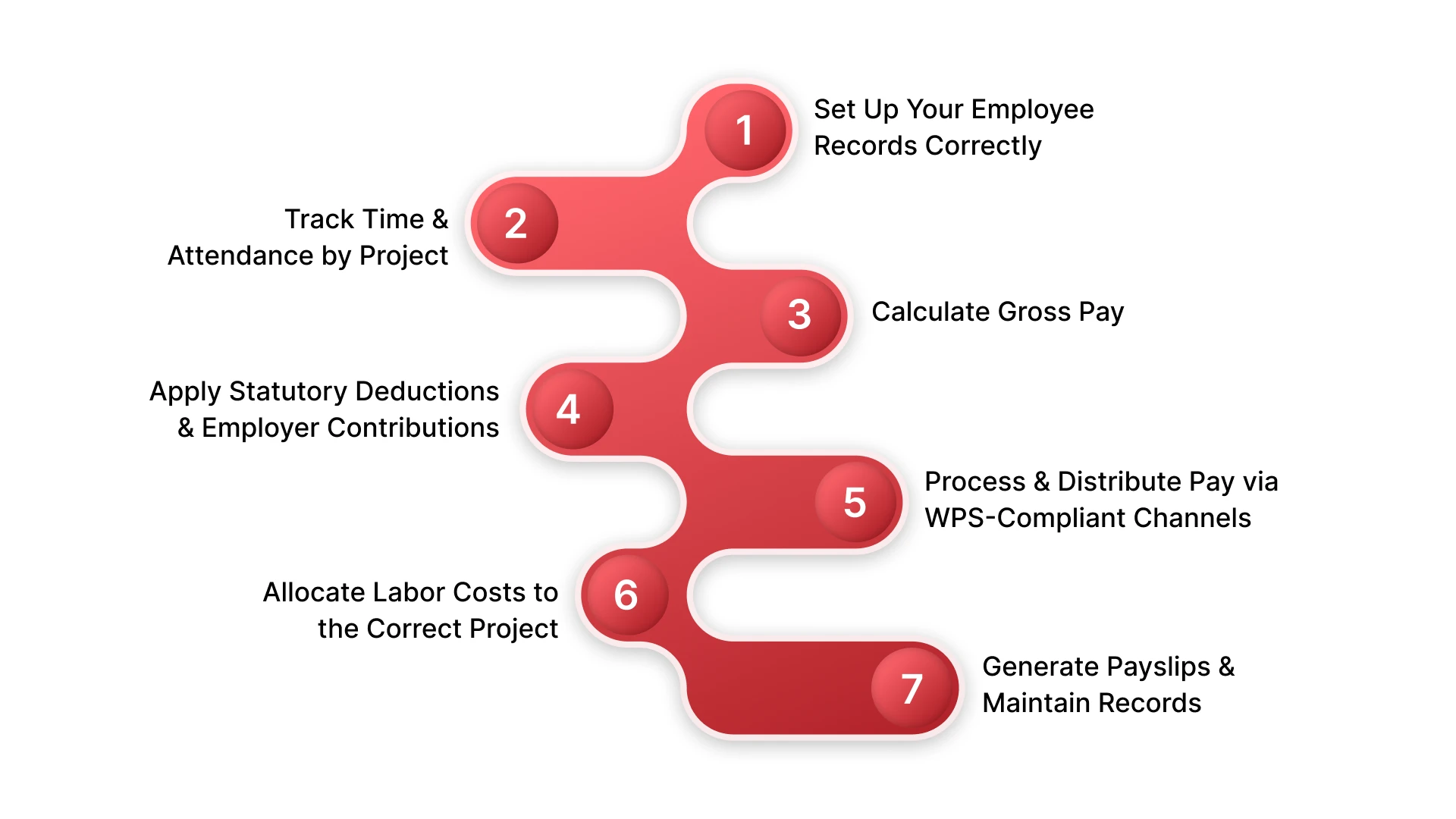
يتطلب تشغيل الرواتب في شركة إنشاءات في المملكة العربية السعودية أكثر من مجرد صرف الرواتب. تحتاج إلى عملية منظمة وقابلة للتكرار تغطي الامتثال، وتوزيع التكاليف، وحفظ السجلات. فيما يلي سبع خطوات أساسية:
قبل معالجة أي ريال واحد، يجب أن تكون سجلاتك منظمة. بالنسبة للمواطنين السعوديين، تأكد من إتمام التسجيل في التأمينات الاجتماعية (GOSI) خلال 30 يومًا من التوظيف. أما بالنسبة للعمالة الوافدة، فتأكد من بيانات الإقامة (Iqama) وتسجيل عقودهم على منصة «قوى». احتفظ بسجلات رقمية لكل عامل تشمل الجنسية، وتصنيف الوظيفة، ومكونات الراتب، ونوع العقد. هذه الخطوة الأساسية تمنع مشكلات سوء التصنيف لاحقًا.
هنا تنهار الأنظمة اليدوية. قد يقسم العامل أسبوعه بين موقعَي عمل نشطين. وإذا كنت تتبع الحضور على الورق أو عبر WhatsApp، فلن تتمكن أبدًا من معرفة تكلفة العمالة المرتبطة بكل مشروع بدقة.
النظام الرقمي، ويفضل أن يكون مرتبطًا بالمشاريع، يقوم بتسجيل هذه البيانات تلقائيًا ويغذيها مباشرة إلى الرواتب. يقوم ربط الحضور بالمشاريع في نظام HAL ERP بذلك تحديدًا، مما يمنحك بيانات دقيقة دون الحاجة لمتابعة الجداول الزمنية.
عادةً ما يحصل عمال البناء في المملكة العربية السعودية على راتب أساسي بالإضافة إلى بدلات مثل السكن، والمواصلات، وأحيانًا بدل غلاء المعيشة. يجب تنظيم هذه البدلات بعناية، لأن ليس كل البدلات تُعامل بالطريقة نفسها عند احتساب اشتراكات التأمينات الاجتماعية (GOSI).
يُحتسب أساس اشتراك GOSI عادةً على الراتب الأساسي بالإضافة إلى بدل السكن، لذا فإن طريقة هيكلة حزمة الرواتب تؤثر بشكل مباشر على قيمة الاشتراكات.
بناءً على جنسية العامل، يتم تطبيق التقسيم الصحيح لاشتراكات التأمينات الاجتماعية (GOSI). بالنسبة للمواطنين السعوديين: يساهم الموظف بنسبة 10% (9.75% للتقاعد + 0.25% لساند)، بينما يساهم صاحب العمل بنسبة 12% (9.75% للتقاعد + 0.25% لساند + 2% تأمين ضد الأخطار المهنية). أما بالنسبة للعمالة الوافدة: يدفع صاحب العمل فقط 2% كتأمين ضد الأخطار المهنية.
بالإضافة إلى ذلك، يتم تخصيص مكافأة نهاية الخدمة (EOSB) بشكل شهري. ومن النقاط المهمة أنه لا يوجد ضريبة دخل شخصية في المملكة العربية السعودية على الموظفين، وهو أمر غالبًا ما يفاجئ أصحاب العمل المعتادين على أنظمة ضريبية في دول أخرى.
يجب تحويل الرواتب عبر حساب بنكي سعودي مسجل، وتقديمها من خلال منصة «مدد» شهريًا. يجب أن تتم عملية التحويل والتقديم خلال نفس شهر فترة الراتب.
يؤدي التأخر في التقديم إلى غرامات تصل إلى 5,000 ريال سعودي لكل موظف. هذا الأمر غير قابل للتفاوض: إما أن تقوم بأتمتة العملية أو تتحمل المخاطر.
هذه هي الخطوة التي تميز رواتب قطاع البناء عن الرواتب العامة. يجب أن تؤدي كل دورة رواتب إلى تسجيل تكاليف العمالة في دفتر تكاليف المشروع المرتبط بها. هذا يمنحك رؤية لهوامش المشروع، ويساعدك على تتبع التدفق النقدي، ويتيح لك مقارنة التكاليف الفعلية للعمالة بالميزانية الأصلية.
بدون هذه الخطوة، أنت تدير الرواتب فقط وليس إدارة عملك. يقوم الربط الأصلي بين الرواتب والمشاريع في نظام HAL ERP بجعل هذا التخصيص تلقائيًا دون الحاجة إلى قيود محاسبية يدوية.
كشوف الرواتب الشهرية إلزامية بموجب نظام العمل السعودي، ويجب أن تُظهر جميع مكونات الراتب، والاستقطاعات، ومساهمات صاحب العمل. يجب أن تكون كشوف الرواتب باللغة العربية (أو ثنائية اللغة). كما يجب الاحتفاظ بالسجلات لمدة لا تقل عن خمس سنوات لأغراض التدقيق.
يقوم نظام الرواتب الرقمي بإصدار هذه الكشوف وتخزينها تلقائيًا، وهو أمر يكاد يكون من المستحيل الحفاظ عليه يدويًا على نطاق واسع.
والآن بعد أن عرفت كيفية تشغيل الرواتب بشكل صحيح، دعنا نتحدث عن الأخطاء التي تُوقع حتى المقاولين ذوي الخبرة في المشاكل.

حتى الشركات التي تُدار بشكل جيد تقع في أخطاء رواتب يمكن تجنبها في قطاع البناء. فيما يلي أكثر الأخطاء شيوعًا وما يجب فعله بدلًا منها:
اقرأ أيضًا: إدارة مخاطر البناء: خطوات الحد من المخاطر وتخفيفها
هذه النقطة الأخيرة تقودنا إلى السؤال الأكبر: متى يحين الوقت للانتقال بعيدًا عن العمليات اليدوية بالكامل؟
يبدأ معظم المقاولين باستخدام Excel أو أداة محاسبة بسيطة. وهذا يعمل، حتى لا يعود كذلك. إليك مقارنة صريحة لمساعدتك على تحديد وضعك:
|
العامل |
الرواتب اليدوية |
الرواتب المدمجة مع نظام ERP |
|
تكلفة الإعداد |
منخفضة مبدئيًا |
استثمار مبدئي أعلى |
|
الدقة |
مخاطر خطأ عالية (إدخال يدوي) |
أخطاء شبه معدومة (آلي) |
|
الامتثال لنظام حماية الأجور (WPS) |
يسهل تفويت المواعيد النهائية |
عمليات رفع آلية |
|
احتساب التأمينات الاجتماعية (GOSI) |
يدوي، وعُرضة لأخطاء التصنيف |
يُحتسب تلقائيًا حسب الجنسية |
|
توزيع تكاليف المشروع |
غير ممكن |
ربط مباشر ومدمج بين المشروع والرواتب |
|
إصدار قسائم الرواتب |
يدوي، ويستغرق وقتًا طويلاً |
بضغطة زر واحدة، وجاهز باللغة العربية |
|
سجل التدقيق |
يصعب الحفاظ عليه |
مسجّل بالكامل ويمكن الوصول إليه |
|
قابلية التوسع |
يتعطل عند تجاوز 20 موظفًا |
يتوسع مع نمو أعمالك |
الرواتب اليدوية ليست بطيئة فقط، بل تحمل مخاطر مالية حقيقية. فيما يلي 3 إشارات تدل على أنك بحاجة إلى نظام ERP:
اقرأ أيضًا: هل يجب على كل شركة أن تمتلك نظام ERP؟ إليك لماذا يحتاج عملك إلى واحد
إذا انطبق عليك أي من هذه الحالات، فإن الانتقال إلى نظام متكامل هو قرار حاسم لعملك، وHAL هنا لمساعدتك على إحداث هذا التحول.
يواجه مقاولو البناء في المملكة العربية السعودية تحديًا فريدًا. إدارة قوة عمل متعددة الجنسيات ومتعددة المواقع مع الالتزام بأنظمة حماية الأجور (WPS)، والتأمينات الاجتماعية (GOSI)، ونطاقات، وكل ذلك مع الحفاظ على السيطرة على ربحية المشاريع. معظم أدوات الرواتب لم تُصمم مع أخذ هذا في الاعتبار. فهي تتعامل مع الرواتب بشكل جيد، لكنها تترك لك مهمة ترتيب الباقي يدويًا.
تم تصميم HAL ERP خصيصًا لقطاع المقاولات والبناء في المملكة العربية السعودية. يربط بين الرواتب، والامتثال، والموارد البشرية، وتكاليف المشاريع في نظام واحد متكامل، بحيث لا يتم إغفال أي شيء.
مع معالجة أكثر من 10 مليارات ريال سعودي في الرواتب، وتسجيل أكثر من 100,000 موظف، وتشغيل أكثر من 50,000 مشروع، يمتلك HAL سجلًا حافلًا يدعم ذلك.
شركة جاش القابضة هي شركة رائدة في إدارة المرافق في المملكة العربية السعودية، تضم أكثر من 4,000 موظف يعملون عبر مواقع عمل متعددة لدى عملاء مختلفين. قبل استخدام نظام HAL، كانت تواجه صعوبات في إدارة الرواتب اليدوية، وتعقيد انتقالات الموظفين بين المشاريع، وعدم وجود رؤية فورية لتكاليف المشاريع.
بعد تطبيق نظام HAL ERP، قامت شركة جاش بأتمتة الرواتب والفوترة بين الشركات، وحصلت على رؤية فورية للعمالة والتكاليف على مستوى المشاريع، كما تم تبسيط عمليات التوظيف وإدارة العقود عبر الشركات التابعة.
النتائج:
انتقل فريق المالية لديهم من متابعة الجداول اليدوية إلى اتخاذ قرارات مبنية على البيانات في الوقت الفعلي.
تُعدّ معالجة الرواتب في قطاع البناء في المملكة العربية السعودية من أكثر العمليات تعقيدًا من حيث الامتثال والتشغيل بالنسبة للشركات الصغيرة والمتوسطة. تبدأ كيفية إدارة رواتب البناء بالأساسيات الصحيحة: سجلات موظفين متوافقة (GOSI، الإقامة، قوى)، وتتبع الحضور حسب المشروع. بعد ذلك، يتعلق الأمر بالدقة. يجب إعداد هيكل الرواتب بشكل صحيح، وتطبيق اشتراكات GOSI بشكل سليم، وتخصيص مخصصات نهاية الخدمة شهريًا بدلًا من انتظار نهايتها حيث تصبح مشكلة.
وبالإضافة إلى ذلك، فإن كيفية إدارة رواتب البناء بفعالية تعني أيضًا ربط تكاليف العمالة بالمشاريع الصحيحة للحصول على رؤية حقيقية لهوامش الربح، مع الحفاظ على كشوف رواتب باللغة العربية وسجلات جاهزة للتدقيق لمدة لا تقل عن خمس سنوات.
إذا كنت تبحث عن تبسيط هذه العملية بالكامل مع ربط الرواتب مباشرة بتكاليف المشاريع، فإن HAL مصمم للتعامل مع واقع قطاع البناء في المملكة العربية السعودية.
شاهد كيف يعمل HAL للمقاولين في المملكة العربية السعودية.
بموجب نظام العمل السعودي، يجب دفع الرواتب مرة واحدة على الأقل شهريًا. ويتطلب نظام حماية الأجور (WPS) تحويل الرواتب ورفعها إلى منصة مُدد خلال نفس الشهر الميلادي لفترة الأجر. أي تأخير أو عدم التزام قد يؤدي إلى غرامات.
لا. لا تفرض المملكة العربية السعودية ضريبة دخل على الأفراد — بغض النظر عن الجنسية. وهذه إحدى المزايا المهمة للعمل في المملكة وغالبًا ما تكون مفاجأة للمقاولين ذوي الخبرة الدولية.
قد تؤدي التأخيرات في تقديم WPS إلى غرامات تصل إلى 5,000 ريال سعودي لكل موظف. وقد تؤدي المخالفات المتكررة إلى إيقاف إصدار تصاريح عمل جديدة، وهو ما قد يكون مدمرًا تشغيليًا لشركات البناء.
نعم، ولكن فقط لتأمين إصابات العمل — بنسبة 2% من الراتب الأساسي للعامل الوافد، يدفعها صاحب العمل بالكامل. ولا يتم إدراج الوافدين في نظام التقاعد أو ساند.
تُحسب مكافأة نهاية الخدمة بناءً على مدة الخدمة: نصف راتب شهر عن كل سنة خلال أول خمس سنوات، ثم راتب شهر كامل عن كل سنة بعد ذلك. يتم الحساب بناءً على آخر راتب أساسي مستلم. ولا يستحق العامل الذي يستقيل قبل إكمال سنتين مكافأة نهاية الخدمة.
تقنيًا نعم — عمليًا لا. بمجرد تجاوز 20 موظفًا أو العمل عبر مواقع متعددة، فإن Excel وWhatsApp يخلقان مخاطر امتثال وثغرات بيانات يصعب التحكم بها. فقدان موعد WPS أو خطأ في تصنيف مساهمة GOSI بسبب خطأ في جدول بيانات قد يكلف أكثر بكثير من تكلفة نظام ERP.