Automotive businesses are dealing with a level of operational pressure that didn’t exist a decade ago. The shift toward electric vehicles, unpredictable supply chains, and rising customer expectations has made day-to-day operations harder to control. What once worked with spreadsheets and disconnected tools now leads to delays, errors, and missed opportunities.
Automotive ERP systems in 2026 are designed to solve exactly this problem. It connects manufacturing, inventory, procurement, service operations, and external systems like e-commerce platforms and logistics providers into one unified environment.
With the global automotive ERP market expected to reach USD 12.3 billion by 2033, it reflects how quickly enterprises are investing in integrated systems to stay competitive. This gives decision-makers a clearer view of operations and helps reduce manual work across departments.
In this blog, we’ll explore the top automotive ERP systems in 2026 and how to choose the right one for your business.
Key Takeaways:
Automotive ERP systems in 2026 unify manufacturing, inventory, procurement, and supply chain processes into a single platform for better operational control and visibility.
ERP is essential for improving coordination, enabling real-time tracking, reducing manual work, strengthening supply chains, and supporting accurate compliance and reporting.
Key features include production tracking, inventory management, workflow automation, system integrations, production planning, and quality control for smoother operations.
Leading ERP systems include SAP, Microsoft Dynamics, Epicor, Plex, QAD, Acumatica, and others, each suited to different automotive business sizes and needs.
Selecting the right ERP depends on scalability, integration, usability, customization, and alignment with automotive industry processes and compliance requirements.
Why ERP Systems are Important for Automotive Industry
The automotive industry operates with tight margins, complex supply chains, and strict quality requirements. ERP systems help bring control by connecting different processes and giving teams real-time visibility.
Here’s why ERP systems play a critical role in the automotive industry:
Improves coordination across operations: Automotive businesses manage manufacturing, suppliers, and dealers together. ERP connects these functions so that information flows smoothly without delays or gaps.
Reduces dependency on disconnected tools: Many companies still use spreadsheets or separate tools. ERP replaces them with a single system, reducing duplication and manual errors.
Supports real-time production visibility: ERP provides live updates on production stages, helping teams quickly spot bottlenecks and avoid delays.
Strengthens supply chain control: It centralises procurement, suppliers, and inventory data, improving visibility and reducing stock issues.
Improves compliance and reporting accuracy: ERP automates reporting and documentation, reducing manual errors and supporting regulatory compliance like VAT.
Helps manage cost and resource efficiency: Tracks material and labour costs across operations, helping businesses control spending and reduce waste.
Enables better decision-making: Real-time dashboards give leaders clear insights to respond faster to operational changes and disruptions.
Supports scalability for growing businesses: ERP systems scale with business growth, handling increasing complexity without adding disconnected tools.
Key Features to Look for in Automotive ERP Systems
Not all ERP systems are built for automotive complexity. Businesses need systems that can handle production workflows, supplier coordination, and real-time inventory tracking while still being easy to use.
Choosing the right features can directly impact business performance and long-term scalability.
Real-time production tracking: Provides live visibility into production lines, work orders, and machine status, helping teams quickly respond to delays and maintain smooth operations.
Advanced inventory management: Tracks parts and materials across multiple locations to prevent stockouts, reduce excess inventory, and improve material planning accuracy.
Integration with external systems: Connects with logistics, e-commerce, and payment platforms to support smooth data flow across all business operations.
Workflow automation: Automates approvals, alerts, and reporting tasks, reducing manual effort and improving operational performance.
Production planning and scheduling tools: Supports demand-based production planning to optimise resources and avoid delays in manufacturing cycles.
Quality control and compliance management: Tracks quality checks and supports compliance with industry standards to reduce defects and operational risks.
User-friendly interface: Offers a simple, intuitive design that improves adoption, reduces training time, and supports daily usage across teams.
Top 10 Automotive ERP Systems in 2026
The automotive ERP landscape in 2026 is shaped by manufacturing complexity, supply chain disruptions, and the need for real-time operational control. Each system below offers a different strength; some focus on global enterprise management, while others specialise in manufacturing or mid-market flexibility.
1. HAL ERP
HAL ERP is a Saudi-localised ERP platform designed for businesses that need better control over manufacturing, inventory, procurement, and daily operations. It brings core business functions into one system while keeping workflows simple and practical for growing automotive and industrial businesses.
Unlike traditional ERP systems that feel complex and rigid, HAL ERP focuses on usability, automation, and real-time visibility across departments in a practical way.
What It Does Well:
Real-time tracking of production, inventory, and procurement workflows
Automation of approvals, replenishment, and operational reporting
Integration with external systems like logistics, e-commerce, and payment gateways
Industry-specific configuration for manufacturing and trading environments
Pricing:
Gold Plan: SAR 1,999/user/year — Small businesses; accounting, sales, procurement, webinars, 12 tickets, single-store.
Enterprise Plan: Custom pricing — Mid-to-large firms; full features + HR, group companies, projects, fully tailored scope based on requirements.
Best For: SMEs and mid-market automotive manufacturers in Saudi Arabia needing localised ERP with strong operational control
Case Study – Jash Holding (Saudi Arabia)
Jash Holding, a large facilities management company with 4,000+ employees, faced inefficiencies in project costing, manual reporting, and intercompany transactions. Legacy systems made scalability difficult and slowed decision-making.
After implementing HAL ERP:
Project-level costing became real-time and transparent
Intercompany transactions were fully automated
Reporting shifted from delayed manual reports to centralised dashboards
Operational performance improved significantly across subsidiaries through better coordination
Results:
~50 million SAR saved through process automation
60%+ improvement in ROI
Faster workforce allocation and better cost control across projects
This implementation demonstrated how HAL ERP reduces operational fragmentation and supports better decision-making in complex, multi-entity organisations.
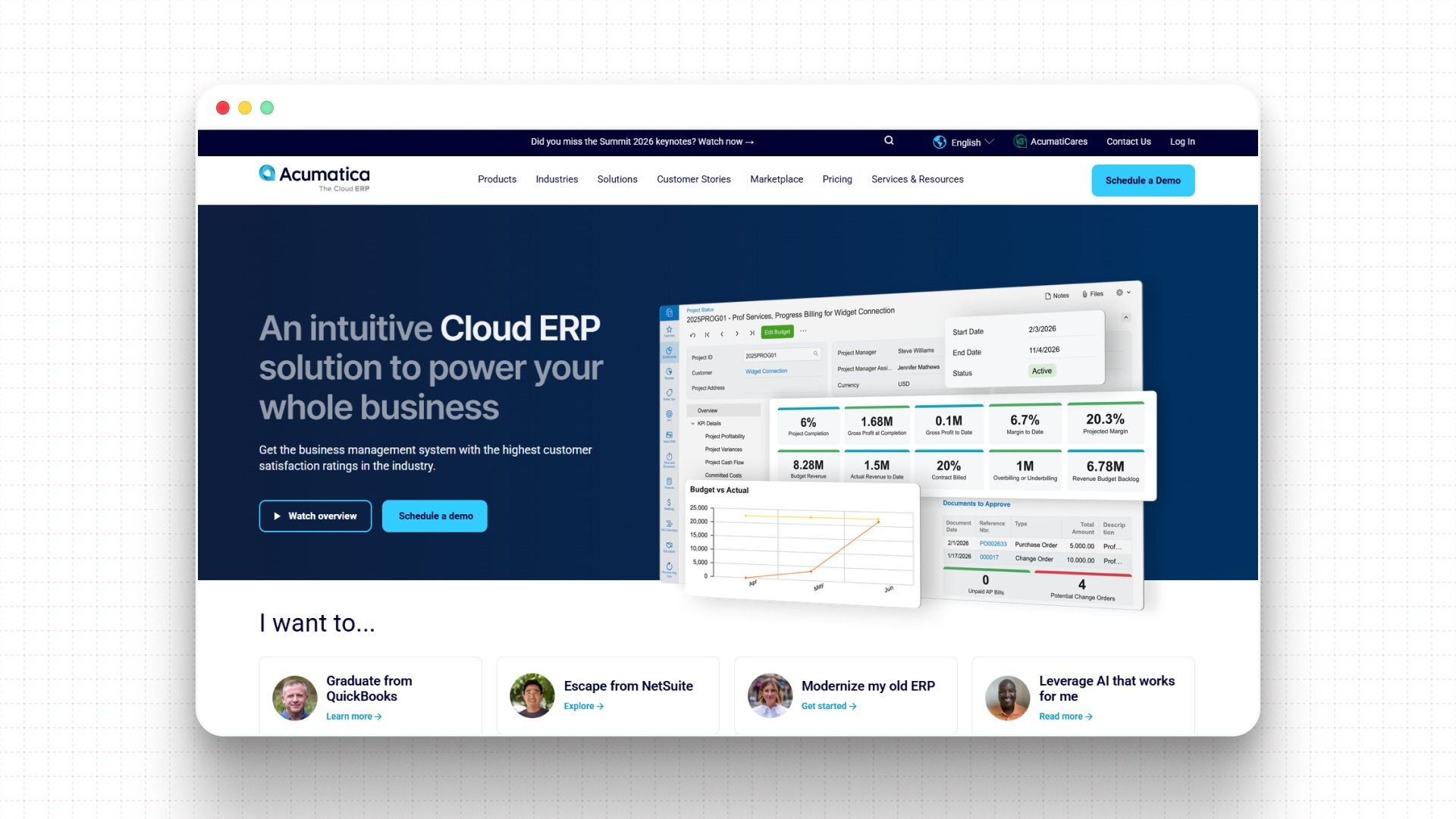
Acumatica is a cloud-based ERP system designed for growing manufacturing and distribution businesses. It is known for its flexible architecture and ability to scale without adding per-user licensing pressure, making it suitable for expanding automotive suppliers.
It focuses on operational flexibility, cloud accessibility, and modular deployment for manufacturing environments.
What It Does Well:
Cloud-based system with scalable architecture for growing operations
Strong manufacturing, inventory, and production management capabilities
Flexible usage-based model instead of per-user pricing
Pricing:
Implementation typically ranges from $20,000 to $500,000+, depending on complexity and manufacturing scope
Total ERP cost depends on modules, integrations, and transaction volume
No per-user licensing model, pricing is based on system usage
Best For: Mid-sized automotive suppliers looking for scalable cloud ERP systems
QAD Adaptive ERP is built specifically for manufacturing companies operating in volatile supply chains. It is widely used in automotive environments where supply chain flexibility and global coordination are critical.
It helps businesses respond faster to demand changes, supplier disruptions, and production shifts.
What It Does Well:
Strong global supply chain and production planning capabilities
Designed for automotive manufacturing complexity
Supports multi-location and multi-country operations
Pricing:
Implementation is custom-priced based on enterprise scale and global deployment
Typically positioned in the mid-to-high enterprise ERP investment range
Cost varies depending on modules and regional rollout
Best For: Large automotive manufacturers with global supply chains
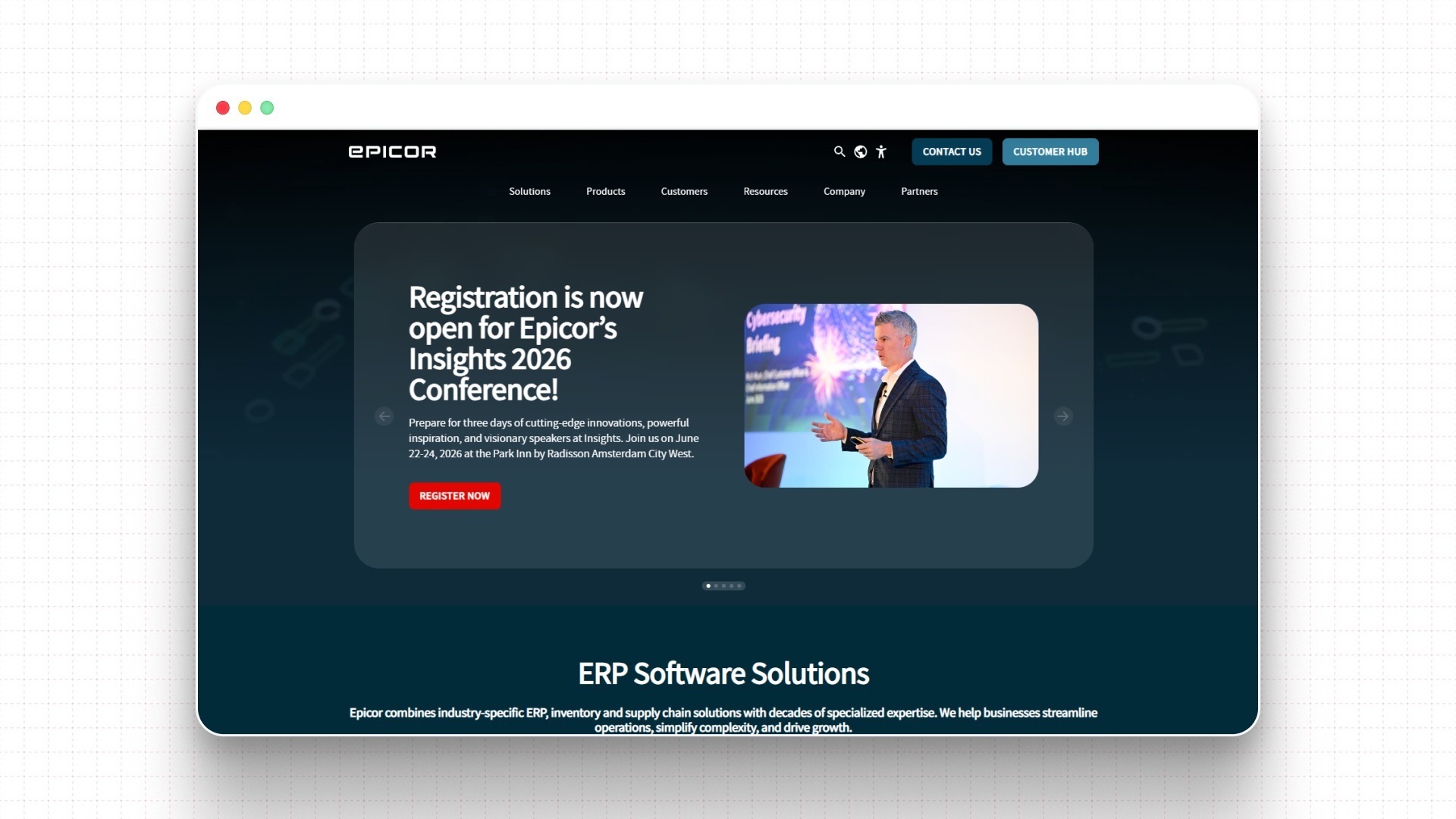
Epicor Kinetic is a manufacturing-focused ERP system designed for industries that require deep production control and shop-floor visibility. It is commonly used in automotive parts manufacturing and supplier environments.
It supports better production planning and real-time tracking of operations.
What It Does Well:
Strong manufacturing and production management tools
Real-time shop floor tracking and visibility
Integrated supply chain and quality management
Pricing:
Implementation typically ranges from $50,000 to $1,000,000+, depending on complexity
Pricing depends on manufacturing scope and customization needs
The partner-led implementation model affects the total cost
Best For: Automotive parts manufacturers and Tier 1–3 suppliers
Plex is a cloud-native manufacturing ERP system designed specifically for production-heavy industries like automotive. It provides real-time visibility into shop-floor operations and quality processes.
It is widely adopted in automotive manufacturing due to its production-first design.
What It Does Well:
Real-time shop floor and production tracking
Built-in quality and compliance management tools
Cloud-based manufacturing execution system (MES) capabilities
Pricing:
Implementation cost is fully customised based on plant size and modules
Typically positioned in the mid-to-high enterprise ERP investment range
Pricing includes setup, integration, and ongoing support
Best For: Automotive manufacturers needing real-time production visibility
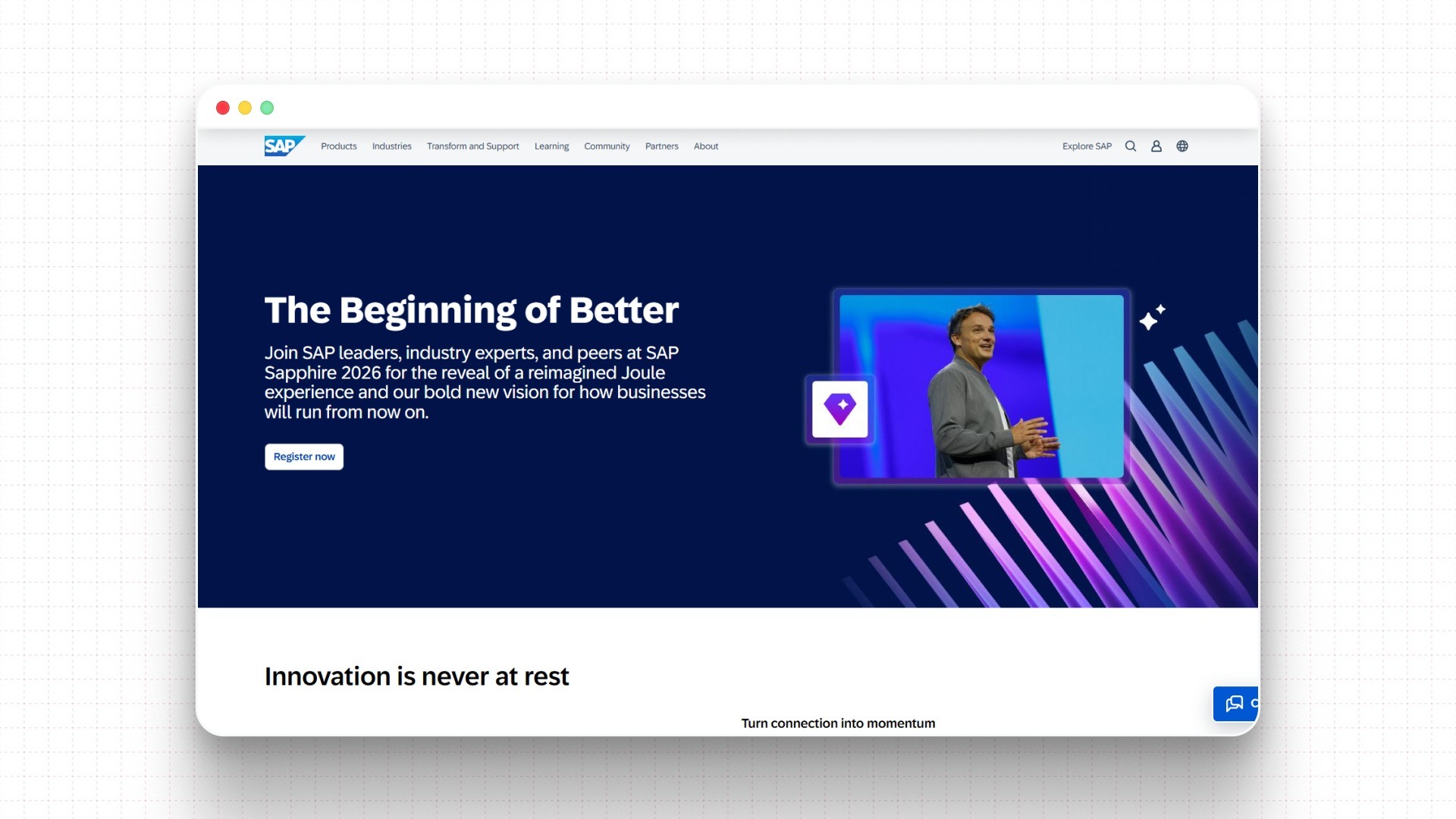
SAP provides enterprise-grade ERP solutions used widely across global automotive manufacturers. SAP S/4HANA is designed for large enterprises, while SAP Business One serves smaller organisations and subsidiaries.
These systems are known for deep process control and global scalability.
What It Does Well:
End-to-end enterprise manufacturing and supply chain control
Advanced analytics and real-time business intelligence
Strong global compliance and scalability
Pricing:
SAP Business One implementation: $15,000 – $150,000+, depending on scope
SAP S/4HANA implementation: $75,000 to $10M+ depending on enterprise scale
Pricing varies heavily based on modules and global deployment
Best For: Large automotive enterprises and global manufacturers
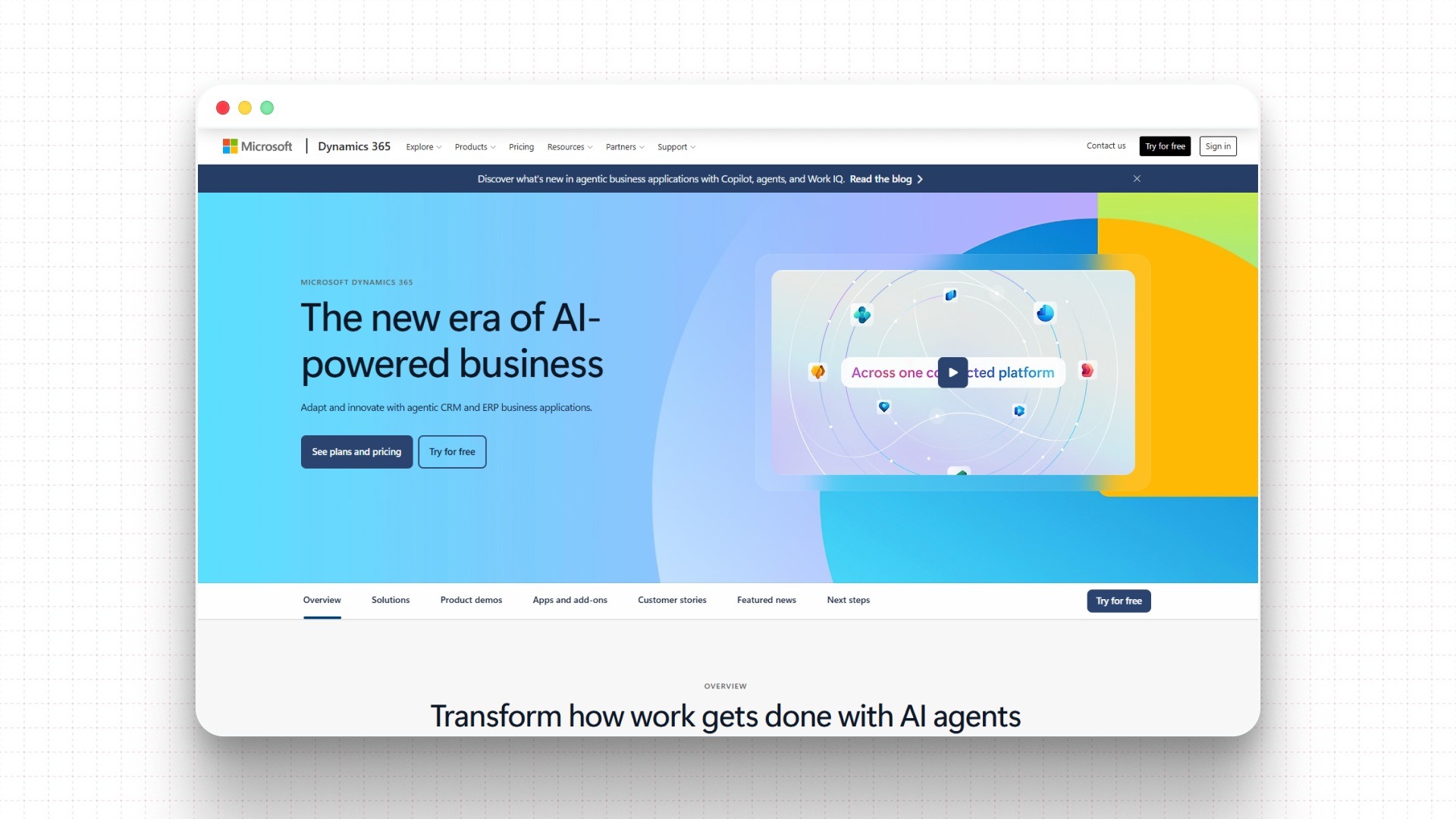
Microsoft Dynamics 365 is a cloud ERP and business application suite that integrates well with Microsoft tools. It is commonly used in automotive operations that require connected workflows across departments and suppliers.
It supports manufacturing, supply chain, and dealer management systems.
What It Does Well:
Strong integration with Microsoft ecosystem tools
Modular ERP and CRM capabilities in one platform
AI-driven analytics and reporting features
Pricing:
Implementation typically ranges from $30,000 to $2,000,000+, depending on scope
Pricing varies based on modules, users, and integrations
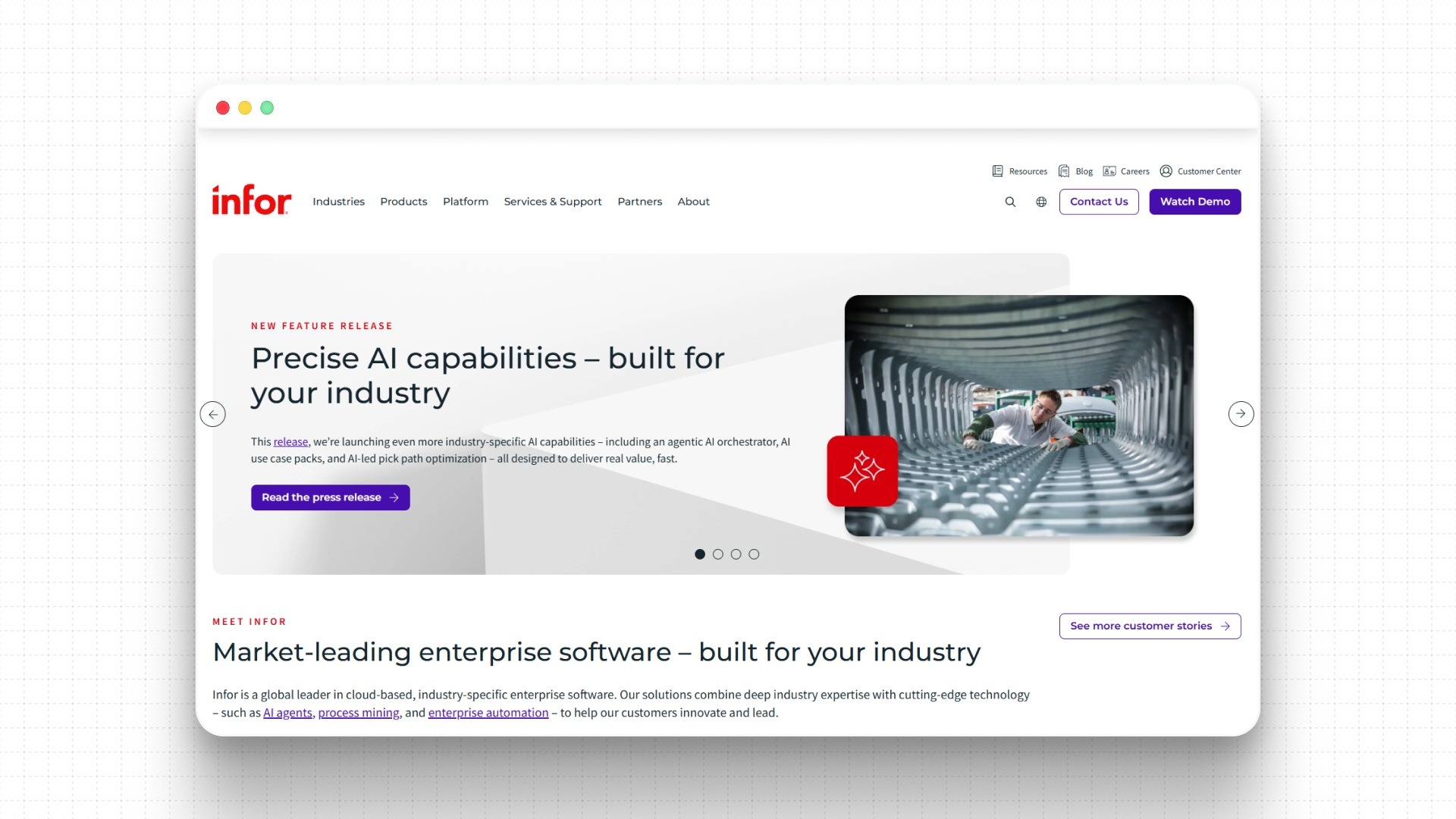
Infor CloudSuite Industrial (LN) is built for complex manufacturing industries, including automotive OEMs and suppliers. It focuses on production efficiency, supply chain coordination, and operational visibility.
It is widely used in manufacturing-heavy environments.
What It Does Well:
Strong manufacturing and production planning capabilities
Industry-specific automotive features
Cloud-based deployment for enterprise operations
Pricing:
Implementation cost is fully customised based on enterprise requirements
Typically falls in the mid-to-high enterprise ERP investment range
Pricing varies by modules and global deployment scale
Best For: Automotive OEMs and large manufacturing enterprises
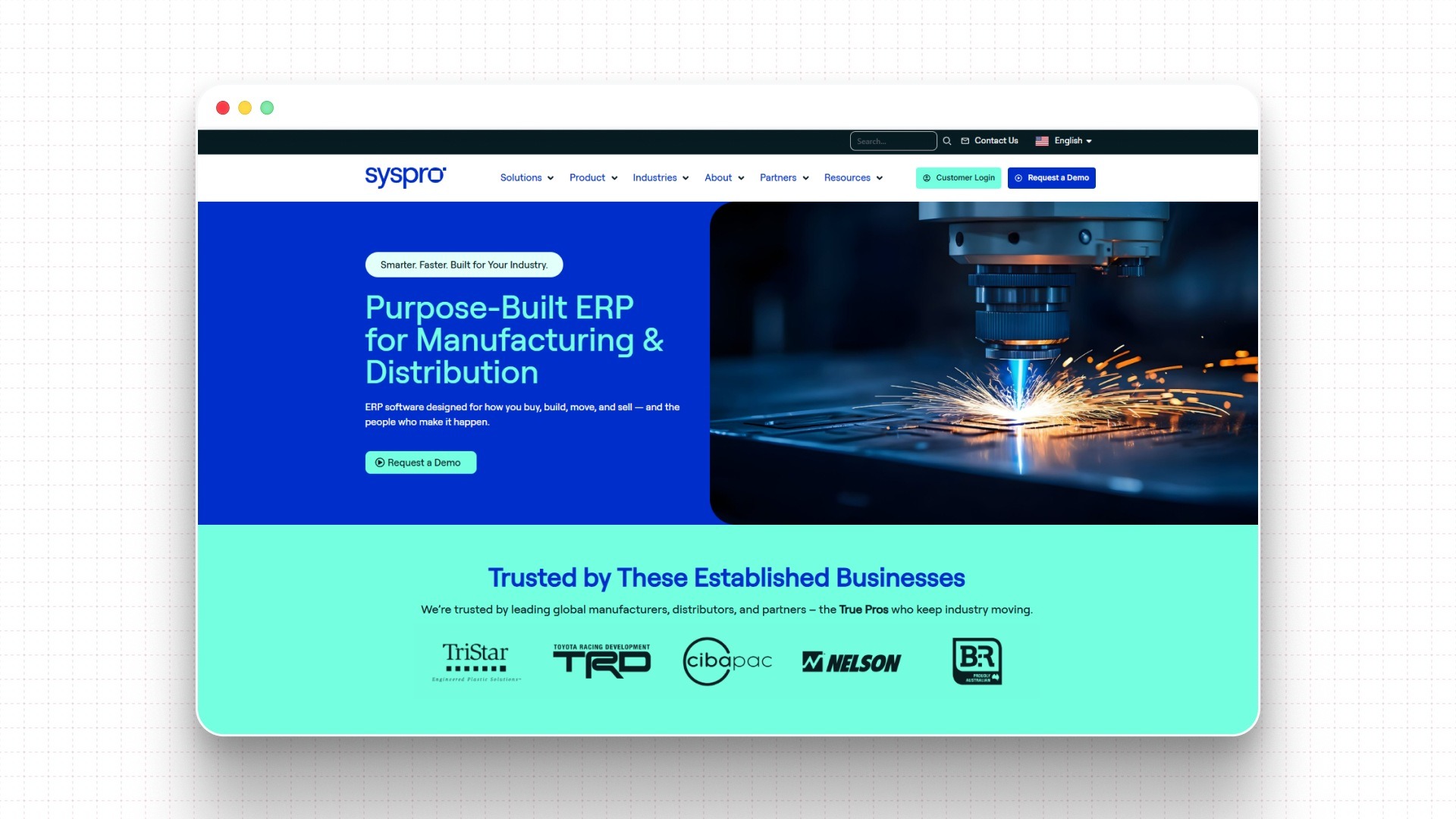
SYSPRO is a manufacturing and distribution ERP system used widely in automotive component production. It focuses on production control, inventory tracking, and supply chain management.
It is known for stable systems and structured manufacturing workflows.
What It Does Well:
Strong inventory and production management tools
Reliable manufacturing and distribution workflows
Supports traceability and compliance
Pricing:
Implementation is quote-based, depending on business size
Typically mid-market ERP investment level
Pricing includes licensing, setup, and support
Best For: Small to mid-sized automotive manufacturers and suppliers
IFS ERP is designed for asset-intensive industries like automotive manufacturing and service operations. It combines production, maintenance, and service management in one system.
It is particularly useful for businesses managing both manufacturing and after-sales service operations.
What It Does Well:
Strong asset and lifecycle management capabilities
Production and maintenance integration
Real-time operational visibility
Pricing:
Implementation cost is custom-based, depending on modules and scale
Generally positioned as a high-end enterprise ERP system
Pricing varies by deployment size and complexity
Best For: Automotive manufacturers with service-heavy or asset-intensive operations
How to Evaluate the Right Automotive ERP for Your Business
Choosing the right ERP system requires more than comparing features. Automotive businesses need to assess how well a system fits their operational complexity, industry requirements, and growth plans. A system that works for a small manufacturer may not suit a multi-location enterprise.
Operational complexity: Start by mapping your core workflows like production, inventory, and procurement. The ERP should match your real operations without adding unnecessary layers.
Business size & growth: Choose a system that fits your current scale but can also support future expansion without needing a complete system switch.
Integration needs: Check that the ERP connects smoothly with logistics platforms, payment systems, e-commerce, and custom applications used in your operations.
Implementation & support: Check whether the vendor offers clear timelines (like 2–4 weeks for setup, 8–12 weeks for full rollout) along with dedicated support teams.
Ease of use: Prioritise systems with simple, intuitive interfaces so teams can adopt them quickly without heavy training or resistance.
Reporting & visibility: Look for real-time dashboards and reporting tools that give accurate insights across production, inventory, and supply chain.
Flexibility & customization: The ERP should adapt to your workflows and allow changes as your business grows or processes evolve.
Industry fit & compliance: Prefer systems aligned with automotive needs and regional regulations like VAT and ZATCA compliance in Saudi Arabia.
Common Challenges in Automotive ERP Implementation
ERP implementation often comes with challenges, especially in the automotive industry, where operations are complex and interconnected.
Data migration: Transferring data from older systems or spreadsheets can lead to errors, missing records, or inconsistent formats if not properly cleaned and validated.
Resistance to change from teams: Employees used to manual or legacy processes may hesitate to adopt the new system, slowing down early usage and adoption.
Process misalignment: Existing workflows may not align with ERP structure, requiring adjustments in processes or careful system configuration.
Integration with external systems: Connecting ERP with logistics, e-commerce, or third-party tools can become complex without proper planning of APIs and data flow.
Underestimating implementation effort: ERP deployment requires time for setup, testing, and training, which is often more extensive than initially expected.
Insufficient user training and onboarding: Without proper training, teams may struggle to use the system effectively, leading to low adoption and continued manual work.
Unclear ownership during implementation: Lack of defined roles between internal teams and vendors can slow decisions and delay project execution.
Weak change management planning: Poor communication during transition can create confusion, reducing user confidence and slowing adoption.
Conclusion
Automotive ERP systems have become essential for managing the growing complexity of modern automotive operations. Businesses that invest in the right ERP system gain better visibility, improved decision-making, and stronger operational control.
The right ERP system depends on your business size, operational complexity, and long-term goals. While global platforms offer strong capabilities, solutions like HAL ERP provide a practical advantage with localised features, faster implementation, and easier usability for Saudi businesses.
HAL ERP is more than just software; it’s a practical system built for real operational control. Request a demo to see how it fits your business needs.
FAQs
1. What implementation timelines should automotive businesses expect for these top ERPs?
Implementation timelines for top automotive ERPs typically range from 3 to 12 months for mid-sized deployments, depending on customization and data migration needs. Large, multi-plant or global rollouts may extend to 12–18 months with phased deployment approaches.
2. How do top ERPs support electric vehicle (EV) production workflows?
Top ERPs support EV production by enabling battery lifecycle tracking, managing new supply chain components like semiconductors, and integrating with IoT-enabled manufacturing systems. They also handle regulatory reporting and evolving quality control requirements for electric vehicle assembly lines.
3. How do costs compare between cloud-based and on-premise options?
Cloud-based ERPs usually operate on subscription pricing with lower upfront costs, making them attractive for scalability and faster deployment. On-premise systems require higher initial investment in infrastructure and licenses but may offer lower long-term costs for stable, large-scale operations.
4. What compliance features help meet automotive industry regulations?
Top automotive ERPs include built-in compliance tools for ISO/TS standards, traceability, and audit trails. They support regulatory requirements such as emissions tracking, safety certifications, and quality documentation, ensuring manufacturers maintain industry compliance across global markets.
5. What scalability options exist for growing automotive manufacturers?
Scalability in modern ERPs allows automotive manufacturers to expand operations across multiple plants, regions, and product lines. Cloud architectures enable flexible user scaling, modular feature additions, and real-time data synchronisation without disrupting existing production workflows.
Mohamed Azher
Mohamed Azher is an accomplished IT professional with over 14 years of expertise in Saudi Arabia’s technology landscape, specializing in ERP delivery, business transformation, and digital innovation. His track record spans leadership roles at Deloitte and Saudi enterprises, making him a trusted architect of scalable solutions for the Kingdom’s most ambitious digital initiatives.