

Ecommerce businesses rarely struggle because they lack a storefront. The harder problem is keeping orders, inventory, payments, customer records, accounting, warehouses, returns, POS channels, and tax reporting synchronized as sales expand across multiple channels. That is where ERP can become useful. An ecommerce-focused ERP setup can connect online sales with the operational systems behind them. For example, an order from Shopify or Salla can feed inventory, fulfilment, customer records and finance instead of requiring teams to re-enter the same transaction across separate systems.
For Saudi businesses, ERP selection in 2026 also needs to consider local ecommerce platforms, payment integrations and ZATCA e-invoicing requirements. ZATCA’s Phase Two rollout is still expanding. Its latest announced group, Wave 25, covers taxpayers whose VAT-subject revenues exceeded SAR 187,500 during 2022, 2023, 2024 or 2025, with affected taxpayers required to integrate their e-invoicing solutions with FATOORA by February 1, 2027. (ZATCA Wave 25)
This guide compares current ERP options for ecommerce businesses operating in Saudi Arabia, focusing on commerce integration, inventory and order management, local fit, pricing transparency, scalability and implementation complexity.
Ecommerce ERP is an ERP environment that connects an online-sales channel with the operational systems used to run the business.
Depending on the ERP and the integrations implemented, that can include:
The ecommerce storefront does not necessarily need to be built inside the ERP.
Some ERP products provide their own commerce platform. For example, Oracle’s SuiteCommerce supports B2B and B2C shopping, checkout and customer-account experiences within NetSuite.
Other systems connect to external platforms.
HAL’s current Integrations page, for example, lists Salla, Zid, Shopify, Magento and Noon alongside POS and payment integrations.
Acumatica’s current Retail and Commerce offering similarly documents connectors for Shopify, BigCommerce and Amazon Marketplace.
The important question is therefore not whether an ERP has an “ecommerce module.” It is whether the ERP can reliably connect orders, inventory, fulfilment, payments and finance across the channels your business actually uses.
Here are the key features to look for in a robust eCommerce ERP system:
As your business grows, keeping track of inventory becomes more complex. Customers expect accurate stock levels when they are ordering online, and you need to know exactly where your products are. An integrated ERP system simplifies this by providing real-time, accurate inventory data to all users. Whether your inventory is stored in one location or across multiple warehouses, the system ensures full visibility, including inventory costs and reorder levels. This reduces manual errors and keeps your inventory management efficient.
A commerce integration should transfer relevant order information between the online channel and the ERP without requiring teams to recreate each transaction manually.
Depending on the integration, this can include:
Do not assume every ERP automatically supports every marketplace or storefront. Confirm that the specific connector and data flow you need are supported.
For example, HAL’s current integration ecosystem lists Shopify, Salla, Zid, Magento and Noon, while Acumatica currently documents Shopify, BigCommerce and Amazon connectors.
Standalone software may handle tasks like general ledger (GL), accounts payable (AP), and accounts receivable (AR), but a cloud-based ERP system goes a step further.
For example, your ERP system instantly creates sales orders when an eCommerce transaction happens. Once the customer successfully makes the payment, the system makes the necessary financial postings automatically. This integration helps businesses comply not only with local tax regulations, such as VAT and e-invoicing, but also gives greater visibility into stock levels, customer behaviors, and actual order delivery status.
Customer information should be available to the teams that need it, but the CRM does not necessarily have to be built into the ERP.
A business can use:
The important requirement is consistent customer, order and account data across systems.
A robust ERP integrates seamlessly with leading eCommerce platforms like Shopify, WooCommerce, Salla, Zid, and Magento, ensuring smooth data synchronization and eliminating manual data entry. This boosts operational efficiency and supports growth across multiple sales channels, including local and international markets.
Ecommerce ERP should provide accurate inventory and order information to the warehouse and fulfilment process.
However, do not assume every ERP includes advanced warehouse management, carrier selection, freight optimization or last-mile delivery functionality.
Businesses with complex fulfillment requirements may need a dedicated WMS, shipping application, 3PL integration or transportation platform connected with ERP.
Acumatica’s current Retail Edition, for example, separately documents native WMS capabilities including barcoding, wave/batch picking and lot/serial tracking.
The Point of Sale (POS) system within an ERP solution offers a reliable and flexible option for eCommerce businesses looking to branch into offline sales or brick-and-mortar retail. This integrated platform allows you to efficiently manage in-store sales, improve customer satisfaction, and gather valuable data to drive growth and expansion.
With these key features in mind, let's explore the best solutions for eCommerce in 2024 and beyond.
No single ERP is best for every ecommerce company. The shortlist below focuses on different business requirements rather than pretending that every platform competes on the same strengths.
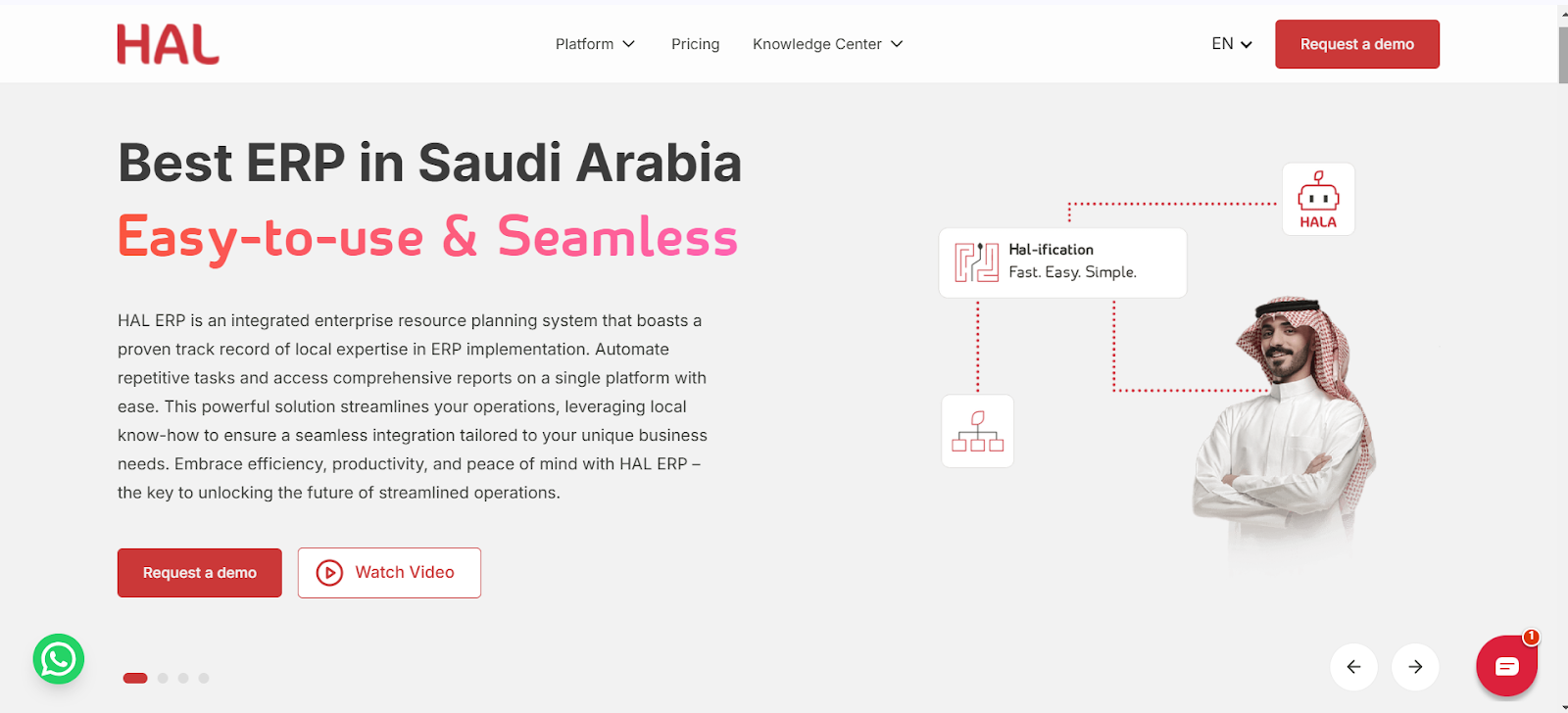
HAL ERP is particularly relevant for Saudi ecommerce businesses that want their ERP connected with local and regional sales, payment and POS platforms.
HAL’s current Integrations ecosystem lists:
alongside banking, POS and other business integrations.
HAL also offers Conversational ERP, allowing selected ERP interactions and reporting through WhatsApp-based workflows.
For Saudi e-invoicing, HAL VAT Care documents Phase I and Phase II functionality, integration through API or Excel/CSV and real-time tax-data validation/submission.
Best suited for: Saudi SMEs and mid-market businesses that value local ecommerce/payment integrations, local support and a wider ERP suite.
Strengths:
Considerations:
Current public pricing: HAL’s Pricing page currently lists the Gold plan at SAR 1,999 per user/year, Platinum at SAR 4,999 per user/year and Enterprise as on-demand.
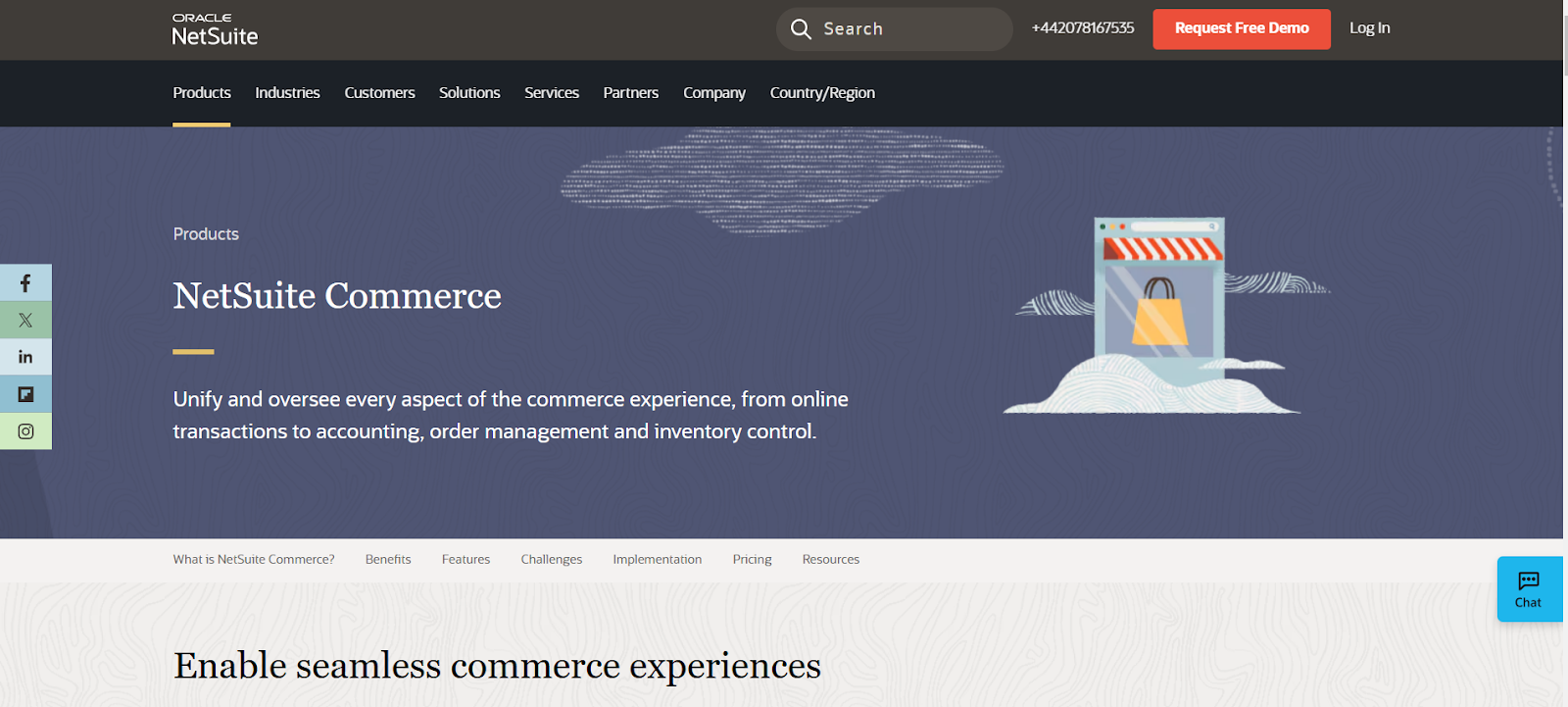
NetSuite is different from an ERP that merely connects to a storefront.
Oracle’s SuiteCommerce provides a full commerce environment for B2B and B2C shopping, checkout and account-management experiences within the wider NetSuite ecosystem.
Oracle’s current documentation also describes online ordering, invoice payment, store pickup and other commerce workflows.
Best suited for: Mid-market and larger companies already committed to NetSuite or wanting commerce tightly connected with NetSuite operations.
Strengths:
Considerations:
Pricing: Contact Oracle/NetSuite for configuration-specific pricing.
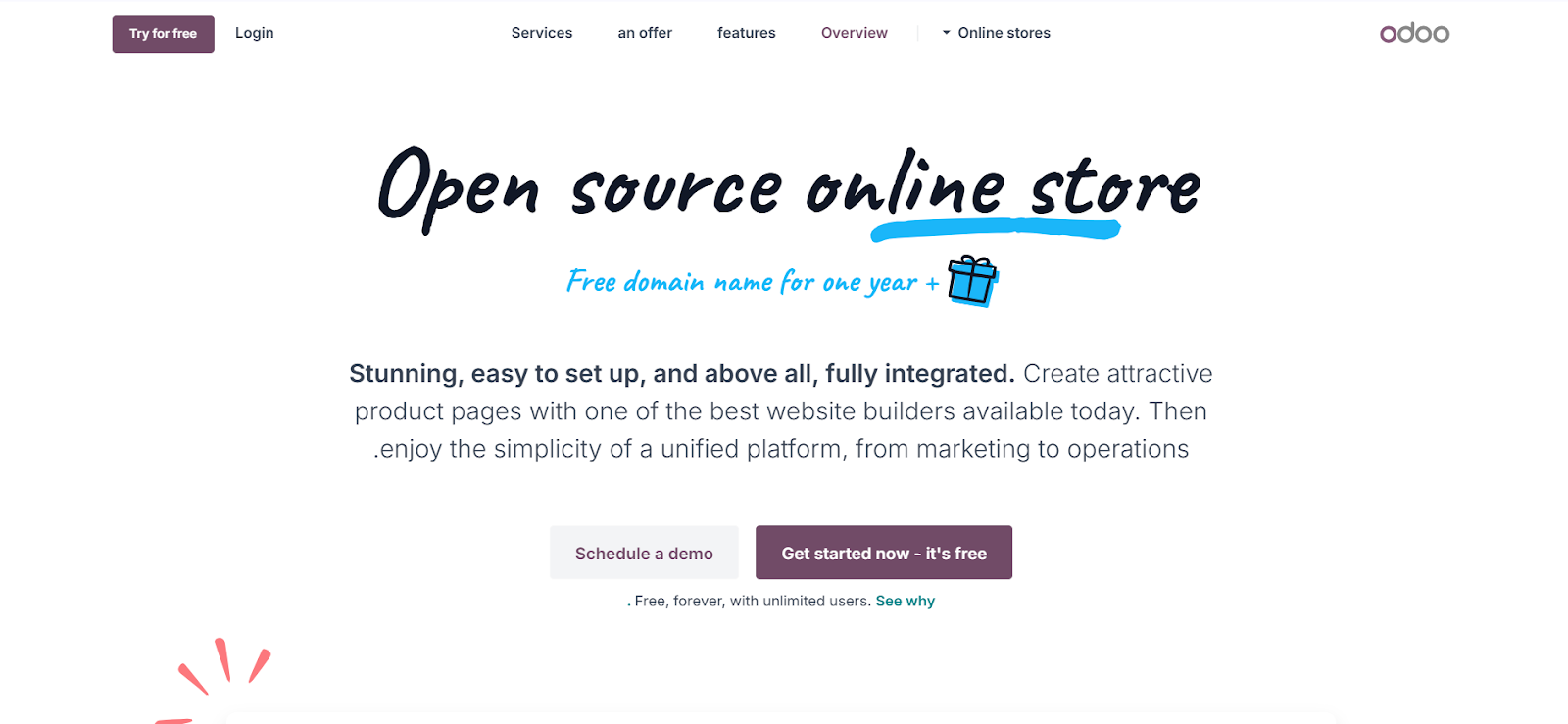
Odoo combines ecommerce, website, accounting, CRM, inventory, sales, purchase, POS and other applications within one modular platform.
The current Odoo Pricing page lists ecommerce, accounting, CRM, inventory, POS and other apps within its paid all-app plans.
Odoo also has one of the clearest publicly documented Saudi localizations in this comparison. Its current Saudi Arabia documentation includes Saudi accounting, reporting, Point of Sale and ZATCA Phase Two e-invoicing API integration.
Best suited for: Businesses that value flexibility, modularity and the ability to run ecommerce directly within the same application suite.
Strengths:
Considerations:
Current public pricing: Odoo’s Pricing page currently shows, for annual billing:
The page notes introductory pricing conditions, so confirm the final commercial quote before purchasing.
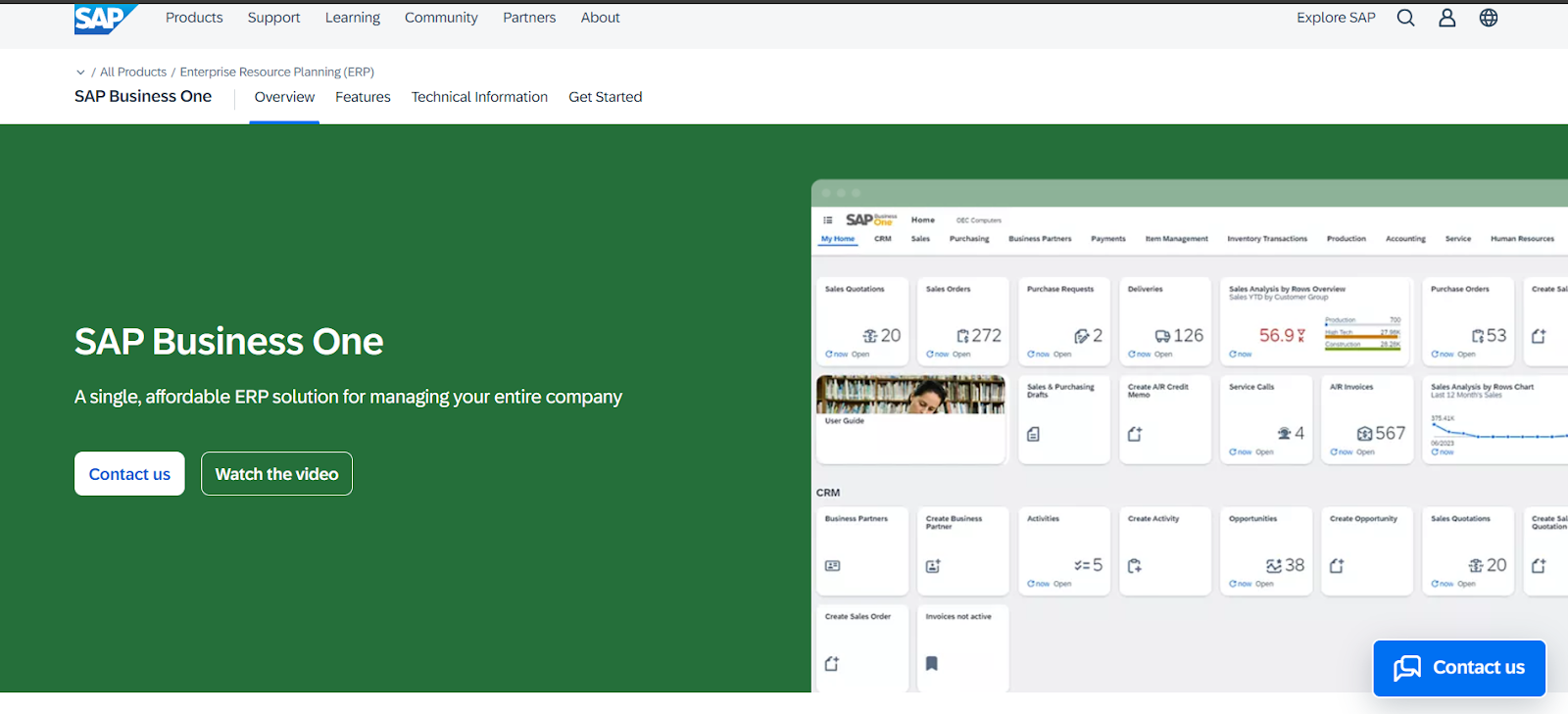
SAP Business One remains an ERP option for small and midsize organizations, particularly where SAP ecosystem compatibility or partner-developed integrations are important.
Unlike Dynamics 365 Commerce or NetSuite SuiteCommerce, SAP Business One should not be described as having a universal native ecommerce storefront.
SAP documents an Integration Framework for SAP Business One that can connect Business One with third-party software, cloud extensions, web services and other applications.
Best suited for: Businesses that want SAP Business One as their ERP backbone and are comfortable implementing ecommerce through SAP/partner integration.
Strengths:
Considerations:
Pricing: Contact SAP or an authorized implementation partner.
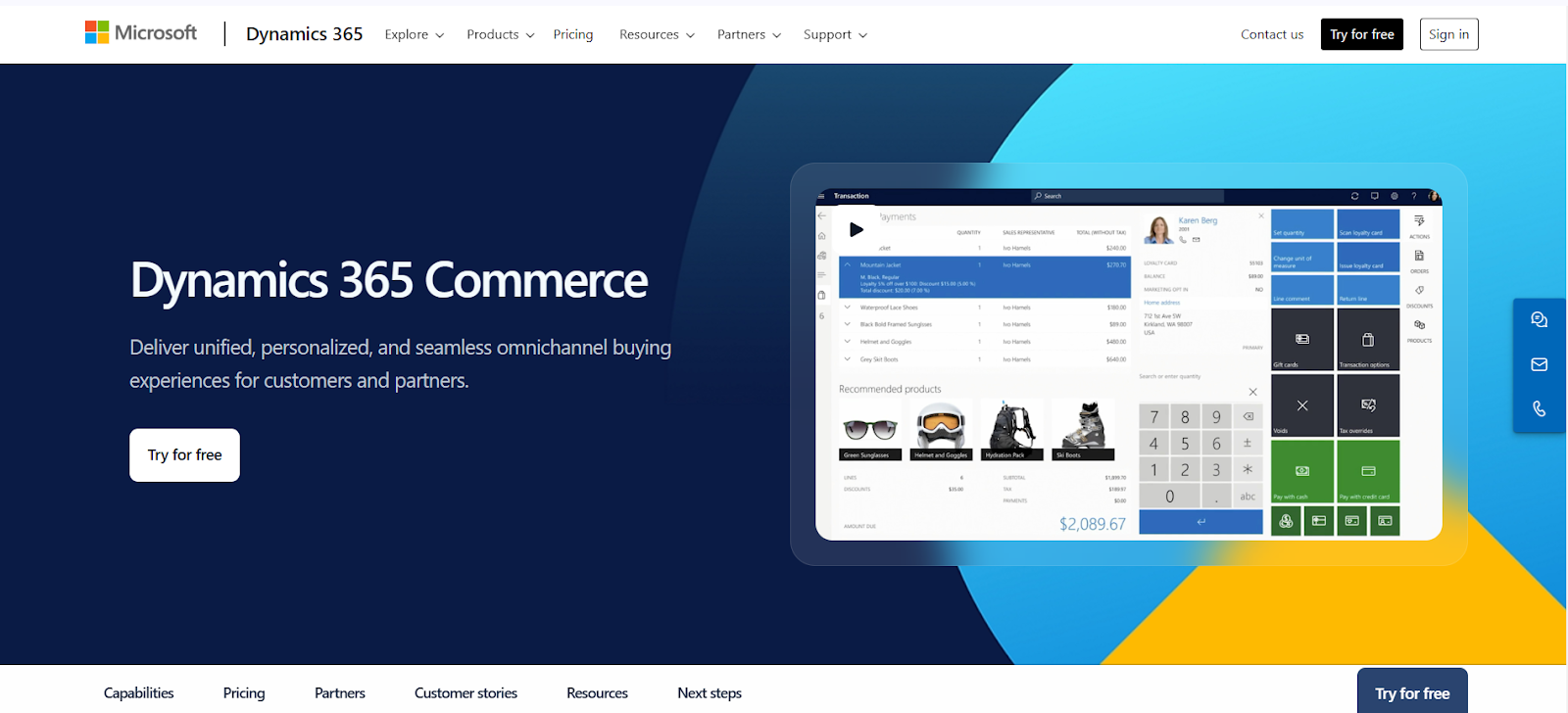
Microsoft Dynamics 365 Commerce is designed around omnichannel retail rather than being only a general ERP with an ecommerce connector.
Microsoft currently documents:
Best suited for: Larger retailers that need sophisticated omnichannel commerce and already operate within the Microsoft ecosystem.
Strengths:
Considerations:
Current public pricing: Microsoft’s Commerce Pricing page currently lists:
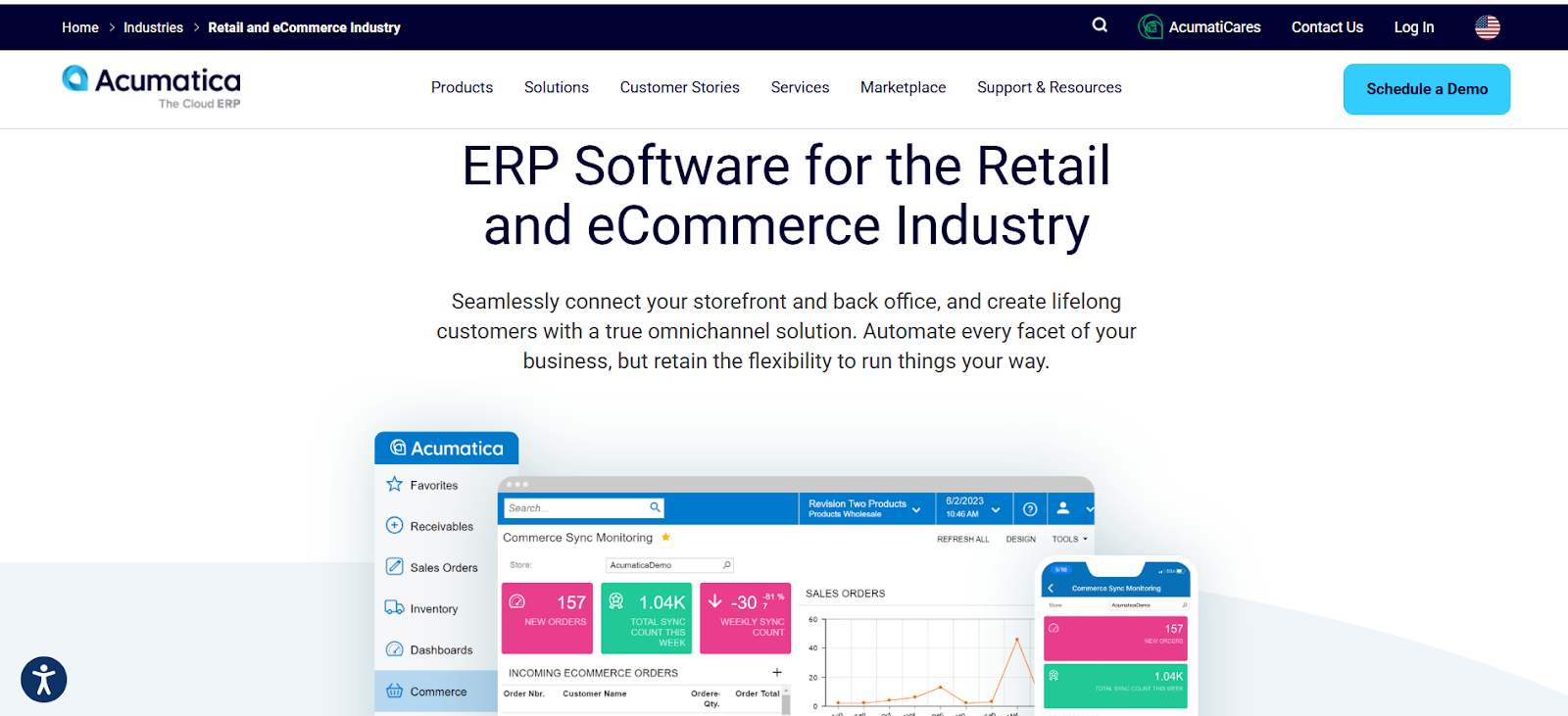
Acumatica Retail and Commerce has evolved considerably since this article was first written.
Its current 2026 retail offering documents:
Acumatica’s 2026 R1 materials also document newer retail features around B2B integration and marketplace tax reconciliation.
Best suited for: Ecommerce, wholesale and omnichannel businesses with more complex inventory, warehouse and fulfilment operations.
Strengths:
Considerations:
Acumatica’s current Pricing model is based on:
rather than a published fixed starting price.
Now that we've seen what's out there, let’s discuss how to choose the best one based on your specific eCommerce business needs.
List the channels the ERP must support.
For a Saudi ecommerce business, these might include:
Do not choose an ERP because it claims to support “ecommerce.” Verify the exact connector you need.
HAL’s current Integrations, for example, explicitly lists Salla, Zid, Shopify, Magento and Noon.
Test:
Online order → payment → inventory reservation → fulfilment → invoice → accounting → return/refund
The ERP should handle the parts of this workflow that matter to your business without excessive manual intervention.
Ask whether you need:
A simple online retailer and a multi-warehouse distributor need very different ERP capabilities.
For Saudi businesses, local integrations can matter as much as core ERP functionality.
Evaluate:
Do not assume generic “VAT support” means the ERP is ready for Saudi Phase Two.
ZATCA requires affected Phase Two taxpayers to integrate their electronic invoicing solution with FATOORA and comply with the relevant technical requirements. (ZATCA Phase Two)
The latest announced Wave 25 extends integration requirements into February 2027.
Include:
This is particularly important because vendors use very different pricing models. Odoo charges per user, Dynamics Commerce separates commerce and ecommerce licensing, Acumatica prices around applications/usage, and several enterprise vendors provide quotes rather than fixed public prices. Now, let's look at the key benefits an ERP system can bring to your eCommerce business.
Orders can move from the ecommerce channel into back-office processes without teams manually recreating every transaction.
Connected commerce and inventory systems can make stock information more consistent across channels.
This can reduce the risk of overselling or unnecessary stock, but the quality of the result still depends on accurate inventory records and properly configured integrations.
Online sales, payments, invoices, refunds and other transactions can feed finance workflows with less manual re-entry.
Businesses selling through marketplaces, their own website and physical stores can bring more of their operational data into a common environment.
Warehouse teams can receive order and availability information from online sales channels more quickly.
Businesses with complex fulfilment should still evaluate whether they need dedicated WMS or shipping functionality.
An integrated system can give service, finance, sales and operations teams access to a more consistent view of the customer and their transactions.
Adding sales channels becomes easier when there is a defined integration architecture behind orders, inventory and accounting.
ERP does not automatically generate revenue or guarantee growth. Its value comes from reducing fragmentation and improving the operational information used to run the business.
Implementing an ERP system can be smooth if you follow these key steps:
So, what's on the horizon for eCommerce businesses using ERP systems? Let’s take a glimpse into the future.
Businesses increasingly expect ERP vendors to maintain supported connectors rather than relying entirely on custom integrations.
Acumatica’s 2026 Retail offering, for example, continues to expand native Shopify, BigCommerce and marketplace capabilities.
HAL similarly maintains a current integration ecosystem covering regional ecommerce, POS and payment providers including Salla, Zid, Shopify, Magento, Noon, Foodics, Tabby and Tamara.
ERP selection increasingly needs to account for ecommerce, marketplace and POS transactions together rather than treating online sales as a separate business.
Microsoft’s current Dynamics 365 Commerce product is explicitly built around omnichannel digital and physical retail, while Acumatica’s Retail offering similarly connects ecommerce, POS and warehouses.
Modern ecommerce businesses need to reconcile not only orders but also marketplace fees, refunds, settlements and tax information.
Acumatica’s 2025 R2/2026 releases, for example, added deeper Amazon settlement and marketplace reconciliation functionality.
For Saudi ecommerce businesses, e-invoicing remains an active implementation requirement rather than a finished 2023 project.
ZATCA’s July 2026 Wave 25 announcement extends the Phase Two rollout to additional taxpayers with integration deadlines in February 2027.
AI is increasingly being embedded into operational workflows rather than existing only as standalone analytics.
HAL’s current Conversational ERP, for example, documents ERP interaction through conversational/WhatsApp-based workflows.
The relevant buying question is not simply whether an ERP advertises “AI,” but which tasks AI can perform, what data it can access, and how users review or approve its actions.
The best ERP for an ecommerce business depends on where you sell, how complex your inventory is, what systems need to integrate, and where the business operates.
For Saudi ecommerce businesses, the shortlist should also account for:
HAL ERP has a particularly strong Saudi-focused integration story. Its current integration ecosystem includes Salla, Zid, Shopify, Magento, Noon, Foodics, Total Pay, Tabby and Tamara, while HAL VAT Care supports Phase I and Phase II e-invoicing workflows.
That makes HAL a strong option for Saudi SMEs and mid-market ecommerce businesses that want local sales, payment, inventory and financial workflows connected within one ERP environment.
However, businesses with different priorities may reasonably choose another platform. NetSuite offers native SuiteCommerce, Microsoft provides sophisticated enterprise omnichannel commerce, Odoo offers a highly modular suite with documented Saudi localization, Acumatica is strong for inventory-heavy commerce, and SAP Business One can work well where a business already relies on the SAP partner ecosystem.
The right choice should therefore come from testing your actual order, inventory, fulfilment, finance and e-invoicing workflows, not from choosing whichever ERP has the longest feature list.
Businesses evaluating HAL for those requirements can review HAL Pricing or book a HAL ERP demo.
There is no universal winner.
HAL is particularly strong for Saudi-focused businesses because its current integration ecosystem includes regional commerce, payment and POS platforms such as Salla, Zid, Noon, Tabby and Tamara, along with Shopify and Magento.
Companies needing a native enterprise ecommerce platform may instead evaluate NetSuite SuiteCommerce or Dynamics 365 Commerce.
HAL currently lists both Salla and Zid on its official Integrations page.
Odoo includes an ecommerce application within its suite, NetSuite offers SuiteCommerce, and Microsoft offers Dynamics 365 Commerce.
No.
ERP integrations can synchronize inventory information, but stock accuracy still depends on correct receipts, picking, returns, adjustments, physical counts and integration configuration.
Businesses that fall within ZATCA’s Phase Two rollout need an e-invoicing solution that meets the applicable Integration Phase requirements.
ZATCA’s latest announced Wave 25 includes taxpayers whose VAT-subject revenues exceeded SAR 187,500 during 2022–2025, with integration required by February 1, 2027 for affected taxpayers.
It varies substantially.
HAL currently publishes plans starting at SAR 1,999 per user/year; Odoo publishes per-user plans; Microsoft publishes separate Dynamics Commerce and ecommerce-add-on pricing; Acumatica uses application/usage-based quote pricing; while NetSuite and SAP Business One generally require configuration-specific quotes.