

Running a small retail business becomes more complicated when sales, inventory, purchasing, payments, accounting, ecommerce, and store operations start moving through different systems.
A single-store retailer might begin with a POS and accounting tool. But as the business adds more products, locations, sales channels, warehouses, employees, or payment methods, disconnected systems can create duplicate work and inconsistent data.
That is where ERP becomes useful.
A retail ERP can connect inventory, purchasing, sales, POS, finance, customer information, and other operational processes so teams work from a more consistent set of records.
For Saudi retailers in 2026, ERP selection also needs to consider local payment integrations, ecommerce platforms, Arabic requirements, VAT, and ZATCA e-invoicing.
ZATCA’s Phase Two rollout is still expanding. Its July 2026 Wave 25 announcement covers taxpayers whose VAT-subject revenues exceeded SAR 187,500 during 2022, 2023, 2024, or 2025, with affected taxpayers required to integrate with FATOORA by February 1, 2027.
This guide explains what small retailers should look for in ERP software, compares current options for Saudi businesses, and shows how pricing, POS, inventory, integrations, and implementation requirements differ between systems.
Enterprise Resource Planning software connects core business processes within one system or closely integrated environment.
For a retailer, that can include:
The main advantage is not simply having more software features. It is the ability to connect transactions across functions.
For example:
POS sale → inventory reduction → payment record → accounting entry
or:
Online order → stock reservation → fulfilment → invoice → finance
A very small retailer may not need a full ERP immediately. ERP becomes more valuable as transaction volume, locations, products, channels, or reporting requirements increase.
HAL’s current HAL Retail product page documents multi-outlet inventory, sales and pricing management, digital receipts, payment integrations, ecommerce connections, loyalty functionality, POS, and omnichannel sales within its retail environment.
When you’re managing finances for a retail business, efficiency is everything. For small businesses in the retail sector, an ERP system consolidates critical functions—like POS, accounting, and HR—under one roof.
This means no more scattered data or missed updates; you get a comprehensive view of your operations, which will help you easily make smart financial decisions.
In fact, according to Select Hub, 40% of companies identified better functionality as their primary reason for implementing an ERP system. This integration can significantly enhance efficiency and help businesses make data-driven decisions more easily.
Retail operations create many connected transactions.
A sale affects inventory. Inventory affects purchasing. Payments affect accounting. Online orders may need to sync with physical stores. Returns can affect stock, customer balances, payment settlements, and VAT records.
ERP can reduce the number of manual handoffs between these processes.
Better inventory visibility: Integrated inventory records can give stores and purchasing teams a clearer view of available stock, transfers, receipts, and replenishment needs.
Connected POS and accounting: Retail transactions can flow from the point of sale into inventory and finance processes instead of being re-entered manually.
Multi-store management: Retailers operating several branches can centralize stock, sales, pricing, and reporting while still analyzing individual locations.
Omnichannel operations: Ecommerce, marketplaces, and physical stores can share more consistent product, inventory, and customer data where the required integrations exist.
Faster reporting: Centralized data can reduce the time required to consolidate sales, stock, expenses, margins, and other operational information.
Less repetitive administration: Configured automation can reduce manual entries and repeated reconciliation work.
Better internal controls: User permissions, transaction histories, approvals, and integrated accounting records can make retail activity easier to review.
These benefits depend on correct implementation, accurate source data, reliable integrations, user adoption, and appropriate process design. ERP does not automatically eliminate stockouts, errors, or operating costs.
Determine whether the ERP needs to support:
A single-store business has very different requirements from a retailer operating ten branches.
Retail ERP should be evaluated from the checkout counter, not only from the finance dashboard.
Check:
HAL Retail, for example, currently documents desktop, app-based, and web POS options. Its HAL POSsible product also supports offline sales that synchronize when connectivity returns. See HAL Retail POS capabilities
Check whether you need:
Do not assume “inventory management” means the same thing in every ERP.
Verify the exact platforms your stores use.
HAL Retail currently documents integrations including Tabby, Tamara, Geidea, Shopify, WooCommerce and Salla, plus selected Saudi banking/payment terminals.
Generic VAT functionality is not enough for businesses subject to ZATCA Phase Two.
Affected taxpayers need an e-invoicing solution capable of meeting the Integration Phase requirements and connecting with FATOORA. ZATCA’s latest Wave 25 extends those requirements to additional taxpayers through February 2027. See ZATCA Wave 25
Test the actual workflows employees will use.
A system that looks simple during a presentation can still become difficult once cashiers, purchasing staff, finance teams, and managers begin using it daily.
Include:
The cheapest monthly subscription is not necessarily the lowest-cost implementation.
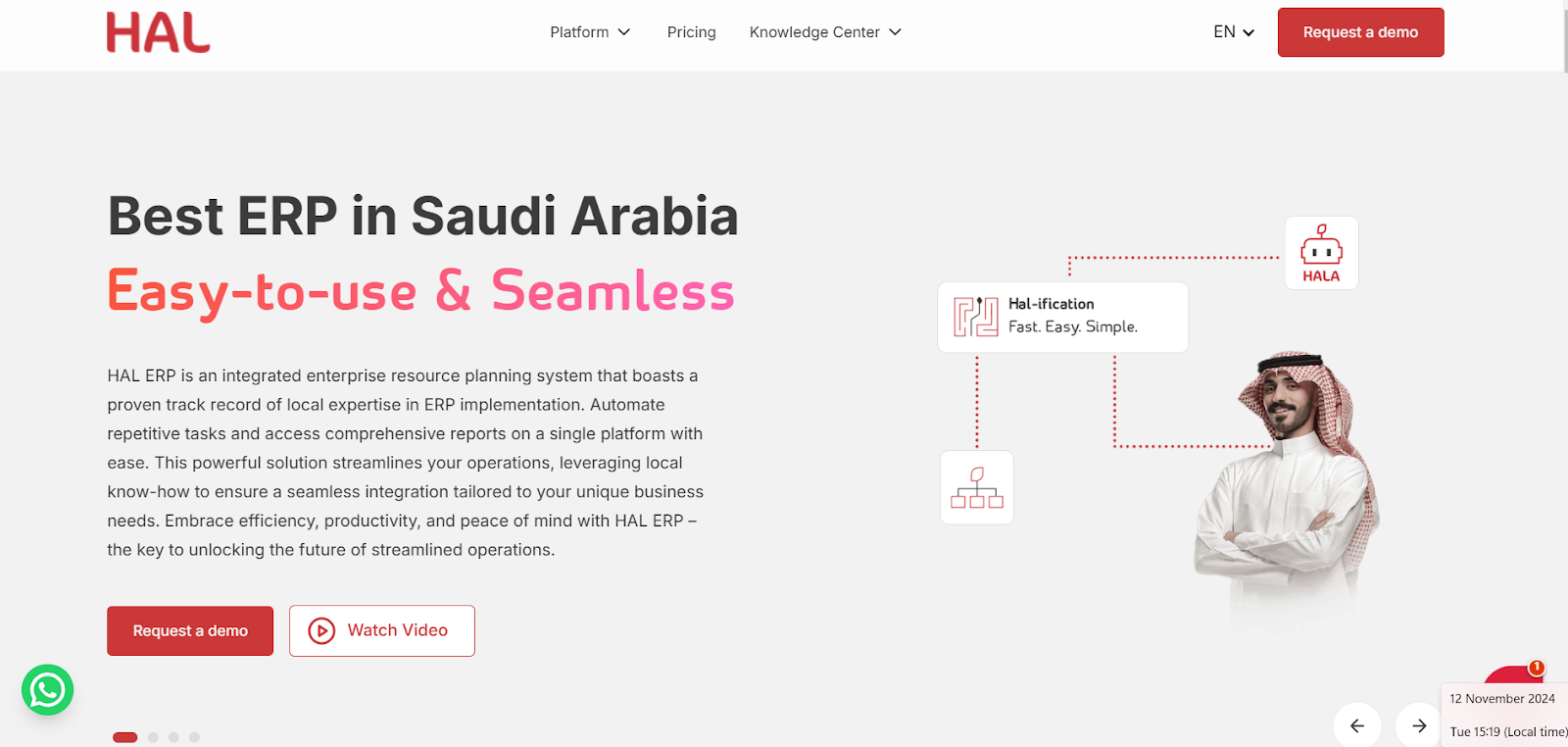
HAL Retail is HAL’s dedicated retail solution for businesses that need inventory, sales, POS, pricing, payments, and financial information connected across their stores.
Its current retail functionality includes:
Best suited for: Saudi small and mid-sized retailers that prioritize local integrations, POS, multi-store operations, ecommerce connectivity, and local support.
Current pricing: HAL’s public pricing currently lists:
One important nuance: HAL currently markets the Platinum plan primarily toward contracting/construction even though its pricing page includes multi-store capability. Retailers needing multiple stores should therefore confirm the appropriate retail configuration and commercial plan rather than assuming Platinum is automatically the required retail package.
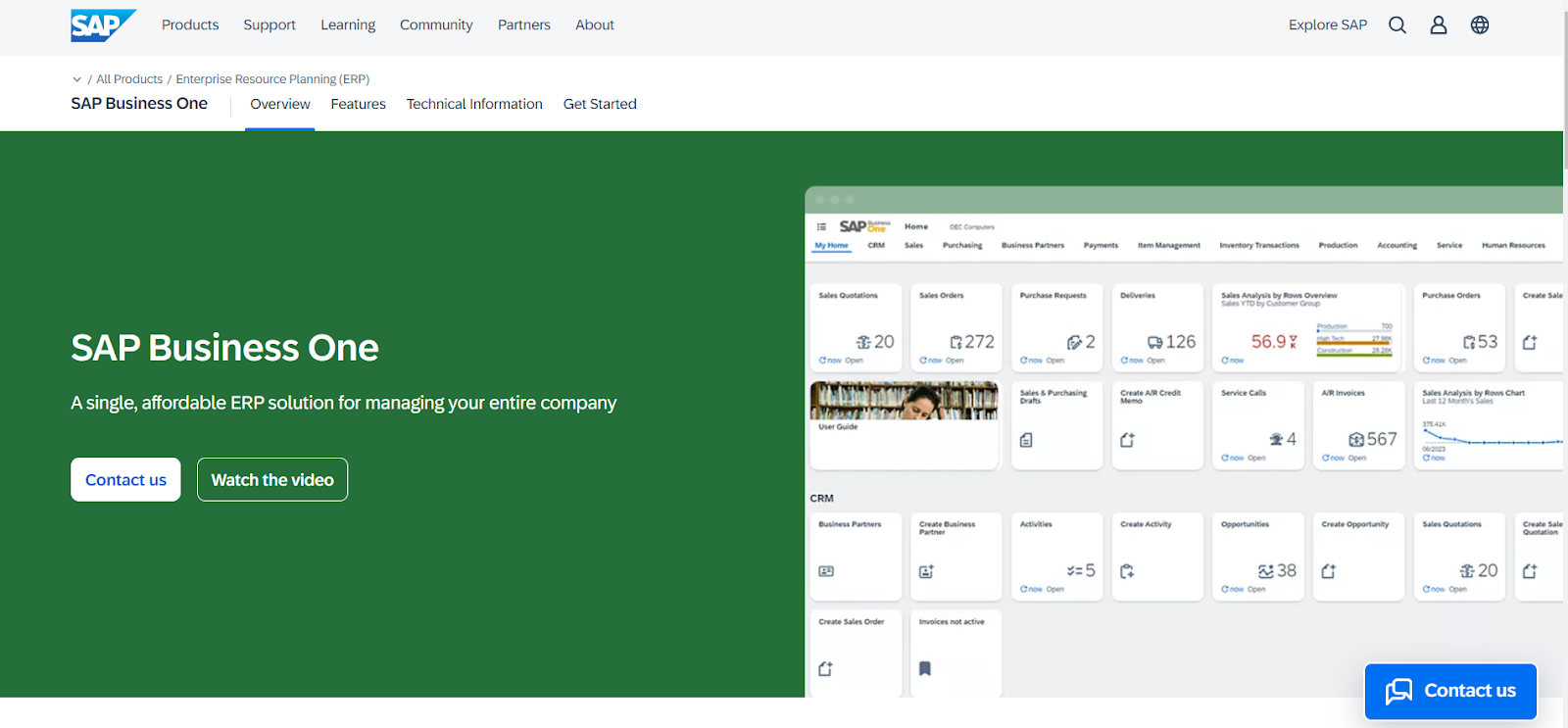
SAP Business One remains specifically positioned by SAP for small and midsize companies.
SAP documents functionality covering:
SAP also maintains dedicated retail positioning for Business One, including real-time inventory across locations/channels, POS insight, merchandising, pricing, and multi-location operations.
Best suited for: Growing retailers with more complex processes and the budget/resources for partner-led implementation.
Considerations: SAP Business One commonly relies on SAP partners and add-ons for parts of the retail stack and local requirements, so Saudi POS and ZATCA implementation should be verified with the selected partner.
Pricing: SAP currently directs prospects to request a quote rather than publishing a universal retail list price. See SAP Business One
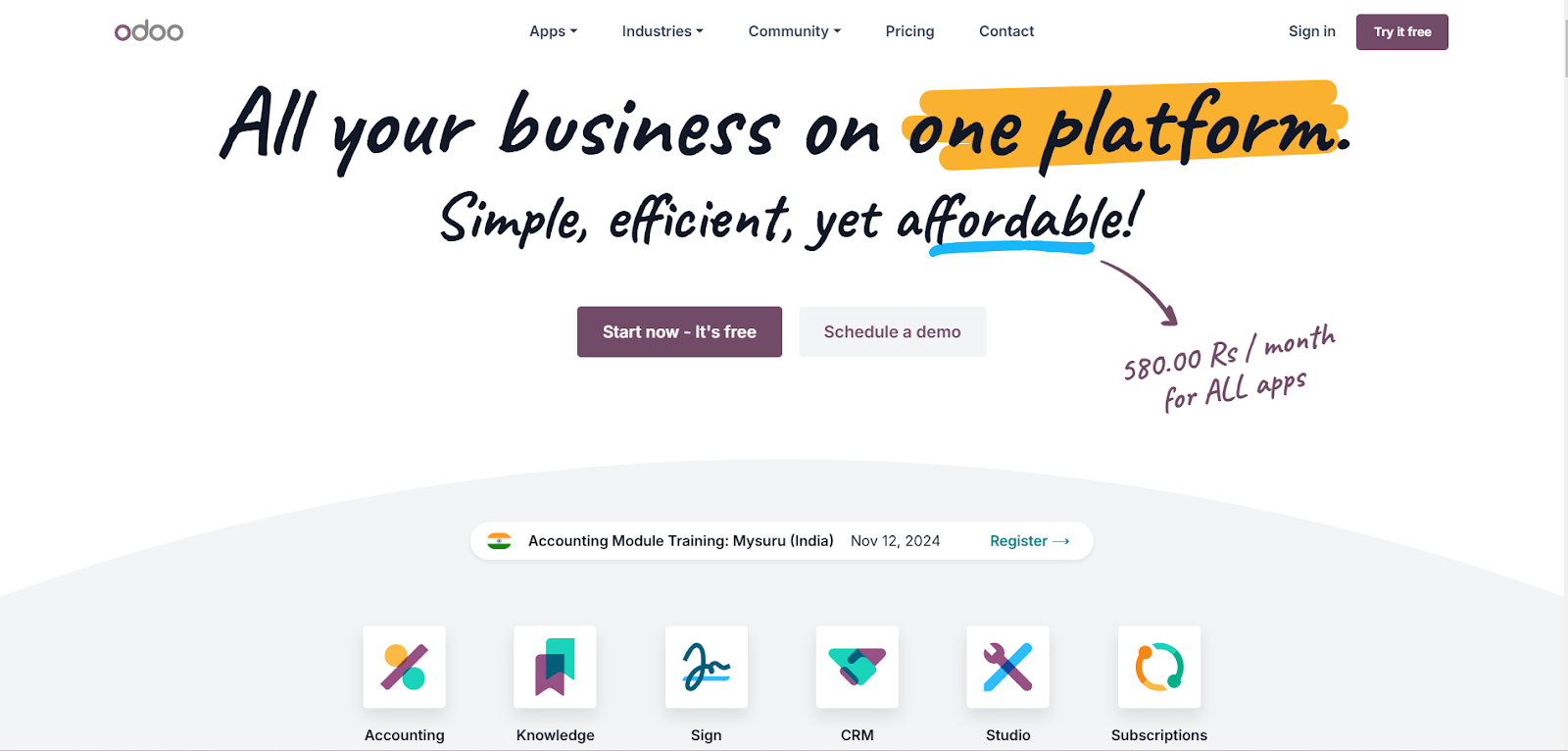
Odoo combines POS, inventory, accounting, CRM, purchasing, ecommerce, HR, and other apps in one modular environment.
Its retail POS currently supports:
Odoo also publishes detailed Saudi Arabia localization documentation covering Arabic invoicing and ZATCA Phase Two integration, including POS e-invoicing.
Best suited for: Smaller retailers that want a broad integrated app suite and are comfortable configuring Odoo around their operations.
Current public pricing: Odoo currently lists:
Businesses requiring custom development or external APIs should pay particular attention to the Custom plan and implementation cost.
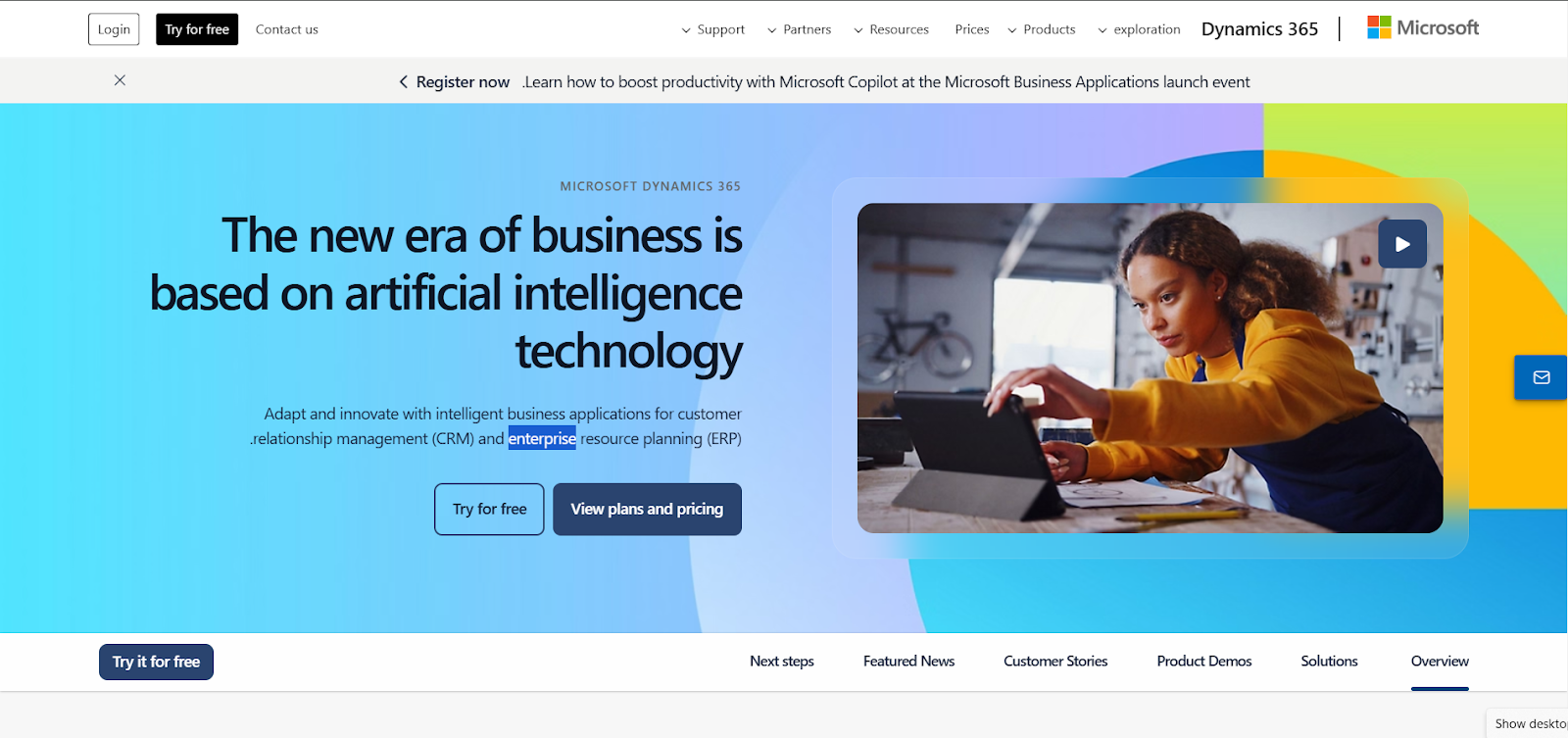
Dynamics 365 Business Central is Microsoft’s ERP for small and midsize organizations.
Its current base plans cover finance, sales, purchasing, inventory, fulfilment, supply-chain planning, warehouse management, and other operational processes.
Retail POS functionality is often provided through Microsoft partner applications rather than being identical to a dedicated retail POS product in the core Business Central license. Microsoft Marketplace, for example, includes retail POS extensions built directly on Business Central.
Best suited for: Retail SMEs already heavily using Microsoft 365, Power Platform, or other Microsoft products and willing to use partner extensions for retail-specific requirements.
Current public pricing:
paid yearly, subject to regional pricing differences. See Business Central pricing
For Saudi deployment, confirm the exact POS, payment, Arabic, and FATOORAH localization provided by the selected Microsoft partner.
NetSuite Retail ERP connects financials with POS, ecommerce, CRM, inventory, order management, and supply-chain information.
NetSuite’s current retail offering includes:
NetSuite is considerably broader than what many very small retailers require, but it becomes more relevant as a company adds locations, channels, brands, or international operations.
Best suited for: Fast-growing retailers with more complex omnichannel and financial requirements.
Pricing: NetSuite currently describes pricing as an annual subscription made up of the core platform, optional modules, number of users, and a separate implementation fee rather than publishing one fixed retail price. See NetSuite Retail ERP
For Saudi businesses, local VAT/e-invoicing and POS requirements should be confirmed for the specific NetSuite implementation rather than assumed from generic global functionality.
Retail ERP should connect checkout transactions with stock, payments, customer records, and accounting.
Evaluate returns, discounts, promotions, cashiers, digital receipts, payment methods, offline operation, and daily closing.
Retailers need accurate visibility into available stock, incoming purchases, transfers, adjustments, and replenishment requirements.
For multi-store businesses, the system should also support stock visibility and movement across locations.
Sales, purchases, expenses, payments, bank activity, and VAT should flow into the accounting environment with clear transaction records.
HAL’s current Accounting product includes automated journal entries, reconciliation, reporting, and financial controls.
Retailers selling online should confirm that ecommerce orders, inventory, customer information, and fulfilment data can move between the storefront and ERP.
Retail businesses may need loyalty points, coupons, customer history, segmented promotions, and store-specific pricing rather than a full enterprise CRM.
HR becomes more relevant as store headcount grows.
A retailer with several locations may benefit from integrated attendance, payroll, employee records, and self-service, but HR should not automatically be presented as more essential than POS, inventory, or purchasing for every small retailer.
There is no useful universal price range for retail ERP.
The final cost depends on:
Current public pricing illustrates how different the models can be.
HAL currently lists its Gold plan at SAR 1,999 per user/year for small businesses and a single store. Its Platinum plan is SAR 4,999 per user/year and includes multi-store capability, while Enterprise pricing is available on demand.
Odoo currently advertises annual-billing plans starting at $24.90 per user/month for Standard under its displayed introductory pricing, while Custom is $49 per user/month.
Microsoft currently lists Dynamics 365 Business Central Essentials at $80 per user/month and Premium at $110 per user/month, paid yearly.
SAP Business One and NetSuite use configuration/quote-based commercial models rather than one universally published small-retail price. NetSuite states that its annual license depends on the core platform, optional modules and users, plus a one-time implementation fee.
These figures are software pricing references, not total implementation budgets.
A retailer should therefore compare the full three- to five-year cost of ownership instead of choosing software from the advertised license price alone.
ERP becomes most valuable to a small retailer when the problem is no longer simply processing sales—it is keeping stores, stock, purchasing, ecommerce, payments, finance, and reporting connected.
The right system depends on the retailer’s actual operating model.
A single-store business may prioritize simplicity, POS, inventory, and accounting. A multi-store or omnichannel retailer may also need central pricing, cross-store inventory, ecommerce synchronization, loyalty, payment integrations, and consolidated reporting.
For businesses operating in Saudi Arabia, local requirements should also carry significant weight.
HAL Retail currently documents multi-outlet inventory, POS, promotions, loyalty, omnichannel sales, digital receipts, online/offline POS operation, and integrations including Tabby, Tamara, Geidea, Shopify, WooCommerce and Salla.
That gives HAL a particularly strong fit for Saudi small and mid-sized retailers that want local retail workflows and integrations without starting with a large global enterprise platform.
HAL’s current public pricing also gives smaller businesses a clearer entry point: its Gold plan is listed at SAR 1,999 per user/year for small businesses and a single store. Retailers needing additional stores or modules should confirm the appropriate configuration directly with HAL rather than assuming they need the Enterprise plan. Review HAL pricing
Businesses comparing their requirements can book a HAL ERP demo and test their actual POS, inventory, payment, ecommerce, and reporting workflows before choosing a system.
There is no single best ERP for every retailer.
HAL is particularly relevant for Saudi small and mid-sized retailers because its current retail solution combines POS, multi-store inventory, payments, promotions, loyalty, ecommerce integrations, and local support. Odoo is another strong SME option, particularly for businesses wanting a highly modular platform with documented Saudi localization.
HAL currently lists its Gold plan at SAR 1,999 per user/year and describes it as tailored for small businesses with a single store. See HAL pricing
Businesses needing multiple locations or additional modules should request a configuration-specific quote.
It depends on the POS.
HAL currently states that HAL POSsible supports both online and offline operation, with offline sales synchronized after connectivity returns.
Odoo POS also documents temporary offline operation.
A very small single-store retailer may only need POS, inventory, and accounting software.
ERP becomes more useful when the business needs several functions or locations to share data—for example POS, purchasing, inventory, ecommerce, accounting, and payroll.
Common requirements can include:
The exact integration should be verified before purchase rather than inferred from generic “API support.”
Affected taxpayers in the Integration Phase need an e-invoicing solution capable of meeting ZATCA’s Phase Two requirements.
The latest Wave 25 covers taxpayers with VAT-subject revenues above SAR 187,500 during 2022–2025, with affected taxpayers required to integrate by February 1, 2027. Read ZATCA’s Wave 25 announcement