Top 10 ERP System Solutions in Saudi Arabia in 2026
Published By
Mohammed Ali Khan
ERP
Mar 10, 2026
In 2026, businesses across the KSA stand at a turning point. As Saudi Arabia pushes full speed towardVision 2030, digital transformation has shifted from a growth advantage to a business necessity. At the center of this shift is one defining decision: choosing the right ERP system in Saudi Arabia.
The Saudi ERP sector isprojected to grow from USD 173.0 million in 2023 to USD 469.2 million by 2030. This surge isn’t fueled by innovation alone. It’s powered by regulation.
From startups to enterprises, selecting the best ERP software in Saudi Arabia means balancing compliance, usability, scalability, and local support. Whether you’re exploring ERP solutions KSA, upgrading to cloud ERP, or evaluating modern ERP systems for Saudi businesses, this guide breaks down the top 10 platforms to help you choose with confidence before competitors and regulations force your hand.
At a Glance:
In 2026, implementing an ERP system in Saudi Arabia is non-negotiable due to ZATCA Phase 2 e-invoicing, 15% VAT enforcement, and Vision 2030’s push toward fully digital operations.
The Best ERP software Saudi Arabia must deliver full ZATCA-compliant ERP capabilities, Arabic language support, Hijri calendar integration, cloud deployment, and reliable local KSA support.
Leading ERP solutions in KSA include HAL ERP, SAP Business One, Microsoft Dynamics 365, Oracle NetSuite, Odoo, Zoho Books, Sage X3, Infor CloudSuite, IFS Cloud, and Acumatica, each suited to different business sizes and industry needs.
Choosing the right Cloud ERP Saudi Arabia depends on ease of use, industry fit, scalability, and how quickly teams can adopt the system without heavy IT overhead.
For ERP systems for Saudi businesses that value simplicity, rapid deployment, and compliance-first design, HAL ERP stands out with WhatsApp-based workflows, AI-powered automation, end-to-end ZATCA compliance, and proven success across KSA.
What is an ERP System and Why Does Your Business Need One?
An ERP system is an integrated software that unifies core business processes across your organization. Think of it as the central nervous system of your company, connecting finance, HR, inventory, sales, procurement, and operations into a single, cohesive platform.
Why ERP is Non-Negotiable in 2026
In 2026, ERP has become a regulatory requirement and a competitive baseline for doing business in Saudi Arabia. Here’s why ERP adoption is now unavoidable:
1. ZATCA E-Invoicing Mandate
Saudi Arabia’s e-invoicing regulations require businesses to generate compliant digital invoices and integrate with ZATCA’s Fatoora platform.
Key requirements include:
Phase 1 (Generation): Businesses must create invoices in XML format with QR codes using compliant systems.
Phase 2 (Integration): Requires real-time integration with ZATCA for invoice clearance, validation, and cryptographic stamping.
Invoice rules: B2B invoices require ZATCA clearance, while B2C invoices must be reported within 24 hours.
Non-compliance penalties: Fines range from SAR 5,000 to SAR 50,000 per violation.
Without a ZATCA-compliant ERP system, businesses risk regulatory penalties and operational disruption.
2. VAT Compliance
Saudi Arabia’s 15% VAT framework requires accurate tax calculations and audit-ready reporting.
ERP systems support compliance through:
Automated VAT calculations.
Simplified VAT return generation.
Complete digital audit trails.
Direct integration with ZATCA reporting systems.
3. Vision 2030 Digital Transformation
Saudi Arabia’s Vision 2030 initiative is accelerating digital transformation across industries. Businesses are expected to operate with modern, integrated systems.
ERP supports this shift by enabling:
Paperless finance and procurement workflows.
Scalable digital infrastructure for growing companies.
But operating in Saudi Arabia requires more than generic accounting and inventory modules. So, is any ERP good enough?
Key Features to Look for in a Saudi ERP System
Not all ERP systems are created equal, especially in the Saudi market. The following features are non-negotiable if you want long-term compliance, scalability, and peace of mind.
Arabic Language Interface and Support: Full Arabic localization for user interfaces, reports, and customer-facing documents. Local Arabic-speaking customer support team available 24/7.
Hijri Calendar Integration: A dual calendar system supporting both Gregorian and Hijri dates for official documentation and reporting.
Multi-Currency Support (SAR Primary): Handle transactions in Saudi Riyals and international currencies with automated exchange rate updates.
ZATCA and SAMA Compliance: Certified integration with government portals for e-invoicing, VAT reporting, and financial regulations.
Local Customer Support: On-the-ground teams in Riyadh, Jeddah, and Dammam for implementation, training, and ongoing assistance.
Cloud-Based Deployment Options: Secure, scalable cloud hosting with data residency within Saudi Arabia for compliance with PDPL (Personal Data Protection Law).
Mobile Accessibility: Native iOS and Android apps for managing operations on the go, plus WhatsApp integration for instant updates.
Industry-Specific Modules: Pre-configured solutions for contracting, retail, manufacturing, services, trading, and healthcare sectors.
Integration with Saudi Payment Gateways: Seamless connectivity with Mada, STC Pay, Hyperpay, Tabby, Tamara, and banking systems.
Now that you understand why ERP is essential for your Saudi business and what features matter most, let's explore the top 10 ERP systems available in Saudi Arabia for 2026.
10 Best ERP Software for KSA Businesses in 2026
With multiple ERP solutions in KSA claiming compliance, scalability, and ease of use, choosing the right platform can feel overwhelming. This curated list breaks down the best ERP software Saudi Arabia has to offer.
1. HAL ERP
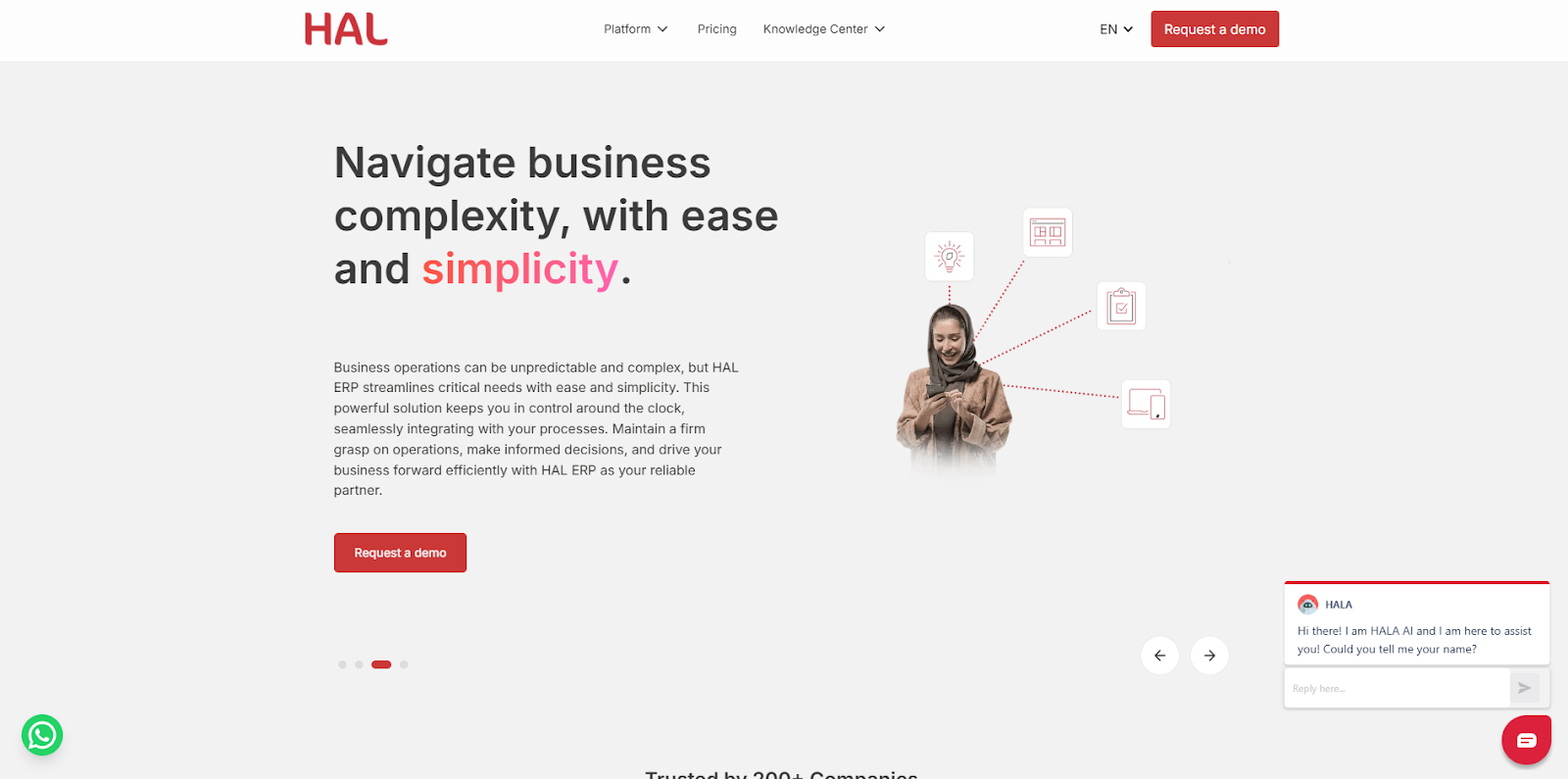
HAL ERP is a cloud-based, AI-powered ERP built specifically for Saudi Arabia and the GCC. Frequently rated as one of the easiest ERP systems to use, it combines local compliance, conversational AI, and mobile-first workflows. The platform is used by 200+ companies across industries and is designed to minimize training time while maximizing adoption.
Why HAL ERP Stands Out
WhatsApp-Native ERP: HAL is the first ERP with native WhatsApp functionality, allowing approvals, inventory checks, and report access directly within WhatsApp. This dramatically improves speed, reduces dependency on desktops, and increases daily system usage among leadership teams.
Conversational AI Interface: Users can interact with the system in Arabic or English using natural language. HAL’s AI generates instant reports, automates data entry, and delivers predictive insights, making advanced analytics accessible without technical expertise.
Excel-Like User Experience: HAL’s spreadsheet-style interface feels instantly familiar, reducing onboarding friction. Drag-and-drop workflows and no-code customization allow teams to adapt the system quickly without IT dependency.
ZATCA Phase 1 & Phase 2 Certified: HAL is fully compliant with Saudi e-invoicing regulations, offering automated invoice generation, cryptographic stamping, real-time clearance, and compliance alerts through direct ZATCA integration.
All-in-One Business Suite: HAL consolidates finance, VAT, inventory, HR, and payroll (WPS, GOSI), CRM, procurement, POS, and project management into a single platform, eliminating the need for multiple disconnected tools.
Deep Local Integrations: The system integrates with Arab National Bank, e-commerce platforms, and logistics providers like Practo, Noon, Pos Bytz, Shopify, Zid, etc.
Industry Fit
Best suited for contracting, trading and distribution, manufacturing, retail and e-commerce, professional services, and healthcare organizations.
Pricing and Support
Plan
Price
Key Inclusions
Support & Scalability
Gold Plan
SAR 1,999 / user/year
Core accounting, sales & procurement modules, access to webinars
12 support tickets, single-store management
Platinum Plan (Most Popular)
SAR 4,999 / user/year
Everything in Gold, plus consumable management, cost accounting, and asset management
36 support tickets, multi-store management
Enterprise Plan
On-demand pricing
All Platinum features plus HR, group company management, and advanced project management modules
Custom support structure, enterprise-grade scalability
Proven Results
Al Homaidhi Group, a leading Saudi luxury retailer, achieved over SAR 70 million in cost savings and a 61% improvement in operational efficiency using HAL ERP. Real-time reporting, dynamic pricing, and WhatsApp-based invoicing eliminated weekly reporting delays and enabled faster, data-driven decisions across stores.
So, if usability, mobile-first management, and Saudi compliance are top priorities, HAL ERP consistently outperforms more complex, global ERP platforms. See how HAL ERP simplifies financial management, compliance, and day-to-day operations for businesses across Saudi Arabia.
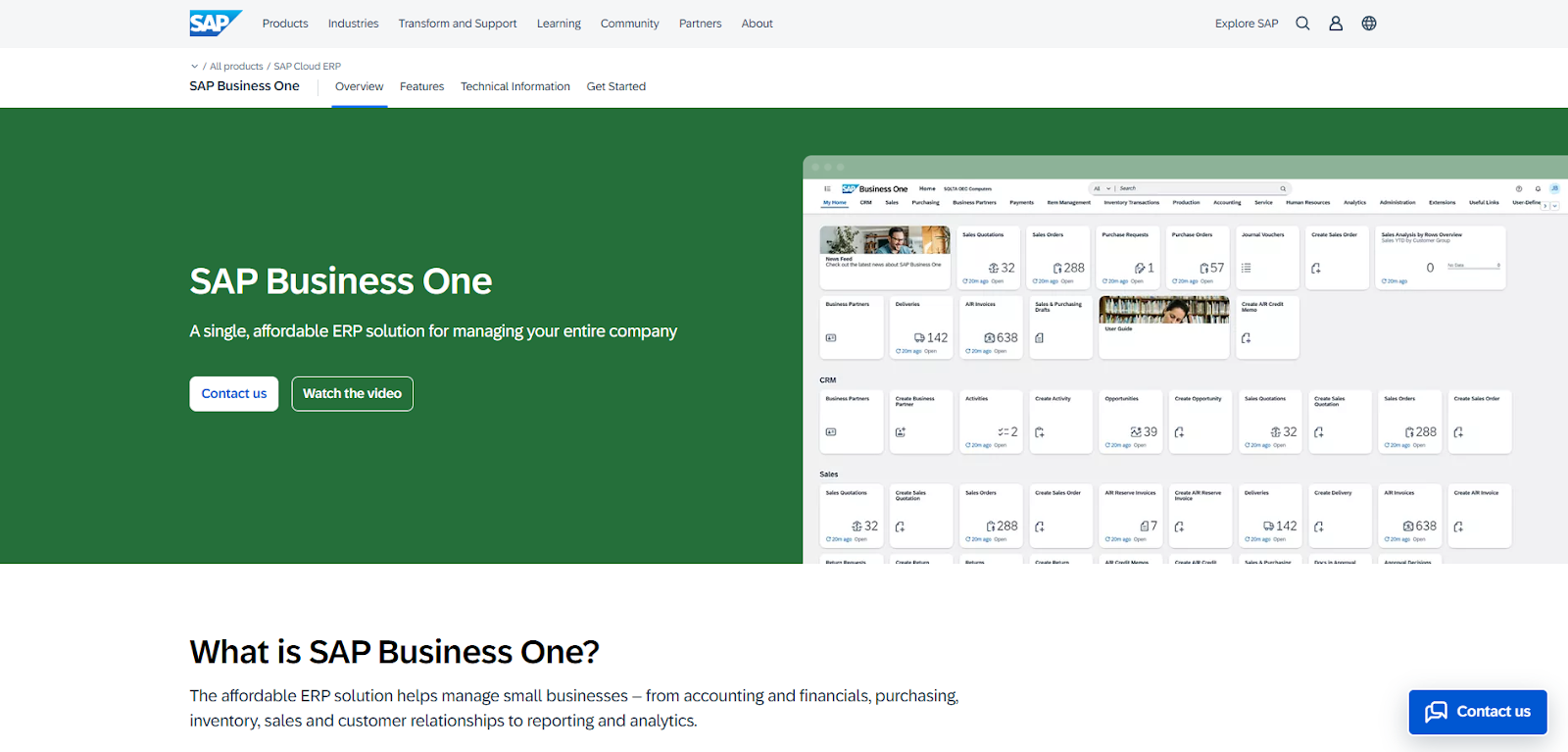
SAP Business One is a globally recognized ERP solution designed for mid-to-large enterprises with complex, multi-entity operations. With a strong implementation partner ecosystem in Saudi Arabia and certification for local regulatory requirements, it is widely trusted by large organizations and Fortune 500–backed businesses that prioritize control, scalability, and depth over speed and simplicity.
Why SAP Business One Stands Out
Enterprise-Grade Financial Management: SAP Business One offers advanced accounting, budgeting, cash flow forecasting, and financial controls, making it suitable for organizations with complex reporting and compliance needs.
Global Scalability: The platform supports multi-entity, multi-currency, and multi-language operations, enabling seamless consolidation across subsidiaries and international business units.
Deep Industry Expertise: With over 25 industry-specific solutions, SAP Business One caters to verticals such as manufacturing, retail, logistics, and services, offering tailored workflows and reporting structures.
Extensive Integration Ecosystem: SAP Business One integrates with over 1,000 third-party applications, allowing enterprises to extend functionality across analytics, supply chain, HR, and customer experience platforms.
ZATCA-Certified Compliance: The system is certified for Saudi e-invoicing requirements, supporting VAT compliance and regulatory reporting aligned with ZATCA mandates.
Considerations
SAP Business One comes with enterprise-level pricing, making it a higher investment compared to mid-market ERPs. Implementation timelines are typically longer, ranging from 6 to 12 months, and customization often requires certified consultants and dedicated internal IT resources.
SAP Business One is a powerful choice for enterprises in KSA that need depth, global scalability, and industry-specific rigor. But it may be excessive for smaller or fast-moving organizations seeking rapid deployment.
Microsoft Dynamics 365 combines ERP and CRM capabilities into a single, cloud-first platform tightly integrated with Microsoft 365, Teams, Power BI, and Azure. With strong adoption in Saudi Arabia and built-in localization, it is an ideal choice for organizations already invested in the Microsoft ecosystem.
Why Microsoft Dynamics 365 Stands Out
Native Microsoft Integration: Dynamics 365 seamlessly connects with Office 365, Teams, and Power BI, enabling familiar workflows, real-time collaboration, and advanced analytics within tools employees already use daily.
AI-Driven Automation and Insights: With Copilot integration, Dynamics 365 leverages AI to automate routine tasks, surface predictive insights, and enhance decision-making across finance, sales, and operations.
Flexible Deployment Models: Organizations can choose cloud, on-premise, or hybrid deployments, offering flexibility for compliance, data residency, and legacy infrastructure requirements.
Broad Industry Coverage: The platform supports a wide range of industries, including finance, retail, manufacturing, and field services, with configurable modules to match diverse operational needs.
Saudi Localization and Compliance: Dynamics 365 supports VAT reporting, ZATCA e-invoicing, and Hijri calendar requirements, ensuring regulatory alignment for businesses operating in Saudi Arabia.
Considerations
Licensing structures can be complex, especially when combining ERP and CRM modules. Implementation typically requires a certified Microsoft partner, and costs fall within the mid-to-high enterprise range. The platform delivers maximum value when organizations fully leverage the Microsoft technology stack.
For Microsoft-centric organizations, Dynamics 365 offers one of the most cohesive ERP-CRM ecosystems available, but its value diminishes if the broader Microsoft stack isn’t fully adopted.
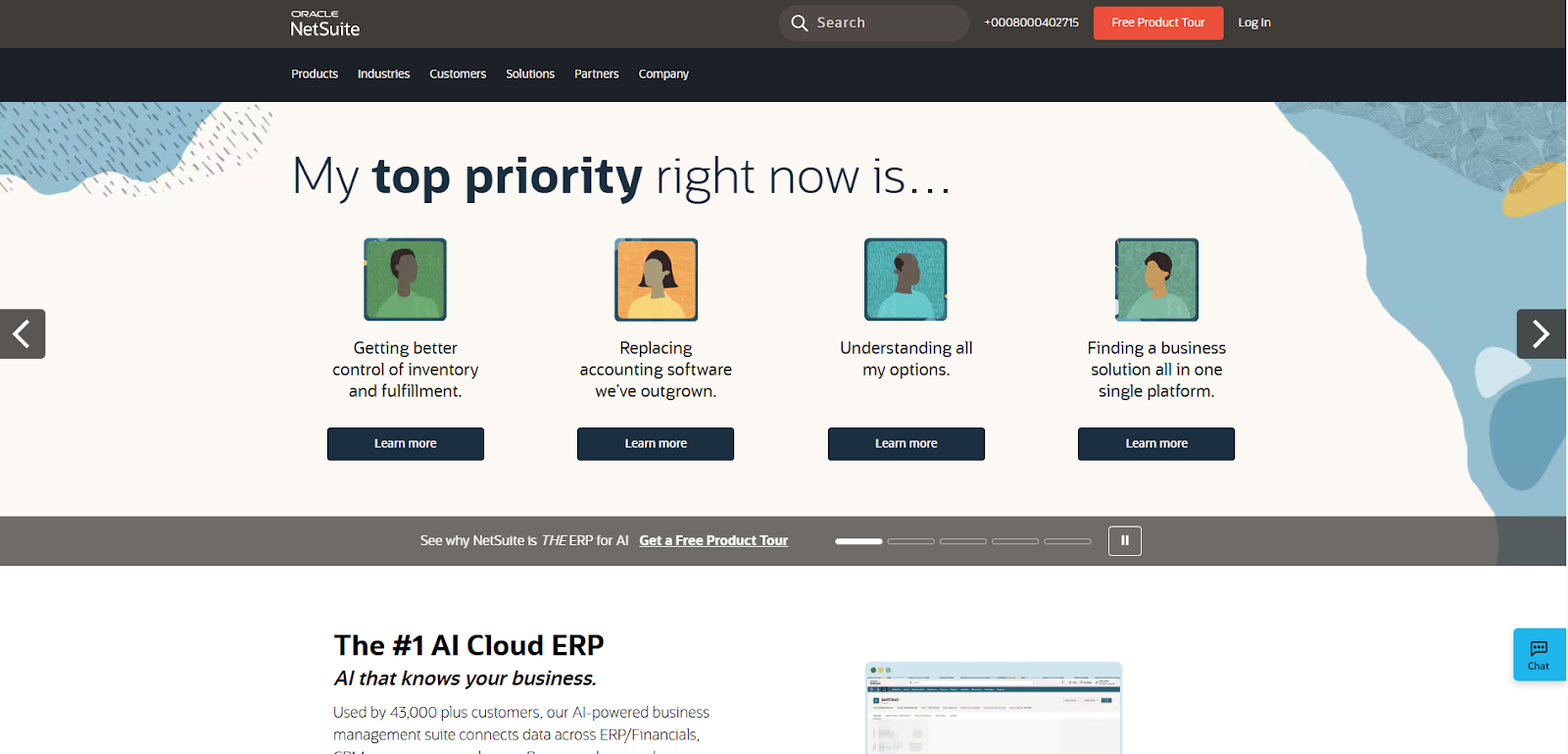
Oracle NetSuite is a pure cloud ERP built for organizations that want real-time visibility, automatic updates, and global scalability without managing on-premise infrastructure. With a strong international footprint and Saudi-ready compliance, NetSuite is often chosen by fast-growing and multi-subsidiary businesses that prioritize always-current functionality.
Why Oracle NetSuite Stands Out
True Cloud Architecture: NetSuite is fully cloud-native with no on-premise option, offering high availability and a 99.5% uptime guarantee. Automatic upgrades ensure businesses always run the latest features without disruption.
Unified Business Platform: Finance, inventory, commerce, and HR operate on a single system, eliminating data silos and enabling real-time business intelligence across departments.
Advanced Customization Framework: SuiteScript allows tailored workflows, automations, and extensions, making NetSuite adaptable to complex operational requirements.
Multi-Subsidiary & Global Management: The platform is well-suited for organizations managing multiple entities, currencies, and geographies, with centralized control and consolidated reporting.
Saudi Compliance Readiness: NetSuite supports VAT reporting and ZATCA-aligned compliance modules through localization frameworks and implementation partners.
Considerations
Oracle NetSuite sits in a premium pricing tier and typically requires annual contract commitments. Customization and advanced configurations often demand technical expertise, and offline functionality is limited due to its cloud-only architecture.
NetSuite excels for cloud-first, globally scaling businesses, but its cost and technical complexity may be overkill for smaller or locally focused organizations.
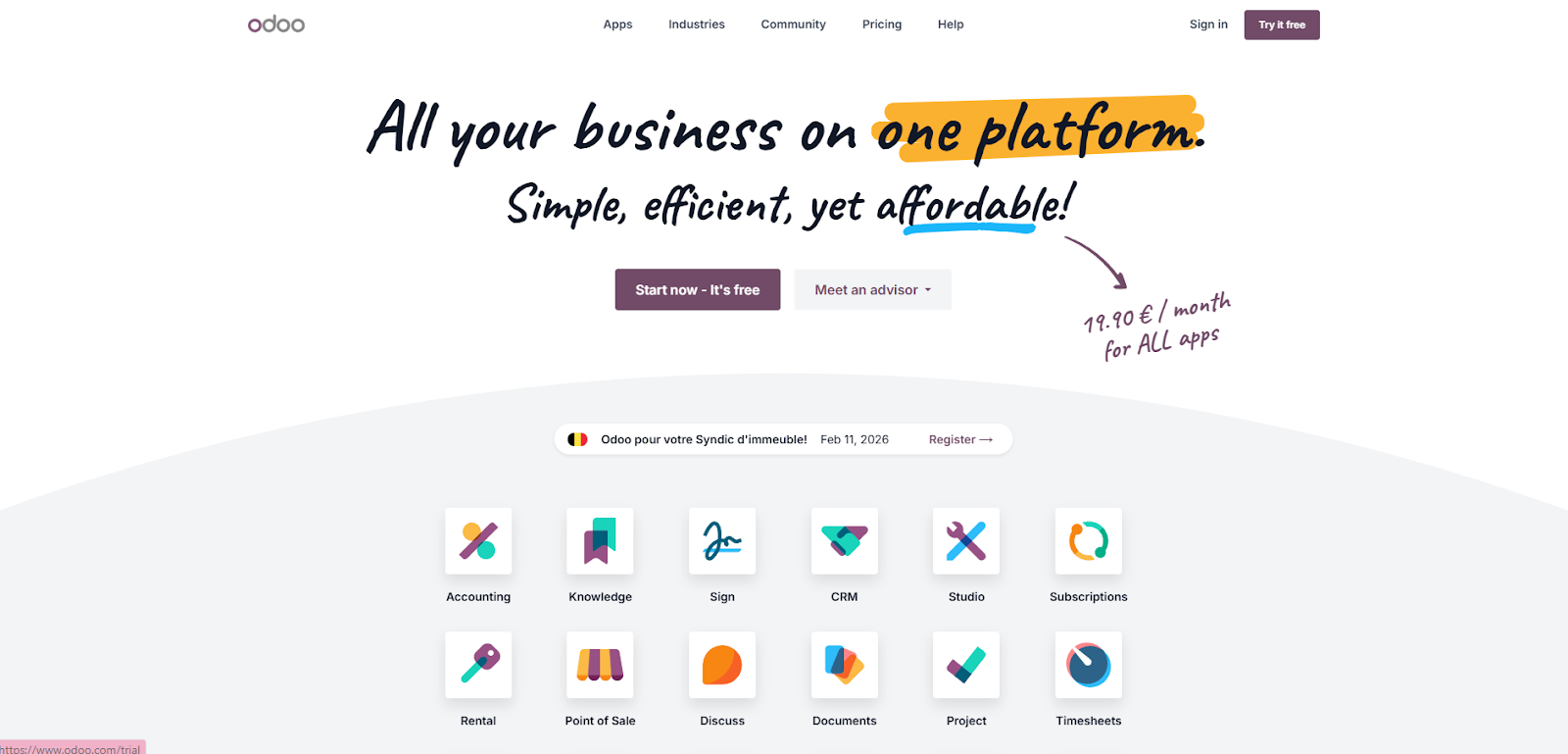
Odoo is a modular, open-source ERP designed for businesses that want flexibility and affordability. Its pay-as-you-grow model and extensive app marketplace make it a popular choice for startups and SMEs seeking gradual ERP adoption without heavy upfront investment.
Why Odoo Stands Out
Low Entry Cost and Flexible Pricing: Odoo allows businesses to start small and scale over time, making it one of the most budget-friendly ERP options available.
Highly Modular Architecture: Companies can begin with core modules such as accounting or inventory and add functionality as their operations expand.
Open-Source Customization: Full access to the source code enables deep customization, making Odoo attractive to tech-savvy teams with specific process requirements.
Modern, Intuitive Interface: Despite its flexibility, Odoo maintains a clean, user-friendly interface that supports quick adoption.
Saudi Localization via Partners: ZATCA and VAT compliance can be achieved through Saudi implementation partners offering localized configurations.
Considerations
Complex customizations usually require a technical partner, and support quality depends heavily on the chosen implementer. Some advanced capabilities are only available in paid modules, and self-hosting requires in-house IT infrastructure.
Odoo offers exceptional flexibility for the price, but success depends largely on partner quality and internal technical capability.
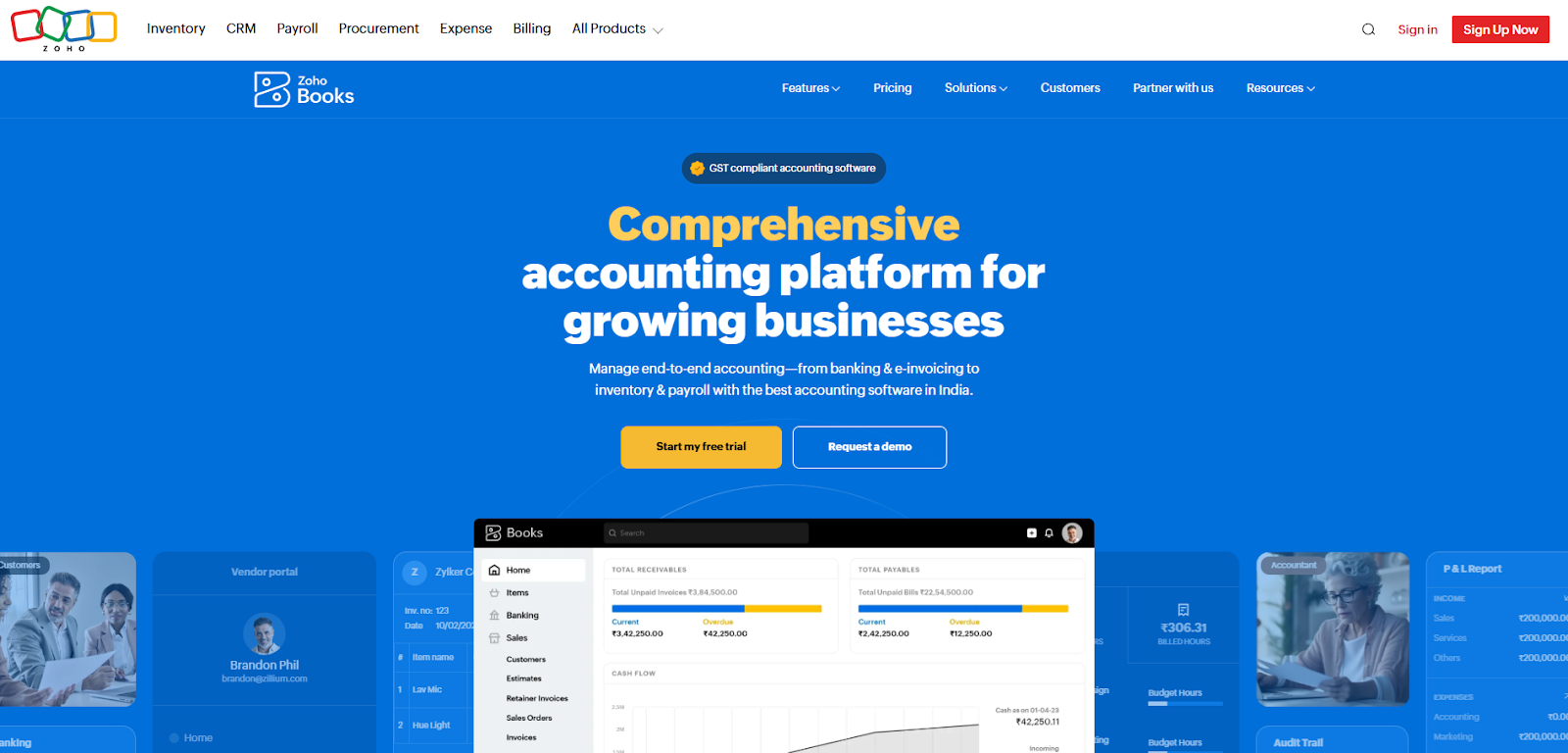
Zoho Books is part of the broader Zoho ecosystem and serves as a lightweight ERP suite for small businesses transitioning from spreadsheets. It emphasizes ease of use, fast setup, and affordability over deep enterprise functionality.
Why Zoho Books Stands Out
Rapid Implementation: Businesses can get started in days rather than months, making Zoho Books ideal for teams that need immediate structure.
Integrated Zoho Ecosystem: Seamless connections with Zoho CRM, Inventory, and Projects provide an end-to-end operational setup for small teams.
Mobile-First Access: Native iOS and Android apps allow owners and managers to track finances and operations on the go.
Cost-Effective Pricing: Plans start at approximately SAR 60 per user per month, making it one of the most affordable ERP-style solutions available.
Saudi VAT Compliance: Built-in VAT reporting supports basic Saudi compliance needs for small businesses.
Considerations
Zoho Books has limited advanced manufacturing and supply chain functionality and may not scale well for rapidly growing or highly complex organizations. Customer support is primarily online.
Zoho Books is a strong entry-level ERP, but most businesses will eventually outgrow it as complexity increases.
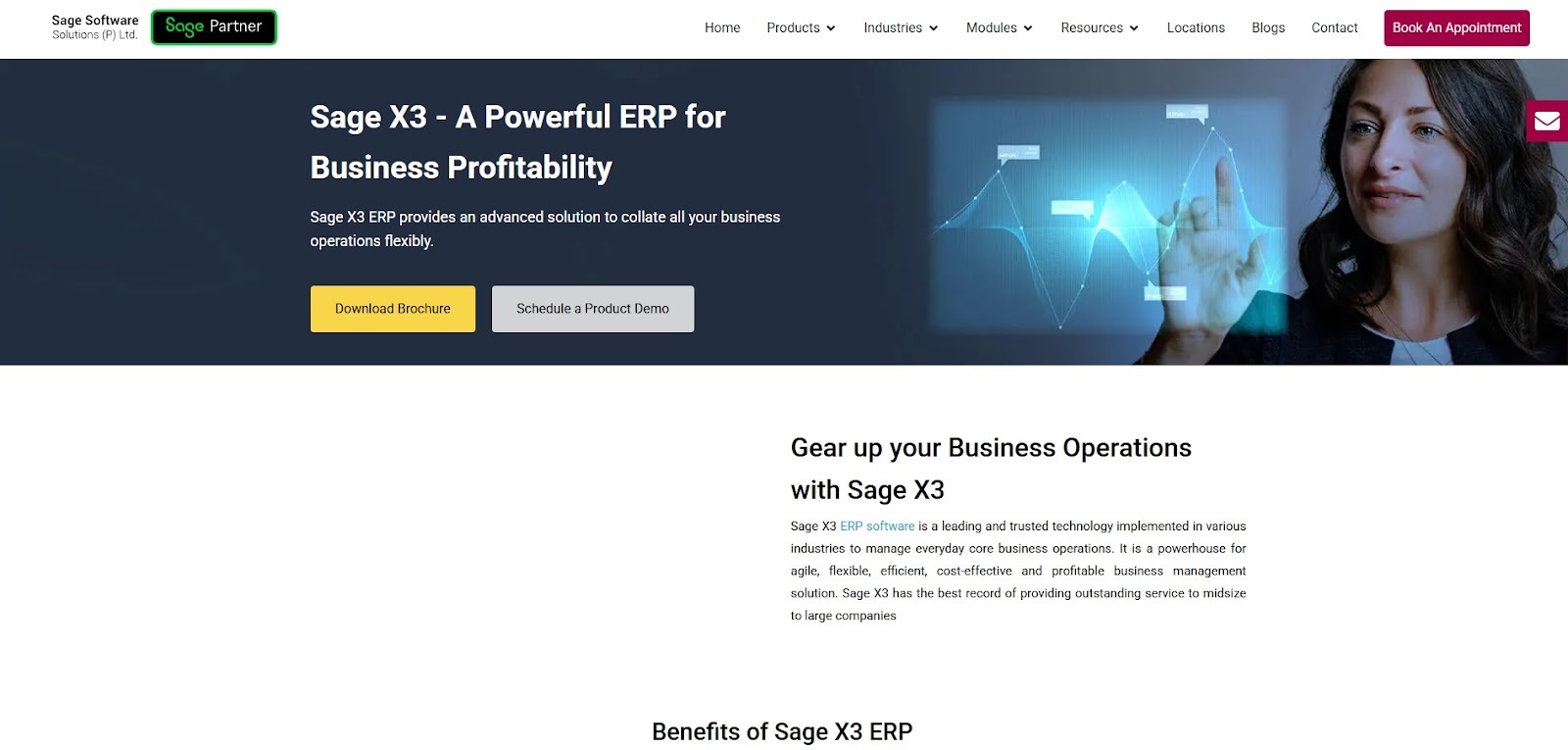
Sage X3 is a manufacturing-focused ERP built for organizations with complex production and supply chain requirements. It offers deep operational control and multi-site support, making it a strong choice for industrial businesses.
Why Sage X3 Stands Out
Manufacturing-First Capabilities: Sage X3 excels in production planning, quality control, and shop floor management for both discrete and process manufacturing.
Advanced Supply Chain Management: The system provides strong inventory, procurement, and distribution functionality across multiple sites.
Enterprise-Grade Financials: Supports multi-GAAP, multi-currency accounting, suitable for manufacturers with international operations.
Scalable Architecture: Designed to grow from mid-sized manufacturers to enterprise-level operations.
Saudi Compliance Support: Includes VAT reporting and ZATCA-aligned compliance features through localization.
Considerations
Sage X3 can be complex to implement, especially for businesses outside manufacturing. Costs are higher than general ERPs, and the learning curve is steeper without manufacturing expertise.
Sage X3 is ideal for discrete and process manufacturers, companies with complex supply chains, multi-facility operations, and make-to-order or engineer-to-order environments. But it’s not optimized for service-led or lightweight operations.
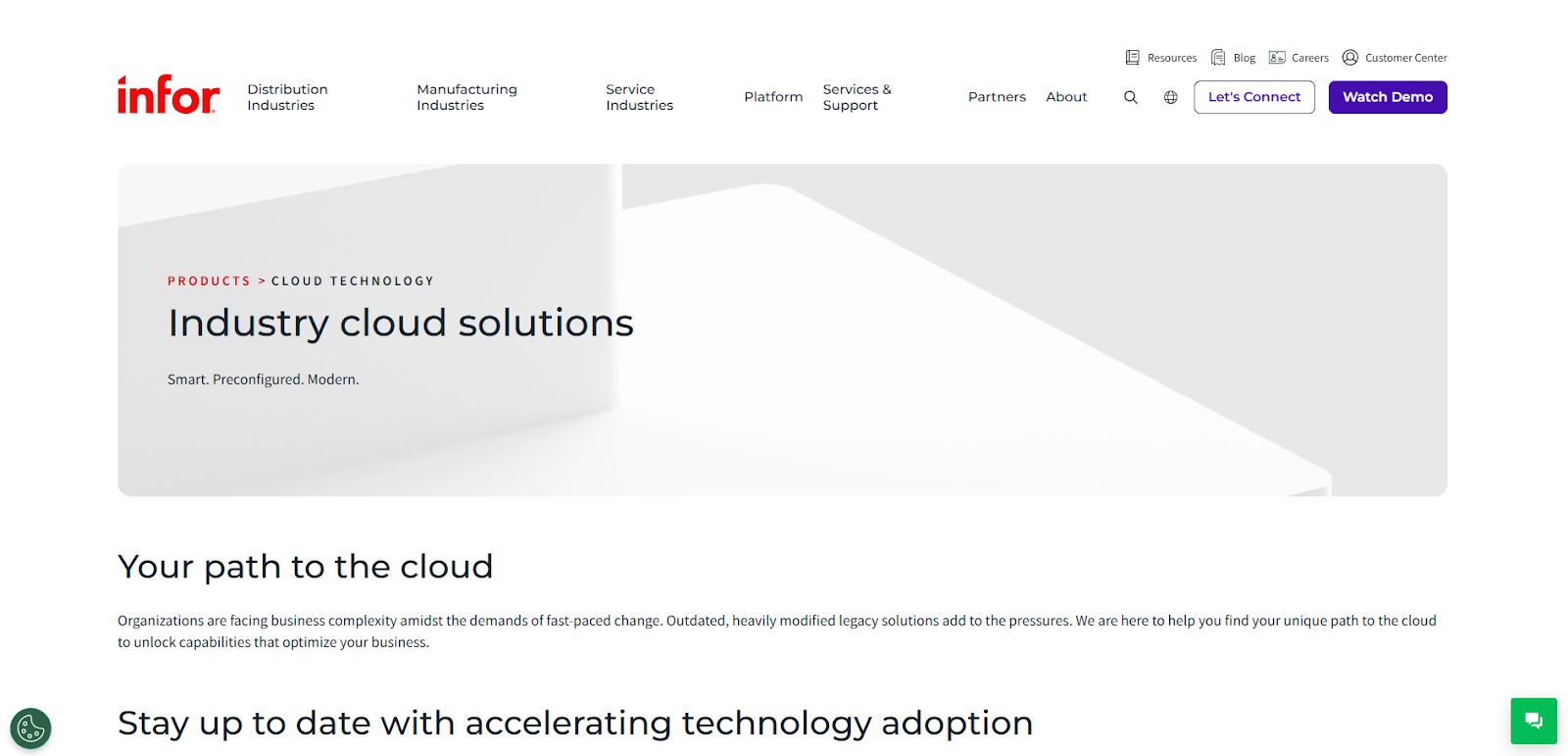
Infor CloudSuite is a cloud-based ERP family designed around deep industry specialization rather than generic business processes. Built for organizations that operate in clearly defined verticals, it delivers pre-configured workflows, sector-specific functionality, and a modern user experience tailored to how each industry actually works.
Why Infor CloudSuite Stands Out
Purpose-Built Industry Depth: Infor CloudSuite offers dedicated ERP editions for industries such as hospitality, healthcare, distribution, fashion, and food and beverage. This vertical-first approach reduces the need for heavy customization and ensures alignment with industry best practices from day one.
Pre-Configured Workflows: Industry-specific processes are built into the system, allowing organizations to go live faster while minimizing customization effort and implementation risk.
Advanced Analytics with Birst BI: Infor’s integrated Birst business intelligence platform provides real-time dashboards, embedded analytics, and predictive insights tailored to industry KPIs.
Mobile-First User Experience: With Infor Ming.le, the platform delivers a modern, intuitive interface optimized for mobile usage, enabling frontline teams and managers to access critical information on the go.
Regional and Saudi Localization: Infor CloudSuite supports regional compliance requirements, including Saudi VAT and regulatory localization, through industry-aligned configurations and local partners.
Considerations
Infor CloudSuite operates in a premium pricing tier and delivers the strongest ROI within its target industries. Implementation typically depends on certified partners, and the platform may be excessive for businesses that do not require deep vertical specialization.
Infor CloudSuite excels when industry fit matters more than flexibility, but for general-purpose businesses, its depth may be more than necessary.
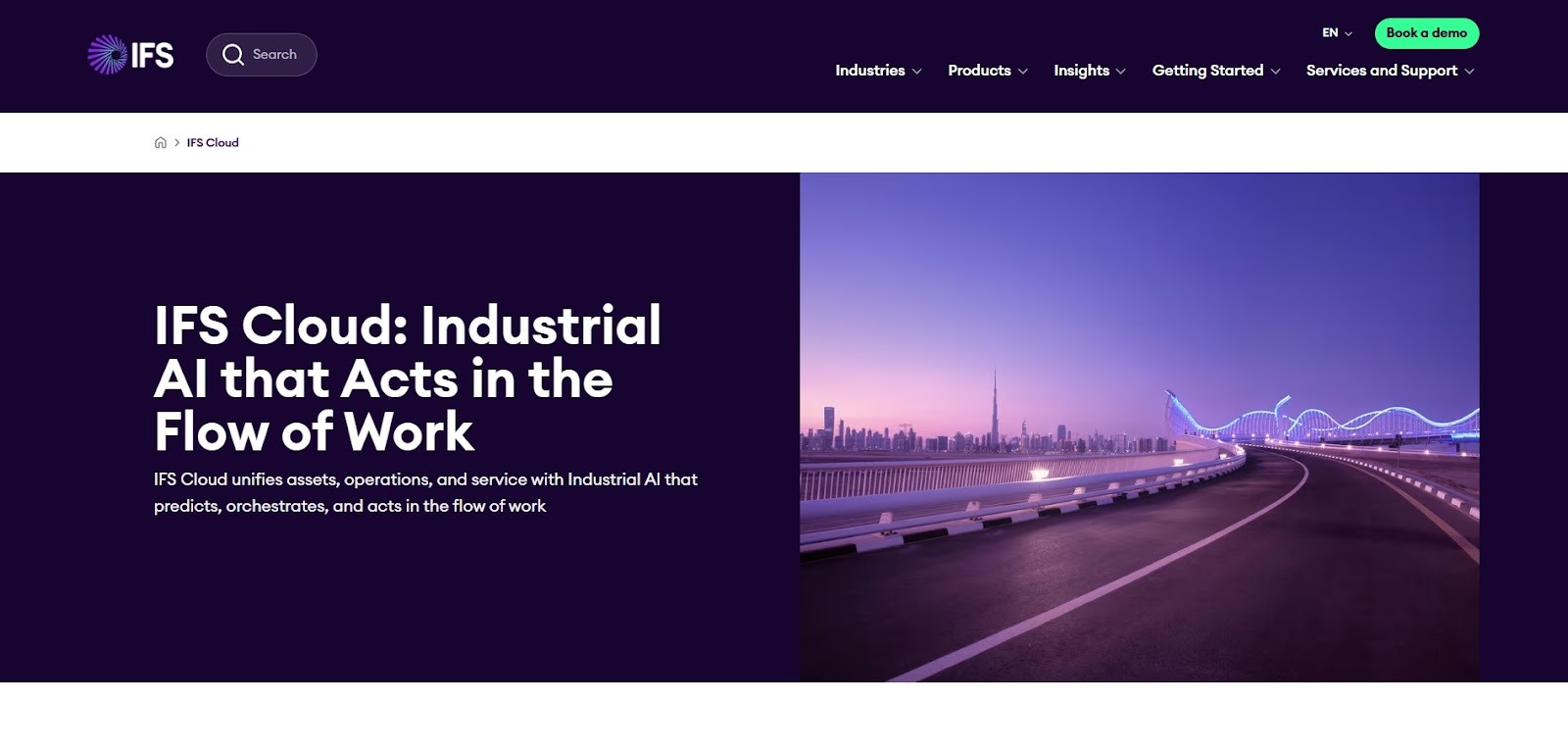
IFS Cloud is a service-centric ERP designed for organizations where asset performance, service delivery, and project execution are core to business success. With strong capabilities in field service, asset lifecycle management, and complex project environments, IFS Cloud is particularly well-suited for service-intensive and asset-heavy industries.
Why IFS Cloud Stands Out
Advanced Service Management: IFS Cloud excels in scheduling, dispatching, and managing mobile workforces, making it a strong choice for organizations that rely on field service operations and real-time service execution.
End-to-End Asset Lifecycle Management: The platform provides comprehensive tools for asset tracking, preventive maintenance, and depreciation management, supporting improved uptime and long-term asset performance.
Project-Centric Capabilities: IFS Cloud is well aligned with engineering, construction, and professional services organizations, offering deep support for project-based planning, execution, and cost control.
Specialization in Complex Industries: The solution has a strong footprint in aviation and defense, where regulatory complexity, safety requirements, and asset reliability are critical.
Local Saudi Presence: IFS Cloud operates through certified local partners in Saudi Arabia, offering regional expertise, implementation support, and ongoing services.
Considerations
IFS Cloud typically involves a complex pricing structure and longer implementation timelines compared to general-purpose ERPs. The platform delivers the most value for service-intensive organizations and requires specialized training to fully leverage its capabilities.
IFS Cloud is a top-tier choice for service- and asset-driven businesses, but it may be excessive for companies without heavy service or project complexity.
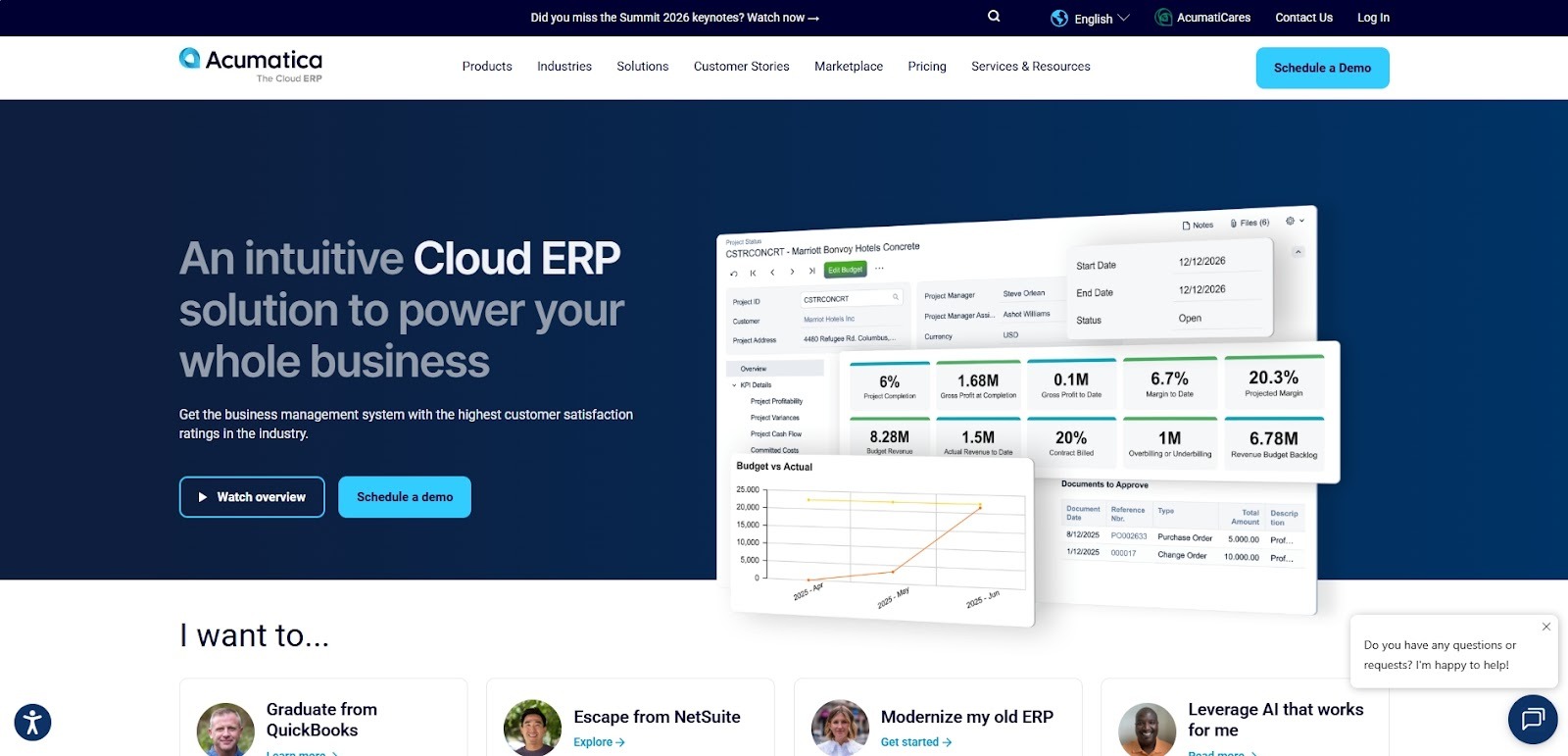
Acumatica is a modern, cloud-based ERP designed for distribution, commerce, and growing businesses that require flexibility and scalability. Its consumption-based pricing model and unlimited user licensing make it especially attractive for organizations with large or fluctuating user bases.
Why Acumatica Stands Out
Unlimited User Licensing Model: Unlike traditional ERPs, Acumatica pricing is based on system resource usage rather than per-user licenses, allowing organizations to scale teams without escalating licensing costs.
Strong Distribution Capabilities: The platform offers advanced inventory management, warehousing, and order processing features tailored for wholesale and distribution-driven businesses.
Built-In E-Commerce Integrations: Native connectors enable seamless integration with e-commerce platforms, supporting omnichannel sales and real-time order synchronization.
Mobile-First Access: Acumatica provides native mobile applications across modules, ensuring operational continuity for sales, warehouse, and management teams.
API-First Architecture: With a modern, open API framework, Acumatica integrates easily with third-party applications, making it highly adaptable to existing tech ecosystems.
Considerations
Acumatica is relatively newer in the Saudi market and has a smaller local support footprint compared to established ERP vendors. Pricing can increase for high-volume transaction environments, and localization typically requires an implementation partner.
Acumatica is a strong option for distribution and commerce-led organizations, but Saudi-specific support and localization should be evaluated carefully.
Choosing the right ERP system in Saudi Arabia in 2026 is a strategic move that directly impacts compliance, efficiency, and long-term growth. With ZATCA Phase 2 enforcement, Vision 2030 accelerating digitization, and rising customer expectations, businesses must adopt ERP solutions that are built for the local market.
So, whether you’re evaluating ERP solutions KSA or upgrading to cloud ERP Saudi Arabia, focus on systems that scale with your business without adding complexity.
For ERP systems for Saudi businesses that value simplicity and speed, HAL ERP stands out with WhatsApp-based workflows, AI-powered automation, rapid implementation, and proven success across KSA.
What is the best ERP system for small businesses in Saudi Arabia?
For small businesses (1-50 employees), HAL ERP stands out as the best choice due to its ease of use, quick implementation (4-8 weeks), WhatsApp integration for on-the-go management, and affordable pricing. Odoo and Zoho are also excellent budget-friendly alternatives for startups, though they may require more technical expertise for customization.
Is cloud ERP secure for Saudi businesses?
Yes, when implemented correctly. Look for providers offering data residency within Saudi Arabia (compliance with PDPL), SOC 2 Type II certification, encryption at rest and in transit, regular security audits, and backup/disaster recovery. HAL ERP, Microsoft Dynamics, and Oracle NetSuite all provide enterprise-grade security with local data hosting options.
What is ZATCA e-invoicing, and how does it work?
ZATCA e-invoicing is Saudi Arabia's mandatory electronic invoicing system for VAT-registered businesses. Phase 1 requires generating e-invoices with QR codes in compliant software. Phase 2 (currently being enforced in waves) mandates real-time integration with ZATCA's Fatoora portal, cryptographic stamping, and invoice clearance/reporting. Non-compliance carries fines up to SAR 50,000. All ERP systems in this guide offer ZATCA-certified solutions.
Can I switch from one ERP system to another?
Yes, but it requires careful planning. Data migration, staff retraining, process realignment, and potential business disruption must be managed. The best approach is to choose the right system from the start by thoroughly evaluating your needs and testing demos. If migration is necessary, work with experienced implementation partners and plan for a 3-6 month transition period.
How do I ensure my ERP system remains compliant with changing Saudi regulations?
Choose a vendor with a proven commitment to Saudi market compliance, local development team monitoring regulatory changes, automatic updates for new requirements, and a track record of timely ZATCA certifications. HAL ERP, SAP, and Microsoft all have dedicated teams ensuring ongoing compliance with Saudi regulations. Ask vendors about their update process and timeline for implementing new requirements.
Mohammed Ali Khan
Mohammed Ali Khan is a seasoned ERP Implementation Consultant with over 100 successful projects across Saudi Arabia. With expertise across diverse industries, he has spearheaded large-scale retail implementations for hundreds of stores, bringing deep knowledge of omnichannel commerce, payment integrations, and the unique challenges of retail operations in KSA.